


Think of an operational excellence framework less as a rigid set of rules and more as the master blueprint for building a high-performance organisation. It's a structured system that tightly connects your company’s big-picture strategy with its day-to-day actions, nurturing a culture where every single employee is empowered to spot and solve problems. This approach ensures that every task genuinely contributes to your long-term business goals.
The Foundation of Sustainable Growth
An operational excellence framework goes far beyond simply firefighting issues as they pop up. Instead, it weaves together principles, systems, and tools to build sustainable momentum. The real goal is to create an environment where continuous improvement isn't just a slogan, but is embedded into the very fabric of your company culture.
Think of it as the operating system for your business. It runs quietly in the background, making sure all the different parts work together efficiently to achieve a shared objective. This systematic approach is crucial for any organisation that wants to lead its industry and achieve lasting growth.
Aligning Strategy with Daily Action
At its heart, an operational excellence framework is all about bridging the gap between high-level strategy and what happens on the front line. Without this vital connection, even the most brilliant strategies are doomed to fail. The framework provides the practical tools and methods needed to translate ambitious goals into tangible, everyday activities.
When this alignment clicks into place, you'll see a few key outcomes:
- Clarity of Purpose: Every employee finally understands how their individual role fits into the bigger picture.
- Consistent Performance: With standardised and optimised processes, your results become reliable and predictable.
- Empowered Teams: Frontline staff are given the trust and skills to make improvements themselves, which fosters a powerful sense of ownership.
An operational excellence framework ensures that every task, from the shop floor to the back office, directly helps to achieve strategic objectives. It fosters a culture of purpose-driven work where efficiency and value are top of mind.
More Than Just Efficiency
While optimising processes and slashing waste are huge benefits, the true power of this framework lies in the cultural shift it creates. It cultivates an environment where humility, respect for every individual, and a relentless focus on the process become the standard way of working.
This cultural transformation is what makes continuous improvement stick for the long haul, rather than being just another top-down initiative that fizzles out. For a deep dive into the specific models and steps involved, you can refer to this comprehensive guide on operational excellence frameworks. That resource offers some great insights into turning these principles into a real-world system for your business. By building this strong foundation, companies not only boost their bottom line but also create a far more engaging and rewarding place to work.
The Pillars of a Strong Operational Framework

Any robust operational excellence framework is far more than just a set of tools or methodologies. Think of it less as a blueprint and more as a cultural constitution, built on core principles that guide every decision and action. These pillars aren't standalone ideas; they’re interconnected mindsets that give the framework its resilience.
Without them, even the most sophisticated systems fail to deliver real, sustainable improvement. Let's dig into the foundational beliefs that underpin any successful framework.
Respect for Every Individual
This isn't about basic workplace courtesy. It’s a strategic conviction that the people closest to the work are the real experts. In a culture built on respect, your frontline staff aren't just doing a job; they are your primary problem-solvers. Their insights are invaluable and actively sought.
Instead of managers dictating solutions from an office, this approach empowers employees to spot and fix the issues they face every day. A machine operator who hears a faint, unusual vibration isn't told to ignore it. They're given the autonomy and tools to investigate. This fosters a powerful sense of ownership right across the organisation.
True respect is shown by trusting your team to improve their own work. It unlocks the collective intelligence of your entire workforce, turning every employee into an agent of progress.
It’s about recognising that every person, whatever their role, brings a unique and valuable perspective to the table. You're building capability at every level, not just hoarding it at the top.
Lead with Humility
For a culture of continuous improvement to actually take hold, leaders must walk the talk. Leading with humility means managers and executives accept they don't have all the answers. Their role transforms from being the chief problem-solver to becoming the chief coach.
Humble leaders ask questions rather than issuing commands. They go to the shop floor—the gemba, where the real work happens—to observe and learn. They listen intently, seeking to understand the daily struggles their teams face before jumping in with solutions. This builds trust and creates an environment where people feel safe to highlight problems without fearing blame.
Focus on the Process
This is one of the biggest mental shifts in operational excellence. It’s about moving away from blaming people and, instead, putting the process under the microscope. When something goes wrong, the typical reaction is to ask, "Who messed up?" This just creates a culture of fear where mistakes get hidden.
A process-focused culture asks a much better question: "Why did the process allow this to happen?" This simple switch changes everything. It works from the assumption that people want to do good work and that errors are usually symptoms of a flawed system.
Let’s say a workshop technician keeps ordering the wrong part. The focus isn't on the technician. It's on the system they're using.
- Is the part numbering system confusing?
- Is the ordering software clunky and hard to navigate?
- Was the training on the system good enough?
By fixing the root cause in the process, you prevent that mistake from happening again, no matter who is doing the job. This systematic approach is the bedrock of reliable operations and is the essence of strong https://tema-solutions.co.uk/quality-assurance-processes/. The goal is to design quality into the system from the very beginning.
Seek Perfection
The final pillar is the engine that drives continuous improvement. "Seeking perfection" doesn't mean you'll ever achieve a flawless, zero-error state—that’s often impossible. What it really means is committing to getting a tiny bit better, every single day.
It creates a healthy dissatisfaction with the status quo. No matter how well a process is running, the team believes it can be improved further. This principle is the cultural fuel for every Lean, Six Sigma, or Shingo Model initiative. It ensures improvement isn't just a one-off project but an endless journey.
Choosing Your Operational Excellence Methodology
Once you’ve laid the groundwork for your operational excellence framework, the next step is choosing the right methodology to bring it to life. Think of these methodologies less as competing philosophies and more as different toolkits, each designed for a specific job. The best choice—or even a blend of several—hinges on your organisation's unique challenges and strategic goals.
Some companies need a complete cultural overhaul before anything else will stick. Others must aggressively tackle process waste or persistent quality issues. The three most prominent methodologies are the Shingo Model, Lean Management, and Six Sigma. Let's dig into what makes each one tick and how they can drive real results.
The Shingo Model: A Culture-First Approach
The Shingo Model is different. Its main focus isn't on tools or events but on nurturing a specific culture and set of behaviours. It’s built on the belief that sustainable, long-term results are the natural outcome of ideal behaviours, which are themselves guided by timeless principles. This makes it a deeply human-centric system that embeds excellence into the very DNA of an organisation.
Instead of starting with a problem like, "How do we reduce defects?", the Shingo Model prompts a more profound question: "What behaviours will create a culture where defects become rare in the first place?"
Here’s what sets it apart:
- Principle-Based: It’s constructed around ten guiding principles, such as 'Create Value for the Customer' and 'Lead with Humility'.
- Behaviour Focused: The model creates a direct line between these principles and the ideal behaviours that managers and employees should demonstrate every day.
- Systemic View: It pushes leaders to see the organisation as an interconnected system of processes, people, and relationships.
This approach is perfect for organisations that realise their biggest hurdles are cultural. If past improvement efforts have fizzled out, it's often because the underlying mindsets were never addressed. The Shingo Model provides a clear roadmap for that deeper transformation.
Lean Management: The Relentless Pursuit of Value
Lean Management is all about maximising customer value while ruthlessly eliminating waste. With roots in the Toyota Production System, its core idea is simple: any activity that doesn't add value from the customer's perspective is waste and needs to go. Picture it as perfecting an assembly line, ensuring every single movement and component directly contributes to the final product.
The real power of Lean lies in its practical tools for identifying and cutting out the "eight wastes," which include everything from defects and overproduction to waiting and underutilised talent. In a manufacturing setting, this could mean redesigning a workshop to minimise how far a technician has to walk for tools, a key principle when creating an efficient warehouse racking layout.
Lean isn’t about working harder or faster. It’s about working smarter by designing processes that flow smoothly and efficiently. The goal is to deliver more value to the customer with less effort.
Six Sigma: The Data-Driven Path to Perfection
While Lean is focused on flow and waste, Six Sigma is all about quality and consistency. It’s a highly disciplined, data-driven methodology that uses statistical analysis to pinpoint and eliminate the root causes of defects and variations in any process. The ultimate ambition of Six Sigma is to make processes so predictable and reliable that they achieve near-perfect results—specifically, no more than 3.4 defects per million opportunities.
Six Sigma truly shines when you're tackling complex problems where the root cause isn't obvious. It provides a structured framework, most commonly DMAIC (Define, Measure, Analyse, Improve, Control), to guide teams through a rigorous, fact-based problem-solving journey.
This chart illustrates where the biggest gains from a well-run operational excellence initiative typically come from.
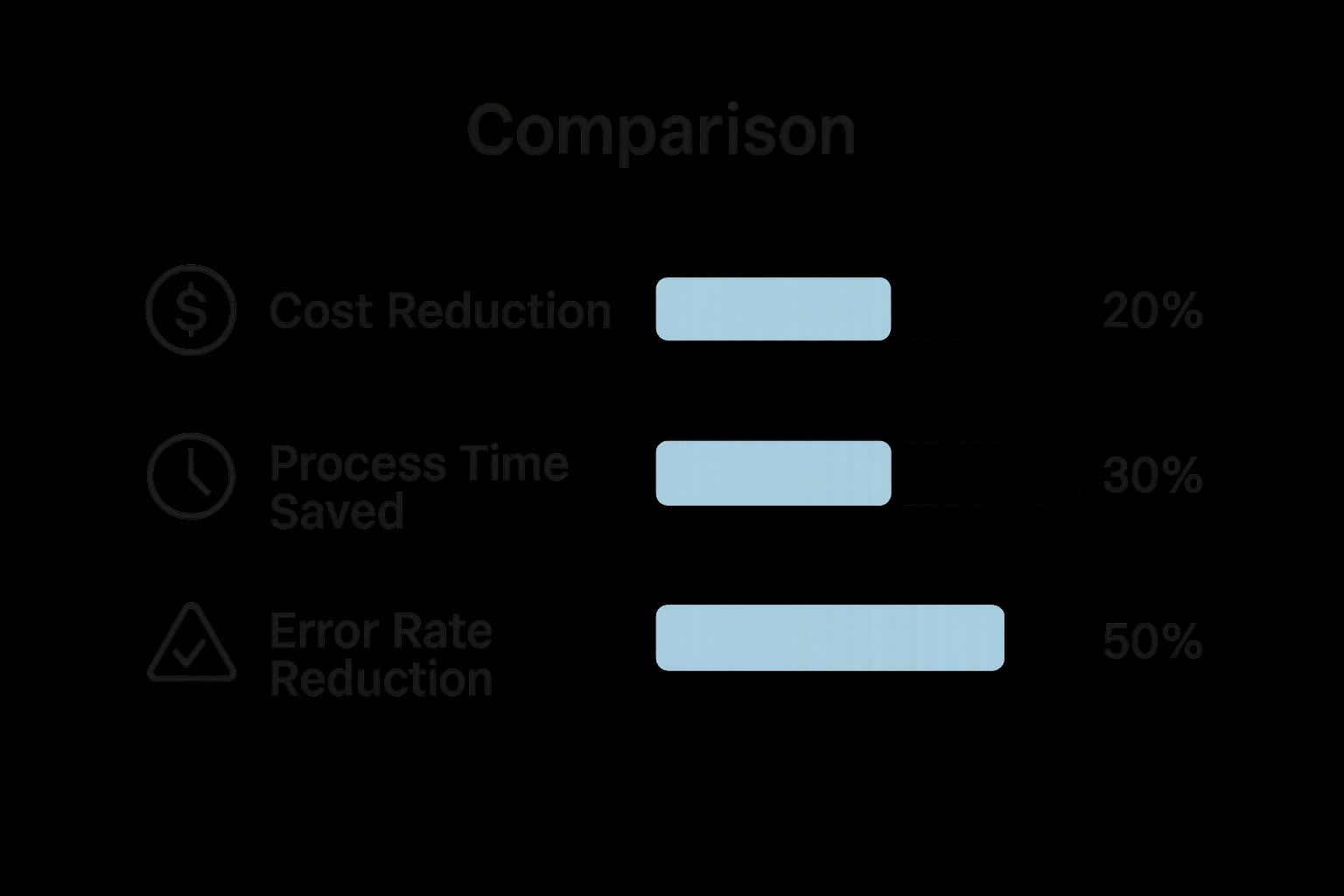
As you can see, a significant portion of the benefits often comes from reducing error rates, which underscores the power of a quality-focused methodology like Six Sigma.
Comparing Key Operational Excellence Methodologies
Choosing between these powerful frameworks can feel daunting, but it really comes down to your primary business pain points. This table breaks down the core differences to help you see which approach might be the best fit for your team.
| Methodology | Primary Focus | Key Tools | Best For |
|---|---|---|---|
| Shingo Model | Organisational Culture & Behaviour | Guiding Principles, Behavioural Benchmarks, Gemba Walks | Organisations needing deep cultural change where previous initiatives have failed to gain traction. |
| Lean Management | Eliminating Waste & Improving Flow | Value Stream Mapping, 5S, Kanban, Kaizen Events | Businesses wanting to increase speed, efficiency, and customer value by removing non-value-added activities. |
| Six Sigma | Reducing Defects & Variation | DMAIC/DMADV, Statistical Process Control, Root Cause Analysis | Complex problem-solving where data analysis is needed to eliminate quality issues and improve process consistency. |
Ultimately, you don't have to pledge allegiance to just one. Many of the most successful organisations create a hybrid. "Lean Six Sigma" is a popular combination that marries Lean's focus on speed and waste reduction with Six Sigma's powerful tools for eliminating defects. This allows you to improve both the efficiency and the effectiveness of your processes. The right path always depends on your starting point.
How the Public Sector Achieves Excellence
While operational excellence was born on the factory floor, its core principles have proven surprisingly adaptable. When you move these ideas from manufacturing into government offices, they become essential tools for delivering efficient, high-quality public services. The goal simply shifts from creating profit for shareholders to delivering value for citizens, but the mechanics of continuous improvement are fundamentally the same.
In the public sector, the "customer" is every citizen, and "value" looks like accessible services, shorter waiting times, and the careful use of taxpayer money. Government bodies operate under unique pressures—tight budgets, constant public scrutiny, and the need for complete transparency. This high-stakes environment makes a structured approach to efficiency not just a good idea, but a necessity.
An operational excellence framework provides a proven roadmap for public organisations to examine their own processes, find what’s holding them back, and make changes that deliver real, measurable results.
Driving Tangible Improvements in Public Services
Putting operational excellence into practice in the UK's public sector isn't just a theory; it leads to concrete improvements. By embracing standardised processes and data-driven decisions, government agencies can genuinely enhance the way they serve the public. This requires a shift away from traditional, often bureaucratic, routines towards a more agile and citizen-focused way of working.
Think of a local council using value stream mapping—a classic Lean tool—to review the entire process for issuing a business permit. By laying out every single step, from application to approval, they can quickly spot delays, redundant paperwork, and pointless handovers. The outcome? A much simpler, faster process for local business owners and less administrative burden for the council itself.
The core principle is universal: design processes that deliver maximum value with minimum waste. In a public context, this translates to better services delivered more efficiently, building citizen trust and satisfaction.
This focus on improving the entire system ensures that positive changes stick around, rather than being temporary fixes that disappear over time.
The Impact of Standardisation and Data
Standardisation is a key part of this change. When processes are consistent, they become predictable and, crucially, measurable. This allows public bodies to set clear performance benchmarks and accurately track their progress. Instead of relying on gut feelings, managers can use hard data to see what’s working and what isn’t.
The UK public sector has made impressive strides by adopting this structured approach. Recent findings show that public organisations using an operational excellence framework have seen service delivery times improve by up to 20-30%. What’s more, they’ve managed to cut operational costs by 15-25% within the first two years alone. These wins are directly tied to standardising processes and maintaining a relentless focus on citizen needs across health, education, and local government. You can explore this further in a report on implementing operational excellence in the public sector.
The main benefits of this approach are clear:
- Reduced Waiting Times: Citizens get faster access to vital services, from healthcare appointments to council support.
- Lower Operational Costs: Streamlined processes cut down on waste, which frees up public money for other critical areas.
- Higher Citizen Satisfaction: A smooth and efficient experience builds public confidence and trust in government institutions.
- Increased Accountability: Data-driven metrics make performance transparent and hold organisations accountable for their results.
By adapting these principles from industry, public sector leaders are proving that excellence is entirely possible, even with the complex challenges of government work. It offers a robust, ethical path to delivering better value for every single citizen.
A Case Study in UK Education Transformation
When you think of operational excellence, you probably picture a factory floor or a complex supply chain. But what happens when you apply these same principles to a school? The UK's education sector offers a fantastic real-world example of how these frameworks thrive far beyond typical industry settings.
Here, the goal isn't making a product cheaper. It’s about creating the best possible environment for students to learn and grow. It's a powerful reminder that operational efficiency can serve a profound social mission.
When a school trust refines its non-teaching functions—think finance, HR, and facilities management—it unlocks resources that were previously tied up in administration. Every pound saved on back-office tasks is a pound that can be put directly back into the classroom. That could mean hiring more teaching assistants, buying better learning materials, or upgrading student technology.
This isn’t about penny-pinching. It's about building a robust support system that empowers teachers to focus on what they do best, free from operational headaches.
Bringing Clarity to School Operations
A major part of this shift has been moving away from instinct-led decisions and towards a more data-informed approach to management. The framework created by the Institute of School Business Leadership (ISBL) has been instrumental here, giving school trusts and their central teams a clear roadmap. It helps them measure what matters, making performance visible and easy to act on.
By introducing clear performance metrics and balanced scorecards, school leaders get an honest, transparent view of how their operations are really performing. This allows them to spot inefficiencies early, manage risks before they become problems, and make sure every part of the organisation is pulling in the same direction—towards its educational goals. The entire system becomes more dependable and much simpler to manage.
The ISBL Framework in Practice
The results speak for themselves. According to an analysis of schools that have adopted the ISBL framework, the gains in data accuracy and performance management have been significant. A focus on key performance indicators (KPIs), rolled up into balanced scorecards, has been a game-changer.
Trusts have successfully cut non-teaching operational costs by 10-15%, funnelling those crucial savings back into education. What's more, with over 75% of participating trusts reporting better operational risk management, the framework is clearly building more resilient and effective schools. You can read more about these findings on data and performance management in education.
This shift has delivered several key wins for schools:
- Better Data Quality: With reliable data, leaders can make smarter, evidence-based decisions at every level.
- Stronger Risk Management: Trusts are now better prepared to spot and handle operational risks before they affect students or staff.
- More Resources for the Frontline: Efficiency savings in back-office functions translate directly into more funding for core teaching activities.
By applying an operational excellence framework, schools are not becoming corporate entities. They are building robust, efficient, and supportive systems designed to help every student and teacher succeed.
This case study perfectly illustrates just how versatile and powerful these principles are. When applied with care and purpose, an operational excellence framework creates incredible value in any sector, proving that optimised operations are the bedrock for achieving any mission-critical goal.
Embedding Governance and Managing Risk

Any world-class operational excellence framework would be incomplete without a solid foundation of governance and risk management. But this isn't about creating another layer of bureaucracy or a simple box-ticking exercise. It’s about weaving these principles right into the fabric of your daily work, making proactive risk assessment second nature for everyone.
When you get this right, risk management stops being a reactive chore and becomes a real strategic advantage. It builds resilience, shores up quality, and ultimately protects your organisation’s reputation. When governance is truly embedded, every single person on the team knows their part in upholding standards and spotting potential threats.
From Reactive To Proactive Risk Culture
A proper governance structure clarifies who owns what when it comes to risk. Senior leaders must accept ultimate responsibility for the big-picture strategic risks, while independent committees provide that crucial oversight to keep everyone accountable. It's a balanced system designed to ensure risks aren't just spotted but are actively managed.
Look at the Office for National Statistics (ONS) here in the UK. They offer a great example of this proactive culture in the public sector. As part of their strategic plan, the ONS committed to delivering over 800 different statistical outputs, which required embedding a strong risk and assurance framework to guarantee the quality of their work. Senior risk owners keep a close eye on about 15 major strategic risks each year, making sure the high-quality data needed for government decisions is always reliable.
Strong governance transforms risk from a liability to be avoided into an opportunity for strategic improvement. It fosters a culture where anticipating challenges is part of the process, not a reaction to failure.
This cultural shift is the real game-changer. It creates an environment where people feel safe to talk openly about potential problems without fearing blame, allowing teams to fix vulnerabilities before they can escalate into something serious. These proactive steps are particularly vital in industrial settings, where even minor supply chain hiccups can bring production to a grinding halt. If this is a key concern, it's worth reading up on managing risk in your supply chain.
Of course, managing risk also extends to the physical workspace itself. In an industrial environment, that covers everything from handling hazardous materials to the very layout of your workstations. Our own guide on https://tema-solutions.co.uk/warehouse-storage-solutions/ offers more detail on creating environments that are both safe and efficient.
By fully integrating governance and risk management into your operational excellence framework, you’re not just preparing for challenges—you're building a resilient organisation that's positioned for long-term success.
Frequently Asked Questions
When you first start exploring operational excellence, it’s natural to have questions. It’s a big shift, after all. Here, we tackle some of the most common queries and concerns we hear from organisations just beginning their journey, from getting the green light from management to proving it was all worth it in the long run.
How Do We Get Leadership to Support This?
Getting leadership on board is absolutely crucial; without their backing, any initiative is likely to falter. The key is to speak their language. Senior managers need to see a clear business case that connects your proposed operational excellence framework directly to the company's bottom line and strategic ambitions.
Forget abstract talk about "culture change" for a moment. Instead, focus on the tangible results you can deliver. Present clear data showing how smarter processes will:
- Slash operational costs: Pinpoint exact figures, like the savings you could make by reducing waste or eliminating rework.
- Boost throughput: Talk in terms of shipping more products or serving more customers with the exact same resources you have now.
- Improve customer satisfaction: Draw a straight line between reliable processes and happier, more loyal customers who keep coming back.
One of the best ways to do this is to run a small, contained pilot project. Pick an area where you know you can get a quick, visible win. This gives you solid proof that the framework works, making it much easier to get the investment needed to roll it out more widely.
Is This Just for Manufacturing Companies?
Not at all. It’s a common misconception because many of the foundational ideas, like Lean, were born on the factory floor. But the core principle of an operational excellence framework is universal: creating the most value for your customer by continuously improving how you work.
We’ve seen it work wonders in all sorts of sectors:
- Healthcare: Slashing patient wait times and improving critical safety procedures.
- Public Sector: Making government services more efficient, as demonstrated by improvements in UK education and statistics departments.
- Finance: Speeding up loan approvals and cutting down on costly errors in financial reporting.
- Logistics: Optimising delivery routes and making warehouse operations more fluid.
Any organisation that has processes can benefit from making them better. The trick is simply to adapt the tools and terminology to fit your unique environment.
Operational excellence isn't about what you make; it's about how you work. The principles of eliminating waste, empowering people, and focusing on process apply universally, from the factory floor to the hospital ward.
How Do We Measure Success?
If you can't measure it, you can't manage it—and you certainly can't improve it. Tracking your progress is vital for keeping the momentum going. You’ll want to monitor a mix of metrics that show both how well your processes are running and the impact they're having on the business as a whole.
While the specific KPIs will depend on your goals, they usually fall into a few key areas:
- Quality: Defect rates, percentage of rework, number of customer complaints.
- Cost: Cost per unit produced, operational overheads, inventory carrying costs.
- Delivery: On-time delivery performance, lead times from order to cash, process cycle times.
- Safety: Number of workplace incidents or reported near misses.
- Morale: Employee engagement scores, staff turnover rates.
Before you start, make sure you measure and record your current performance. This baseline is your "before" picture. It allows you to clearly show everyone the progress you've made, proving the value of your operational excellence initiatives across the entire organisation.
At TEMA Solutions Limited, we provide the robust, high-quality storage and workstation solutions that form the physical foundation of an efficient workspace. Our durable Thurmetall and LISTA products are engineered to support your operational excellence journey by ensuring tools and components are always organised and accessible. Explore our industrial storage and workstation systems to build an environment that drives productivity and continuous improvement.


