


When you hear "industrial storage," you might just picture a basic metal cupboard. Functional, sure, but not exactly a game-changer. For tough environments, though, stainless steel cabinets are in a league of their own. They aren't just boxes; they're engineered pieces of equipment that are vital for a workshop's efficiency, safety, and longevity. Think of them as a strategic upgrade, built to perform when the pressure is on.
Beyond the Shine: How Stainless Steel Cabinets Transform Your Workspace
Picking the right storage for a busy workshop is a bit like choosing tyres for a race car. The standard road tyres will get you around the track, but they won’t give you the grip, durability, or safety you need to actually compete. It’s the same with storage. Your average wooden or mild steel cupboards can hold tools, but they’ll quickly buckle under the real-world demands of an industrial setting.
Stainless steel cabinets are your high-performance option. They’ve been engineered from the ground up to take a beating—day in, day out. We're talking about constant exposure to chemical spills, high humidity, and heavy impacts that would warp, rust, or destroy lesser materials in no time. This built-in resilience is what makes them a cornerstone of operational excellence, not just a place to chuck your gear.
More Than Just a Metal Box
To really get why these are a smart move, you have to stop thinking of them as just containers. They're a fundamental part of creating a well-organised, safe, and productive workspace. Investing in them is a business decision that impacts several key areas:
- Operational Uptime: Because they fight off rust and damage so effectively, you're not constantly dealing with repairs or replacements. That means less downtime and smoother operations.
- Workplace Safety: Their solid build, often paired with robust locking systems, keeps valuable tools secure and hazardous materials safely tucked away.
- Long-Term Investment: The upfront cost might be higher, but their incredibly long lifespan means you get a far better return on investment over the years. They just last.
Why Every Detail Matters
The real value of a stainless steel cabinet is found in the small details—the specifications that might seem minor at first but have a huge impact on performance. If you're a facility manager or workshop owner, getting your head around these details is the key to making a savvy investment. For more ideas on getting your space sorted, check out our guide on storage ideas for your workshop.
Think of it this way: The specific grade of steel is like the cabinet's immune system, defining how well it can fight off rust and chemical attacks. Its load capacity is its skeletal strength, dictating how much weight it can handle day after day without giving up.
Then you have the specialised features, like electrostatic discharge (ESD) protection for sensitive electronics work or reinforced shelving for heavy dies and tooling. These are the finishing touches that tailor the cabinet perfectly to what you do. By considering these elements carefully, you’re not just buying a cupboard; you’re configuring a strategic asset for your business.
Choosing the Right Steel for the Job
When you’re looking at stainless steel cabinets, it's tempting to think all that shiny metal is created equal. But it’s not. The specific grade of steel is the single biggest factor that dictates how long your cabinet will last and how well it will stand up to the rigours of your workshop.
Think of it like choosing tyres for a car. You wouldn't put standard road tyres on a vehicle that’s going off-roading every day. The same logic applies here. Matching the steel to the environment is key to getting a cabinet that performs for decades, without paying for features you don't need or, even worse, choosing one that fails when you need it most.
Decoding the Steel Grades: 304 vs 316
You'll almost always come across two main options: Grade 304 and Grade 316. They look identical, but a small difference in their chemical makeup gives them vastly different strengths. Both are austenitic stainless steels, a technical term that simply means their internal structure makes them non-magnetic and gives them fantastic anti-corrosion properties.
Grade 304 Stainless Steel: This is the industry's go-to, the reliable workhorse. It contains a healthy amount of chromium and nickel, which creates an invisible, self-healing "passive" layer on the surface. This is what stops rust before it can even start, making it an excellent choice for general manufacturing, automotive workshops, and warehouses where it might face a bit of moisture or the odd spill.
Grade 316 Stainless Steel: Think of this as Grade 304 with a superpower: molybdenum. This extra element gives it an incredible defence against chlorides, salts, and aggressive industrial acids. It's the undisputed champion for marine environments, chemical plants, laboratories, or anywhere else that involves constant exposure to corrosive substances.
The choice really boils down to this: if your workshop is mostly dry and doesn't involve constant chemical exposure, Grade 304 is a brilliant, cost-effective solution. But if you’re up against harsh chemicals, de-icing salts from vehicles, or even just salty coastal air, investing in Grade 316 is non-negotiable to prevent corrosion and protect your investment.
This table gives a quick overview to help you decide.
Comparing Common Stainless Steel Grades for Industrial Use
| Steel Grade | Key Properties | Best For | Typical TEMA Solutions Application |
|---|---|---|---|
| 304 | Excellent corrosion resistance, good formability, strong, and easy to clean. | General workshops, food processing, warehouses, automotive garages, and dry manufacturing areas. | Standard stainless steel workbenches and general-purpose storage units. |
| 316 | Superior resistance to chlorides, acids, and salts. More durable in harsh conditions. | Marine environments, chemical plants, laboratories, pharmaceutical facilities, and coastal areas. | Custom-specified units for laboratories or specialised industrial settings. |
As you can see, understanding your day-to-day operations is the first step in choosing the right grade.
This infographic neatly sums up how a well-chosen industrial cabinet contributes to a successful workshop.
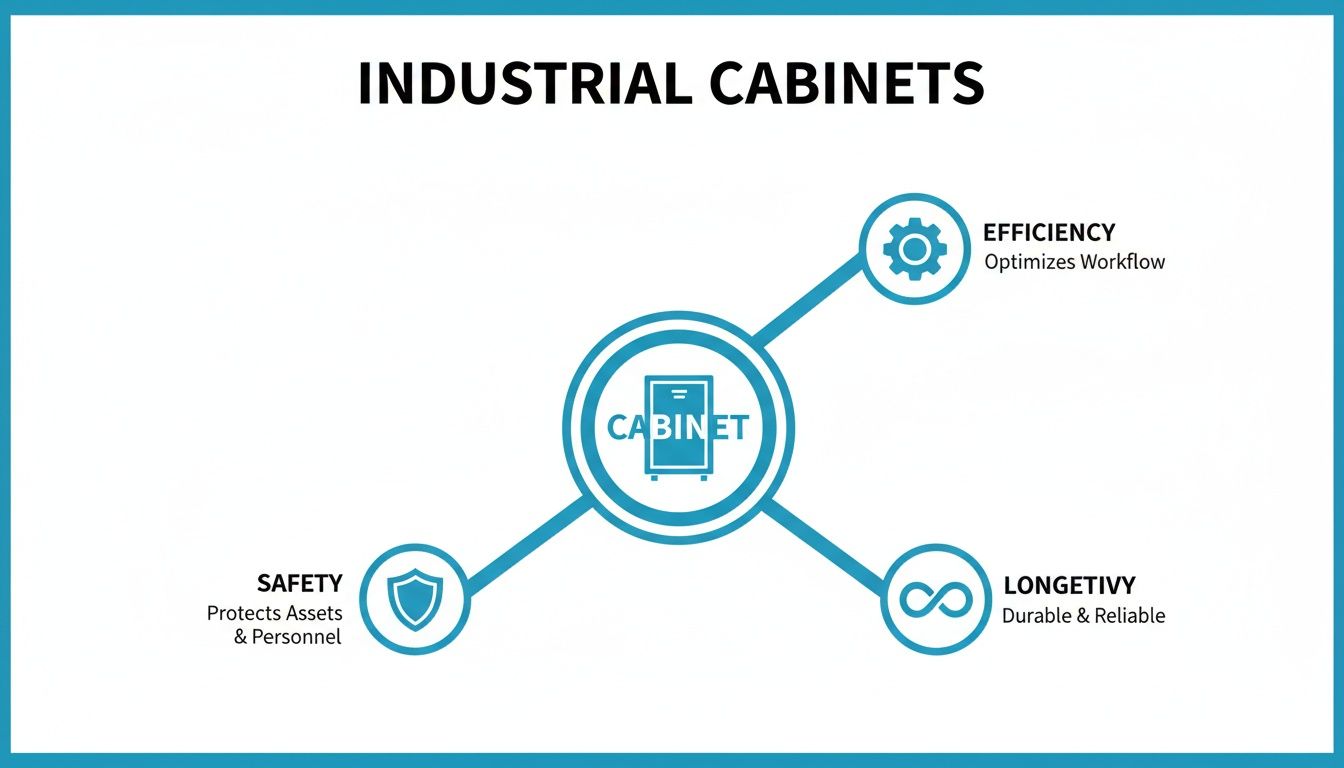
The material you choose has a direct impact on safety, long-term durability, and overall efficiency.
Understanding Finishes and Their Impact
It’s not just about the steel grade; the surface finish matters, too. The finish affects how easy the cabinet is to keep clean, how well it hides the inevitable fingerprints and scuffs of a working environment, and the overall professional feel of your space.
A brushed finish, sometimes called a satin finish, is what you'll see most often in industrial settings. It has very fine parallel lines that do a great job of concealing minor scratches and smudges, which makes it incredibly forgiving in a busy workshop. It’s practical, looks sharp, and is a breeze to maintain.
On the flip side, you have a polished or mirror finish. It's incredibly reflective and smooth, and while it certainly looks striking, it highlights every single fingerprint and speck of dust. This finish is usually saved for architectural details or decorative pieces, not the floor of a hard-working garage.
There's a third option that’s really catching on: the powder-coated finish. Here at TEMA Solutions, our Thurmetall and LISTA cabinets are a great example of this. A high-quality powder coating is applied over the steel, adding colour and texture. But more importantly, it creates an exceptionally tough, abrasion-resistant barrier that adds another layer of defence against knocks, chemicals, and general wear and tear. It really is the best of both worlds—unbeatable protection with a clean, modern look.
The Real-World Benefits in High-Performance Workshops
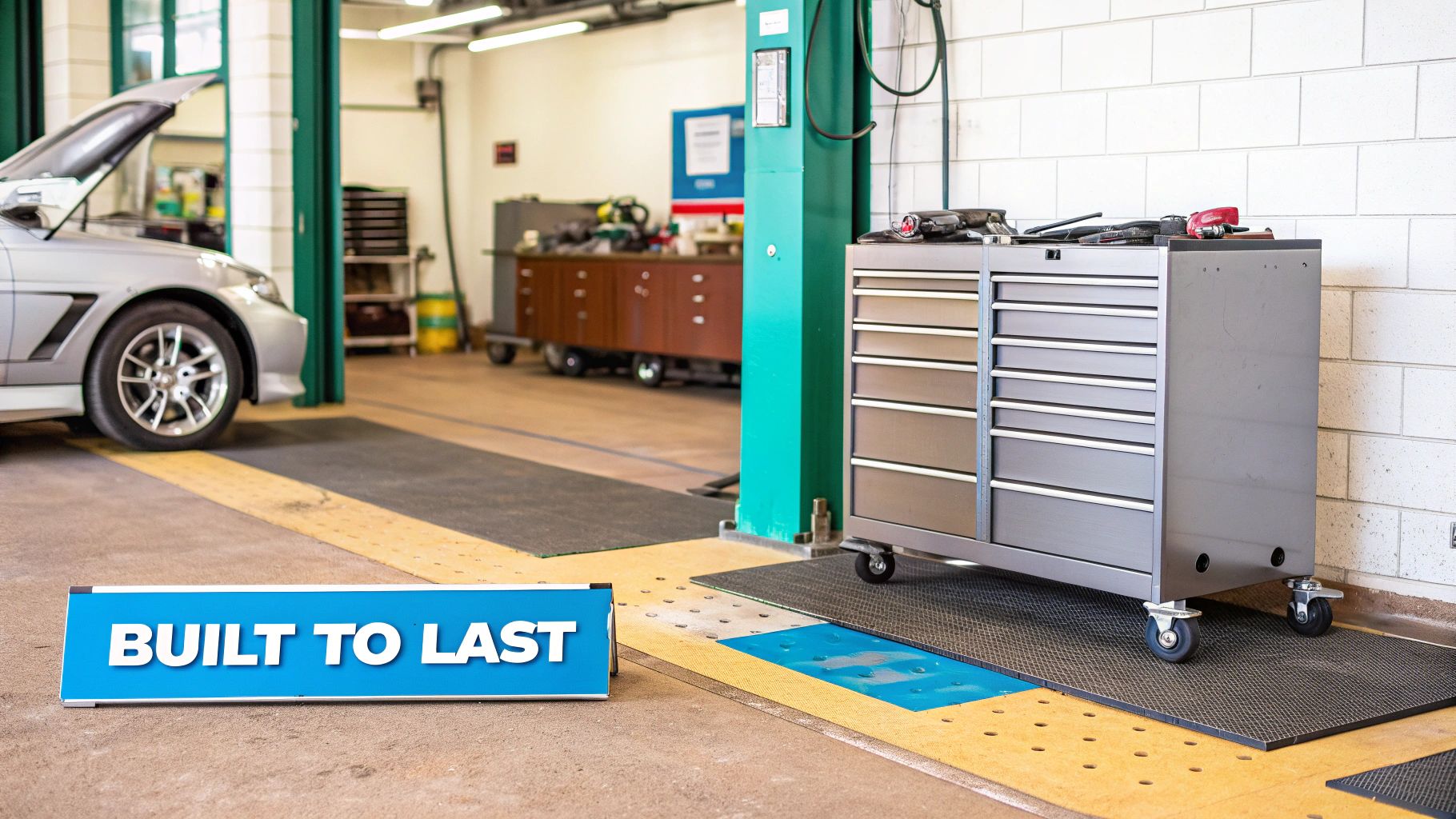
It’s one thing to talk about steel grades and finishes, but what really counts is how these cabinets perform on your workshop floor. High-quality stainless steel cabinets are much more than just storage boxes; they are a serious investment in unstoppable durability, top-tier hygiene, and long-term financial sense. These aren't just abstract ideas—they translate into real, everyday advantages that help your operation run smoothly.
Picture a busy automotive garage. All day, cabinets get splashed with corrosive brake fluid, smeared with thick grease, and dripped on with engine coolant. A wooden or even a standard mild steel cabinet would quickly stain, warp, or rust under that kind of assault, needing constant repairs or a full replacement. Stainless steel, on the other hand, just shrugs it all off. Its natural corrosion resistance means a quick wipe is all it takes to clean up spills, leaving no lasting damage. That resilience keeps your workshop looking professional and your valuable equipment protected for years.
Unstoppable Durability in Demanding Environments
The sheer physical toughness of stainless steel is its most obvious superpower. These cabinets are built to take the knocks, scrapes, and heavy loads that are just part of the daily grind in any industrial setting. This isn't just about looking good; it's about reliability you can count on.
When your storage can handle the day-to-day abuse without failing, you get fewer interruptions and more peace of mind. In fact, a key reason for their growing adoption is that they offer a 30-50% longer lifespan in corrosive environments compared to traditional alternatives. It’s a trend that highlights a simple truth: durability isn't just a feature, it's a strategic advantage that keeps your workspace safe and functional.
Superior Hygiene for Critical Applications
Now, let's switch gears and step into a completely different environment, like a cleanroom for electronics assembly or a food processing plant. In these places, preventing contamination isn't a "nice-to-have"—it's an absolute necessity. The non-porous surface of stainless steel is a genuine game-changer here. Unlike wood or painted steel, there are no microscopic cracks or crevices for bacteria, dirt, and other contaminants to hide in.
This makes cleaning incredibly effective. A simple wipe-down with the right sanitisers can completely sterilise the surface, ensuring you meet the most stringent hygiene standards.
The ability to easily maintain a sterile environment is crucial. This quality makes stainless steel cabinets essential not just in cleanrooms, but in any area where cleanliness directly impacts product quality or safety.
Their tough, easy-to-clean surfaces also make them perfect for facilities that handle chemicals, directly supporting best practices in managing a hazardous substance register to keep your team safe and compliant. For workshops looking for that same level of organised, tough-as-nails storage, check out our range of metal cabinets with drawers.
Long-Term Financial Value and Return on Investment
Finally, let's talk money. While the upfront cost of stainless steel cabinets can be higher than other materials, their total cost of ownership is where they really shine. This is where the smart money is.
Think about the alternatives for a moment:
- Wooden Cabinets: They’re vulnerable to moisture, chemicals, and impact damage. In a tough environment, you’ll be lucky to get a few years out of them before they need replacing.
- Mild Steel Cabinets: These are prone to rust and corrosion, especially once the paint or powder coating gets scratched. That damage leads to a much shorter lifespan and ongoing maintenance headaches.
Stainless steel, in contrast, is a 'buy it once, buy it right' solution. With just a bit of basic care, a well-made cabinet will easily last for decades, outliving several generations of cheaper storage units. This longevity gets rid of the repeat costs of replacement, repairs, and the downtime that comes with them. When you see it as a long-term capital investment instead of just another expense, the logic is undeniable. You're paying for decades of reliable, worry-free performance.
A Practical Checklist for Choosing Your Cabinets
Picking the right stainless steel cabinets feels like a big commitment, and frankly, it is. This is a long-term investment in how smoothly and safely your workshop runs, so it pays to get the specifications right the first time. Forget getting bogged down in datasheets for now; let's use a practical checklist to figure out exactly what you need.
Think of it like packing for a trip. You wouldn't cram a month's worth of gear into a daypack, nor would you drag a massive suitcase along for a weekend away. The goal is to match your equipment perfectly to the job at hand.
Start with Configuration and Layout
First things first: map out how the cabinets will fit into your daily workflow. Don't just think about what you're storing, but how your team needs to get to it. A smart layout can shave minutes off tasks all day long, while a clumsy one becomes a constant source of frustration.
To get your configuration right, ask yourself these key questions:
- Drawers or Cupboards? Are you storing heavy tools and small parts that need deep, fully extendable drawers? Or do you need tall, open cupboard space for large containers and equipment? Often, a combination of the two works best.
- What Size and Shape? Get the tape measure out. Check your available floor space, but don't forget to account for the clearance needed for doors and drawers to swing open fully without hitting anything.
- Mobile or Static? Could your team benefit from a mobile cabinet on heavy-duty castors, bringing tools directly to where the work is happening? Or does your setup call for a fixed, permanent installation?
Thinking through these points helps you build a picture of the physical cabinet you need. You can explore a huge range of adaptable layouts in our collection of storage cabinets with doors to see what's possible.
Evaluate Load Ratings and Capacity
One of the most critical factors for safety is the cabinet's load rating. This isn't a vague guideline; it's the absolute maximum weight the shelves and drawers are built to handle safely, day in and day out. Overloading a cabinet is asking for trouble—it risks structural failure, wrecked equipment, and serious injuries.
It's a bit like building a bridge. You'd need to know the heaviest vehicle that will cross it to make sure it's strong enough. The same logic applies here; you have to match the cabinet's strength to the weight of your gear.
To get the right load rating, start by identifying the single heaviest item you plan to store. Whether that's a hefty power tool, a full box of fasteners, or a sensitive diagnostic machine, use its weight as your starting point. Always choose a cabinet with a load rating that comfortably exceeds this number to give yourself a solid safety margin.
Identify Essential Specialised Features
Beyond simply holding things, modern stainless steel cabinets come with specialised features built for specific industrial environments. Choosing the right ones can protect sensitive electronics, secure high-value assets, and help you meet industry standards. Two of the most common and important features are ESD protection and high-quality locks.
ESD-Safe Surfaces
If you work with microchips, circuit boards, or any other electronics that are sensitive to static, then Electrostatic Discharge (ESD) protection is non-negotiable. A tiny static shock, often too small for a person to even feel, can instantly fry delicate components, leading to expensive and frustrating equipment failures.
- How it works: ESD-safe cabinets are built with special dissipative materials. These materials safely channel any static electricity build-up to a grounding point, neutralising the danger before it can zap your components.
- Ask yourself: Do we handle, repair, or assemble electronic parts? If the answer is yes, then specifying ESD-safe features isn't a luxury—it's essential for quality control.
Robust Locking Mechanisms
Keeping valuable tools, controlled materials, or sensitive documents under lock and key is a basic requirement in any professional workshop. A good locking system gives you both security and peace of mind.
You'll want to look for robust, integrated locks designed for industrial wear and tear, not flimsy afterthoughts. It's also worth considering if you need a single master key for all cabinets or individually keyed units for different teams or security clearance levels. The choice should directly reflect your workshop’s security protocols.
Keeping Your Cabinets in Prime Condition for Life
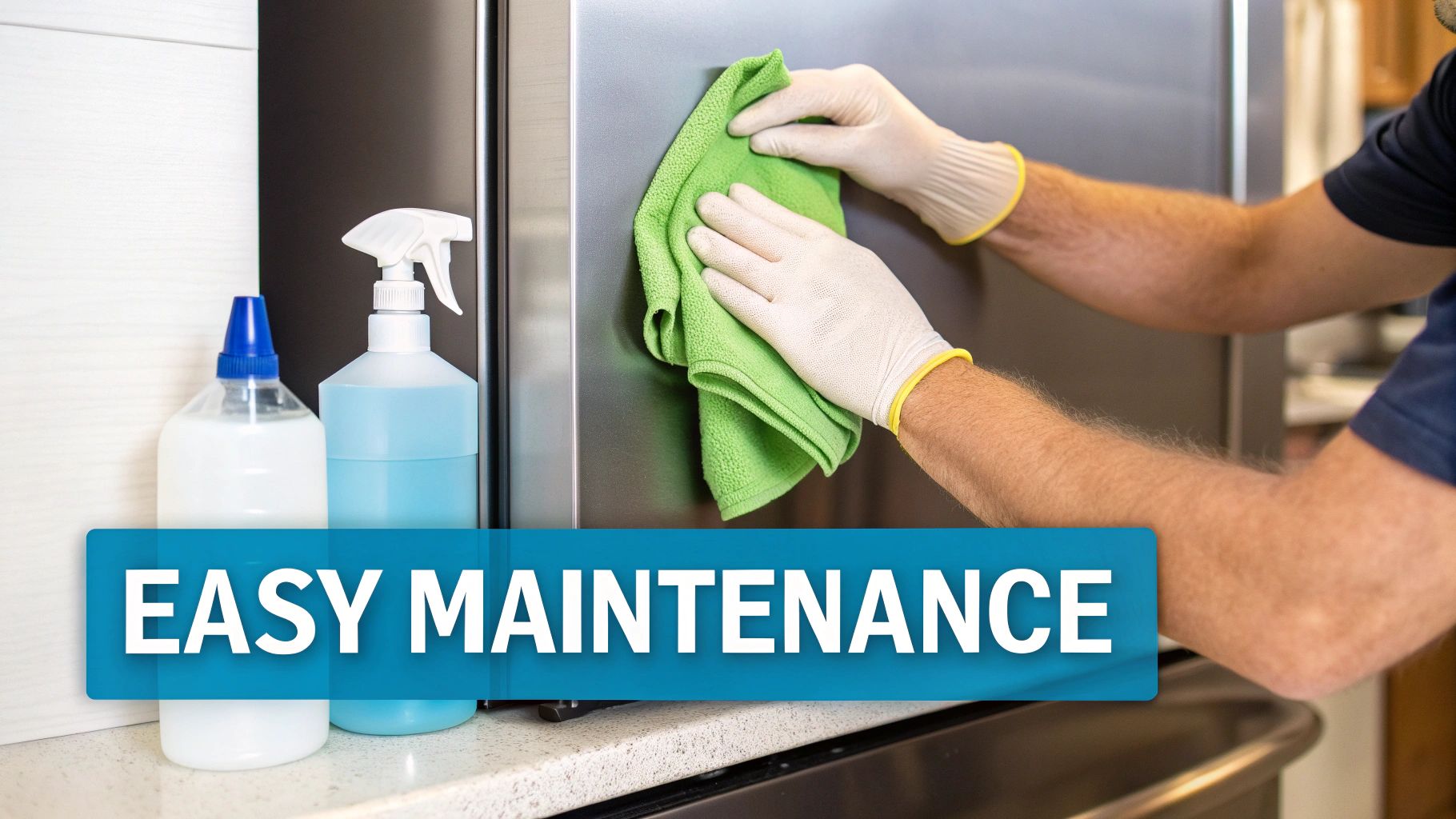
One of the best things about choosing stainless steel cabinets is how incredibly durable and easy to look after they are. But "low maintenance" isn't the same as "no maintenance." It’s a common mistake to think stainless steel is totally bulletproof, but a simple care routine is all it takes to keep your cabinets looking and working like new for decades.
Proper care is more than just about keeping up appearances—it’s about protecting the steel's invisible shield. The material gets its fantastic corrosion resistance from a very thin, self-healing film on its surface called the passivation layer. If you hit it with harsh chemicals or scrub too hard with something abrasive, you can damage this layer, leaving the steel underneath exposed and vulnerable. A gentle, consistent cleaning routine keeps this barrier intact.
This shift towards long-lasting, easy-care materials isn't just happening in workshops. Take the UK bathroom cabinets market, for example, which was valued at a huge USD 2,975.2 million in 2023. Stainless steel is a popular choice there too, thanks to its hygienic properties and ability to handle damp conditions. This trend shows a wider appreciation for materials that make life easier, a principle that’s even more critical in a busy industrial environment. You can learn more about the findings on the UK bathroom cabinets market to see just how popular they’ve become.
Your Simple Cleaning Toolkit
Forget about an arsenal of harsh or expensive chemicals. For looking after stainless steel cabinets, the simplest approach is almost always the best.
- Soft Microfibre Cloths: You’ll want two. One for cleaning and a separate dry one for buffing away water spots afterwards.
- Warm Water and Mild Soap: A bit of washing-up liquid in warm water is all you need for most day-to-day cleaning.
- Specialist Stainless Steel Cleaner: For a more thorough clean or to really bring back that shine, a pH-neutral, non-abrasive cleaner works wonders.
Whatever you do, steer clear of harsh tools. Steel wool, scouring pads, and abrasive powders will leave permanent scratches in the finish, damaging both the look and the crucial passivation layer of your cabinets.
A Three-Tiered Maintenance Routine
You don't need to make a big chore out of cleaning. A simple, tiered approach will keep your cabinets in top-notch condition.
1. The Daily Wipe-Down
In a busy workshop, a quick daily wipe is your best line of defence. Just use a damp microfibre cloth to get rid of fingerprints, dust, and any minor smudges. Here’s a pro tip: always wipe in the same direction as the steel’s grain to avoid leaving any streaks.
2. The Weekly Clean
Once a week, mix up your warm, soapy water solution to deal with anything tougher, like grease spots or spills that have had time to dry. Gently wash the surface, rinse it with a clean, damp cloth, and immediately dry everything with your second microfibre cloth. That final drying step is key to preventing water marks and keeping the finish looking flawless.
3. The Occasional Deep Clean
If you’ve got stubborn grease or grime that won’t shift, put a small amount of a specialist stainless steel cleaner on your cloth. Work it into the problem area, again, following the grain. These cleaners are great at breaking down oily residue without being harsh on the surface. Just be sure to rinse and dry thoroughly when you're done. And never, ever use bleach, ammonia, or anything with chlorides—these chemicals are extremely corrosive and will cause permanent damage.
Why Your Choice of Supplier Matters
Choosing the right stainless steel cabinets goes way beyond just comparing steel grades and load ratings. The supplier you choose to work with is just as critical to getting it right as the product itself. The difference between sourcing from a generalist hardware store and an industrial storage specialist like TEMA Solutions is the difference between simply buying a box and investing in a system that’s genuinely optimised for your workspace.
Think of it this way: you wouldn't ask your GP to perform highly specialised surgery. The same logic applies here. An expert supplier brings a wealth of industry knowledge to the table, helping you cut through the jargon and complex options. Their guidance is invaluable, preventing costly mistakes like under-specifying a cabinet for a tough job or, just as bad, overpaying for features you’ll never use.
The Assurance of Premium Brands and Robust Warranties
One of the biggest advantages of working with a specialist is the access you get to premium, industry-proven brands. At TEMA Solutions, we supply equipment from European leaders like Thurmetall and LISTA—names that are synonymous with quality engineering and sheer durability. This isn't just about a logo; it's the peace of mind that comes from knowing your cabinets are built to ISO-certified standards and will perform reliably, day in and day out, for years to come.
That commitment to quality is backed up by warranties that actually mean something.
- Thurmetall Warranty: A comprehensive five-year warranty on all units.
- LISTA Warranty: An exceptional ten-year warranty, which speaks volumes about their confidence in the product's longevity.
These aren't just pieces of paper. They're guarantees that protect your investment and show the manufacturer stands firmly behind their craftsmanship.
More Than a Seller—A Partner in Productivity
A true specialist offers value that extends far beyond the initial sale. They become a long-term partner, someone genuinely invested in your operational success. One of the most important services they can offer is expert guidance on ergonomics. A well-designed workspace isn’t just about being efficient; it’s about the health and well-being of your team.
An ergonomically designed layout reduces physical strain, cuts down on wasted movement, and can give morale and productivity a significant boost. This focus on human factors is something only a dedicated industrial partner can really provide.
The demand for durable, well-designed equipment is clear across many sectors. In the UK's kitchen furniture market, for instance, cabinets (often including stainless steel) account for a massive 67.74% of revenue. While that's a different market, it highlights a universal appreciation for robust, long-lasting solutions. For your warehouse teams, this trend is critical; stainless steel's corrosion resistance can slash replacement cycles by up to 40%, while ergonomic designs directly support well-being during demanding shifts.
When you're looking at suppliers, even their online presence can be a subtle clue to their operational strength. It's worth considering how well they handle things like SEO for manufacturing companies. Ultimately, choosing a supplier like TEMA Solutions means you're not just buying a cabinet. You're gaining a partner dedicated to helping you build a safer, more efficient, and more productive workshop.
Your Stainless Steel Cabinet Questions Answered
Choosing the right industrial storage always throws up a few questions. To help you feel completely confident in your decision, we've tackled some of the most common queries we hear from buyers looking to invest in stainless steel cabinets.
Are Stainless Steel Cabinets Really Worth the Extra Money Upfront?
In a word: absolutely. It’s true that stainless steel cabinets come with a higher initial price tag, but their total cost of ownership is far lower over time. Their incredible durability and resistance to just about everything means they last for years, saving you the expense and disruption of having to replace cheaper alternatives down the line.
Think of it less as a purchase and more as a one-time investment in a piece of equipment that will serve your workshop reliably for decades. That longevity makes it a much smarter financial move for the long haul, delivering real value that compounds over its lifespan.
Can I Get Cabinets Made to Fit My Workshop’s Awkward Layout?
Of course. This is actually one of the biggest advantages. At TEMA Solutions, we work with highly configurable systems from leading brands like LISTA and Thurmetall that are designed to fit your space, not force you to work around them.
The whole point is to build a system that genuinely improves your workflow. You shouldn't be limited to standard, off-the-shelf units when the goal is to make your team more efficient by putting everything they need right where they need it.
This means you can specify the exact dimensions, drawer and cupboard setups, worktop materials, and even add specialist features like ESD protection. Our team is here to walk you through the process, helping you design a storage solution that makes the most of your available space for better productivity and ergonomics.
What Sort of Industries Get the Most Out of Stainless Steel?
Honestly, they're a game-changer in any setting where hygiene, durability, and chemical resistance are non-negotiable. That makes them the go-to choice across a whole host of demanding industries.
Here are just a few examples:
- Automotive Garages: They shrug off damage from oils, grease, and other corrosive fluids without a problem.
- Electronics Manufacturing: We can specify ESD-safe units to protect delicate components from static discharge.
- Food and Beverage Processing: Their non-porous surfaces are a breeze to sterilise, making it easy to meet strict hygiene regulations.
- Chemical Labs and Research Facilities: When you're handling aggressive substances, their superior corrosion resistance is absolutely essential for safety.
Their inherent toughness also makes them the first choice for heavy-duty machine shops and any industrial environment where equipment takes a real beating day in, day out. Put simply, if your environment is tough on gear, stainless steel is the answer for reliable, long-lasting storage.
Ready to fit out your workshop with storage that’s built to last? The experts at TEMA Solutions Limited can help you configure the perfect stainless steel cabinet system for your needs. Contact us today for a personalised consultation.


