


Let’s be honest, clutter isn’t just messy—it’s expensive. In a busy workshop or factory, disorganisation eats up time, leads to damaged tools, and even creates serious safety hazards. This is where a good metal cabinet with drawers proves its worth. It’s not just a box for your stuff; it’s the backbone of an efficient, safe, and productive workspace.
Why the Right Metal Cabinet Is a Game-Changer
In any industrial setting, whether it’s a high-tech manufacturing plant or a local garage, chaos is the enemy. Every minute spent rummaging for the right socket or a specific component is a minute you’re not getting work done. A smart investment in a quality metal cabinet with drawers pays for itself by bringing order and logic to your workflow.
Making the right choice comes down to three non-negotiable elements:
- Durability: It has to be tough enough to handle the daily grind of an industrial environment.
- Capacity: It needs the right amount of space and strength to hold your specific tools and parts without buckling.
- Security: Your valuable tools and equipment need to be protected from damage, loss, and theft.
Nail these three, and your cabinet stops being just another piece of furniture and becomes a cornerstone of your operation.
The Foundation of an Organised Workspace
Think of your workspace as a system where every part needs to function smoothly. A well-chosen cabinet not only organises your tools but also protects them, extending their life and ensuring they are ready to go the moment you need them. This principle of optimising workflow and investing in durable equipment is universal, as highlighted in this guide to commercial kitchen equipment, where efficiency is just as crucial.
The real value of a premium metal cabinet isn’t just in what it holds, but in how it structures your work. When every tool has a designated, secure, and easy-to-reach home, you drastically cut downtime and boost output.
It’s the details inside the cabinet that often make the biggest difference. The quality of the drawer slides and runners, for instance, is critical for everyday use. There’s a reason the global drawer slides market was valued at USD 6.4 billion in 2023 and is projected to hit USD 10.3 billion by 2032. This explosive growth shows just how much people value the small things, like a drawer that glides open effortlessly even when fully loaded.
This guide will walk you through these crucial details, helping you make a choice that’s not just a purchase, but a lasting investment in your business.
Decoding the Different Cabinet Types
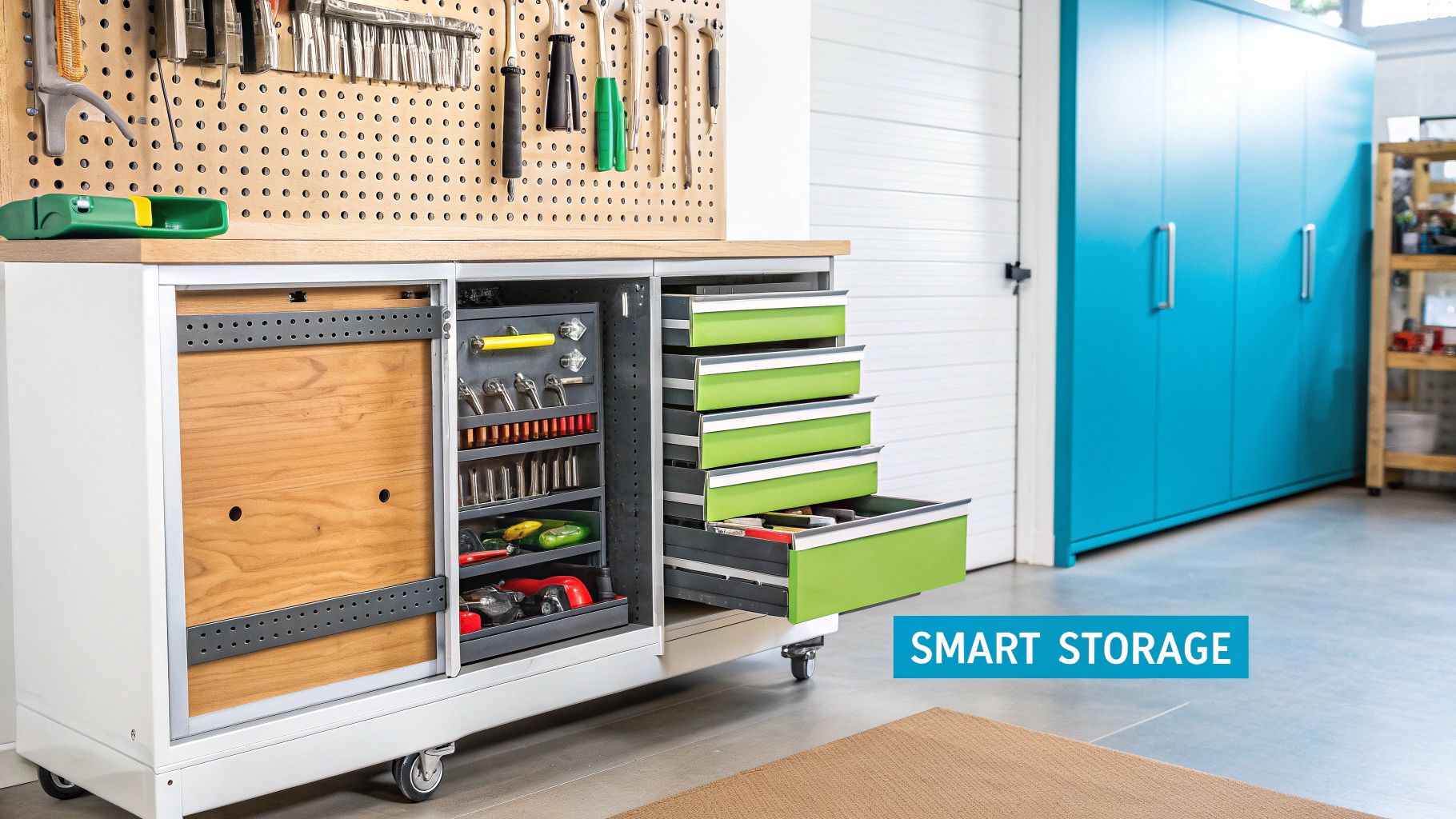
When you’re outfitting a professional workspace, it’s easy to think all metal cabinets are more or less the same. But that’s a rookie mistake. Choosing the right type of cabinet is the first, and most crucial, step towards creating a workspace that’s not just organised, but genuinely efficient. It’s a bit like choosing a vehicle; you wouldn’t take a sports car on a construction site.
Each cabinet design—stationary, mobile, and modular—serves a very different purpose. Stationary units provide raw stability, mobile cabinets bring convenience to your workflow, and modular systems offer unmatched adaptability. Getting to grips with what makes each one tick is the key to picking the perfect fit for your day-to-day operations.
Stationary Cabinets: The Bedrock of Your Workshop
Stationary metal cabinets with drawers are the unshakeable foundation of any serious industrial setting. Typically bolted to the floor or set firmly against a wall, they are built for one thing above all else: stability. This immovable nature makes them the go-to solution for storing your heaviest tools, expensive calibrated instruments, or any critical component that needs a permanent, secure home.
Think of a busy assembly line. Each station needs a specific set of tools, always within arm’s reach. A stationary cabinet ensures everything is exactly where it needs to be, day in and day out. This predictability eliminates wasted motion and lets your team find a smooth, efficient rhythm.
They are the perfect choice for:
- Dedicated Workstations: Give technicians instant access to their most-used tools without them ever having to leave their post.
- Heavy-Duty Storage: Their robust build and fixed footprint are ideal for housing bulky jigs, fixtures, and powerful tools.
- Secure Central Storage: A large, lockable stationary unit can serve as a central hub for shared equipment that needs to be properly managed and checked out.
Mobile Cabinets: Tools That Travel with You
While stationary units hold down the fort, mobile cabinets are built for action. Picture them as a fully-stocked pit crew trolley for your workshop floor. Set on heavy-duty, lockable castors, these cabinets bring the tools directly to the job, whether that’s across the factory or right next to a piece of machinery needing maintenance.
This mobility is a genuine game-changer in dynamic environments like automotive garages or large manufacturing plants where work isn’t tied to one spot. Instead of your team making endless trips back to a central tool chest, the entire toolkit moves with them. This simple change can drastically reduce wasted time and physical effort.
A mobile metal cabinet with drawers doesn’t just store tools; it optimises motion. By bringing the storage to the point of use, you can convert hours of walking time into productive work time each week.
Modular Cabinets: The Building Blocks of Storage
If you’re looking for ultimate flexibility and a system that can grow with your business, modular cabinets are the answer. These aren’t just standalone units. They are an ecosystem of compatible components—cabinets, drawers, worktops, and even overhead storage—that you can mix and match to build a completely custom layout. Think of them as the building blocks for a truly bespoke storage solution.
This approach is brilliant for businesses that expect to expand or see their workflows evolve over time. You can start with a basic setup and simply add new modules as your needs change. It protects you from being locked into a rigid configuration that might be obsolete in a few years, making it a smart, long-term investment in your operational efficiency.
The growing demand for high-quality metal storage is part of a bigger picture. The UK market for metal cabinets with drawers, especially the hardware like runners, is expanding rapidly. This is fuelled by a preference for durable metal components and the sleek, minimalist aesthetic of steel that suits modern industrial design. You can find out more about these market trends for cabinet hardware on Market Report Analytics.
Matching Drawer Capacity to Your Tools
When you’re looking at an industrial metal cabinet, it’s easy to get caught up in its overall size. But the true test of a quality cabinet isn’t its footprint on the workshop floor—it’s the strength hidden inside each drawer. The single most important factor is load capacity. This one detail will determine whether you’ve bought a reliable workhorse or a source of constant frustration.
Getting load capacity right is about more than just preventing a drawer from buckling. It’s about matching the cabinet’s engineering to the real-world weight of your tools. A shallow drawer might be the perfect size for your delicate micrometres and gauges, but if the slide mechanism is flimsy, it’s not doing its job. Likewise, a big, deep drawer is useless for heavy power tools if it can’t handle the weight.
Think of drawer slides like the suspension on a vehicle. You wouldn’t try to haul a tonne of bricks with a standard family car; you’d get a heavy-duty truck. It’s the same principle here. Light-duty slides are perfectly fine for small fixings and components, but for hefty engine parts or die sets, you absolutely need robust, industrial-grade ball-bearing slides built for the job.
This image shows just how different cabinet setups can solve distinct organisational problems in a busy workspace.
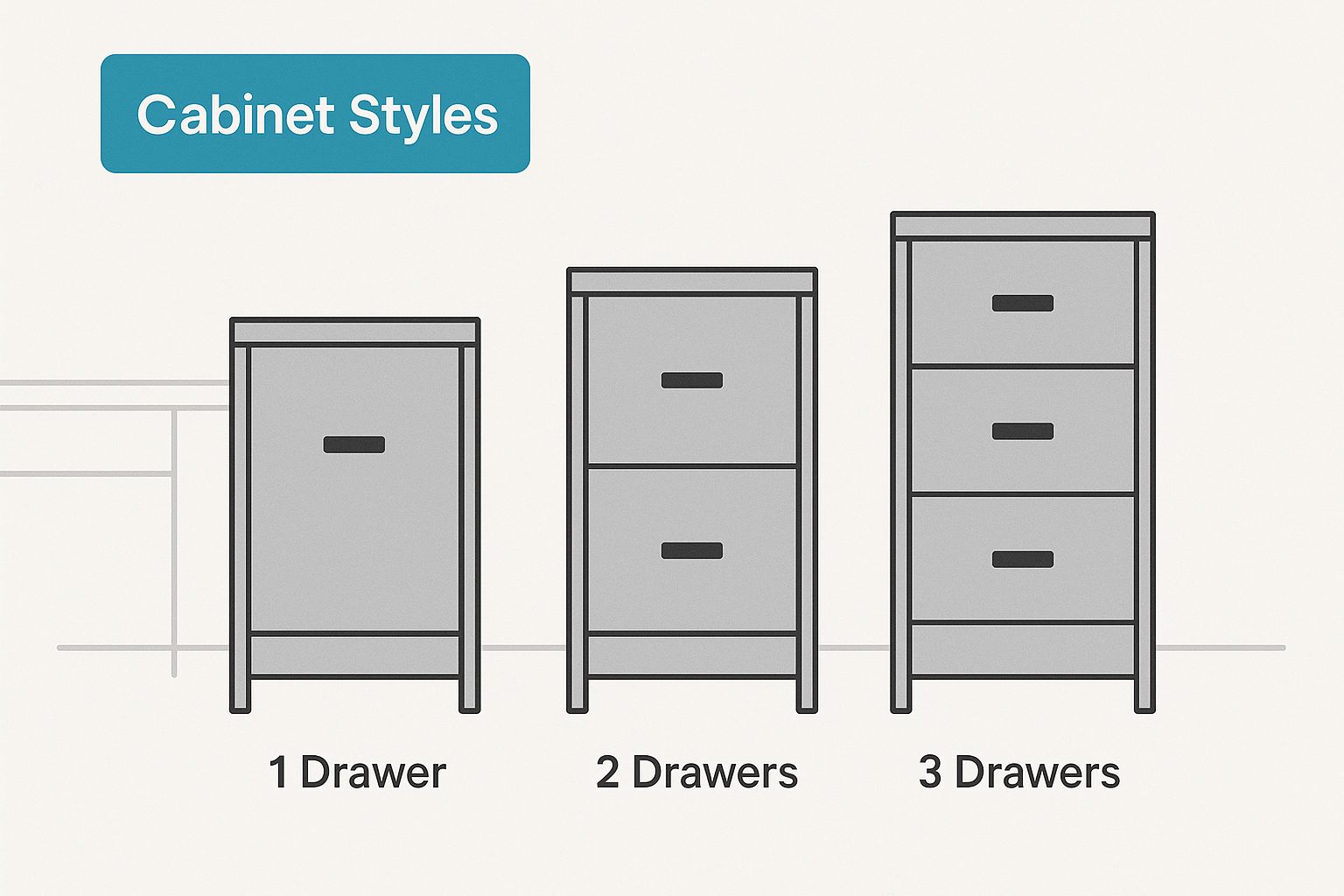
As you can see, a one-size-fits-all approach rarely works. The key to a tidy, efficient workshop is a smart mix of drawer sizes and configurations.
Calculating Your Real-World Needs
To pick the right capacity, it’s time to stop guessing and start measuring. A vague idea of what you plan to store just won’t cut it. The best way to get it right is to physically group and weigh your tools.
Seriously, grab the items you plan to keep in one drawer, put them on a scale, and get an actual number. This simple step removes all the guesswork and gives you a solid baseline to work from.
Once you have that weight, don’t just find a drawer that meets the exact number. Always build in a buffer.
Expert Tip: I always recommend choosing a drawer capacity that’s at least 20-25% higher than what you’ve weighed. This safety margin accounts for any new tools you might add later and prevents long-term stress on the slides, keeping things safe and ensuring your cabinet lasts.
For instance, if the tools for one drawer weigh in at 30 kg, you should be looking for a cabinet with drawers rated for at least 36-40 kg. A little foresight here will prevent overloading and make your investment go much further. You can find more practical advice like this in our guide on maximising efficiency with workshop drawers.
Understanding Common Capacity Ratings
Drawer load capacities aren’t just random numbers; they’re directly tied to the type and quality of the slide mechanism. This table breaks down what different ratings actually mean in a practical sense for your workshop.
Drawer Load Capacity and Common Use Cases
| Load Capacity Range (per drawer) | Typical Drawer Slide Mechanism | Ideal for Storing |
|---|---|---|
| 25-45 kg | Standard Roller or Ball-Bearing | Hand tools (spanners, screwdrivers), fasteners, small parts, and electronic components. |
| 45-90 kg | Heavy-Duty Ball-Bearing | Cordless power tools, larger testing equipment, and heavier individual components. |
| 90-180 kg+ | Reinforced Heavy-Duty Slides | Heavy machine parts, large die sets, multiple heavy power tools, and bulky fixtures. |
Often, the smartest move is to choose a cabinet that offers a mix of capacities. You can use the lighter-duty drawers for small items and save the high-capacity ones for your heaviest, most valuable gear. This kind of strategic storage makes sure every tool is safe, secure, and easy to grab when you need it.
Finally, never underestimate the value of full-extension ball-bearing slides. They let you see and reach everything, right to the very back of the drawer. This isn’t just a convenience—it’s crucial for ergonomics and safety, as it stops you from straining or rummaging blindly. After all, when a drawer is rated to hold 90 kg, you need to be able to access that entire weight safely.
Of course, here is the rewritten section with a more natural, human-expert tone, following all your specified requirements.
Choosing the Right Material and Finish
A cabinet’s ability to survive the daily grind comes down to two things: what it’s made of and what’s protecting it. Think of it like a knight’s armour; the quality of the metal and its finish will determine how well your metal cabinet with drawers stands up to the battles of an industrial environment.
Making the right call here isn’t just about looks. It’s a practical decision that directly affects how long the cabinet will last and whether it’s right for your specific workplace. A cabinet sitting in a clean, dry assembly area has a much easier life than one destined for a damp, chemical-heavy workshop. Getting to grips with the steel itself and its protective skin is the first step to buying a unit that’s truly built to last.
This choice is becoming a bigger deal as more industries look for sustainable, long-lasting equipment. The global market for cabinet and drawer hardware is now worth an estimated $10.18 billion, and a big part of that is the demand for tough, recyclable materials like steel. It shows a clear shift away from throwaway solutions towards quality investments. You can read more about these global hardware market trends on Archive Market Research.
Understanding Steel Gauge: The Armour Analogy
When you’re looking at specs, you’ll see a “gauge” number for the steel. It can seem a bit backward at first, but the idea is simple. In the world of steel, a lower gauge number means thicker, stronger metal.
So, a 16-gauge steel cabinet is a whole lot tougher and more resistant to dings and dents than a 22-gauge one. For heavy-duty industrial use, where your cabinet is likely to get knocked by carts, tools, or machinery, going for a lower gauge (thicker steel) is a smart investment. It’s the difference between a cabinet that shrugs off a bump and one that shows a permanent scar.
Selecting the Right Metal for the Job
While most industrial cabinets are steel, not all steel is created equal. The two you’ll come across most often are cold-rolled steel and stainless steel, and they each have their place.
Cold-Rolled Steel: This is the workhorse of the industrial world. It’s strong, dependable, and doesn’t break the bank, making it the go-to choice for general storage in workshops, garages, and factories where conditions are fairly dry and stable.
Stainless Steel: This is the specialist. Its main superpower is its incredible resistance to rust, corrosion, and chemicals. This makes stainless steel the only real choice for environments where hygiene and preventing contamination are non-negotiable.
Think of it like this: cold-rolled steel is a solid pair of work boots, perfect for most jobs. Stainless steel, on the other hand, is the specialised safety footwear you’d need for hazardous or sterile conditions.
You wouldn’t wear your standard boots into a chemical lab, and you shouldn’t put a standard steel cabinet in a food processing plant or a sterile medical facility. Matching the metal to the environment is absolutely fundamental for both safety and performance.
Why the Finish Is More Than Just a Colour
The finish on a metal cabinet is its first line of defence. It’s much more than a pretty colour; it’s a protective shield that determines how well the cabinet will fight off wear and tear over the years.
While some cheap units might just have a lick of paint, a powder-coated finish is the undisputed champion for industrial settings. The process involves electrostatically applying a dry powder to the metal, then baking it on. This creates a hard, durable skin that’s leagues ahead of liquid paint.
A good powder-coated finish gives you robust protection against:
- Scratches and Chips: It stands up far better to the daily scrapes and knocks of a busy workshop.
- Chemicals and Solvents: It provides a non-porous barrier against spills that would eat through a painted surface in no time.
- Rust and Corrosion: By sealing the steel away from moisture and air, it drastically extends the life of the cabinet, especially in damp or humid areas.
Ultimately, choosing a cabinet with a high-quality powder coat means your investment won’t just look professional for longer—it will be fundamentally better equipped to handle the realities of an industrial workspace.
Essential Features For Safety And Daily Use
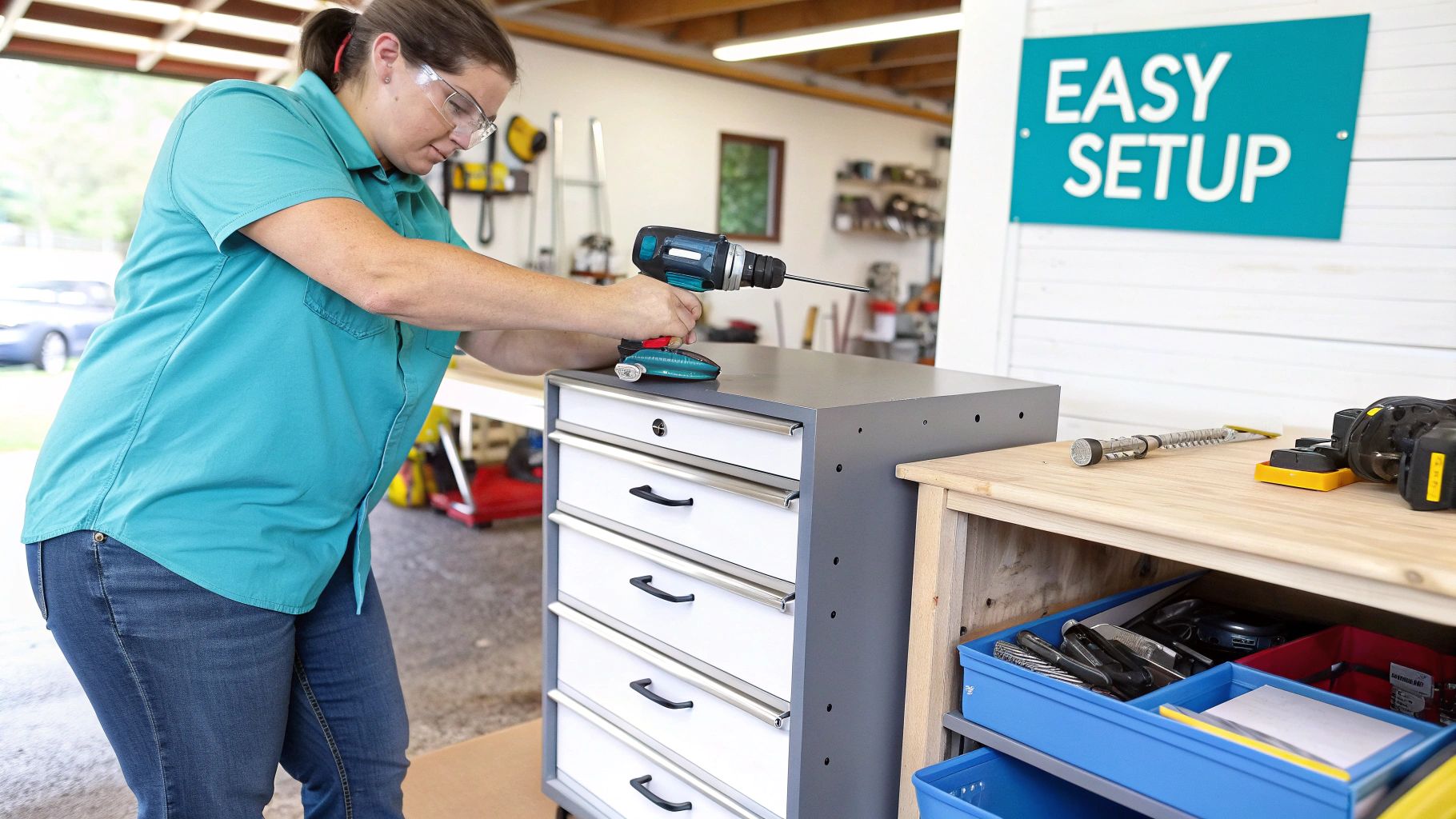
A top-quality metal cabinet with drawers is more than just a box to store things in. It’s an active part of your workshop that protects your valuable assets and, more importantly, your people. While things like load capacity and strong steel are the obvious starting points, it’s the smaller, everyday features that truly set a great cabinet apart.
These are the details that prevent accidents, reduce physical strain on your team, and generally make the whole workday run a lot smoother. Think of them like the safety systems in a modern car—you might not notice them all the time, but they’re working quietly in the background to prevent a catastrophe. In a busy industrial environment, these aren’t luxuries; they’re absolute necessities.
Core Safety Mechanisms
In a workshop, the most dangerous situations often come from simple, preventable mistakes. A top-heavy cabinet tipping over because too many heavy drawers are open at once is a classic example. That’s precisely why any decent cabinet is engineered with specific features to stop these things from ever happening.
- Central Locking Systems: This is your first line of defence. With a single turn of a key, you can secure every single drawer in the unit. It’s a simple way to protect thousands of pounds worth of tools and sensitive equipment from going missing.
- Anti-Tilt Mechanisms: This is arguably the most critical safety feature a cabinet can have. It physically stops more than one drawer from being opened at a time. This keeps the cabinet’s centre of gravity stable and prevents it from tipping forward, even when a heavy drawer is pulled all the way out.
A cabinet without an anti-tilt feature is a ticking time bomb. Just imagine pulling out a top drawer loaded with 90 kg of tooling. That puts immense forward force on the unit. If someone else opens another drawer, the entire cabinet could easily topple over. This mechanism is completely non-negotiable for workplace safety.
- Drawer Interlock Systems: This system works hand-in-hand with the anti-tilt function, ensuring that drawers can only be opened one at a time. It makes using the cabinet a clean, predictable process, preventing jams and letting your team focus on their work, not on fighting with a stubborn storage unit.
Ergonomics For a Healthier Team
Safety isn’t just about avoiding major accidents. It’s also about protecting your staff from the day-to-day wear and tear that leads to long-term problems. Poor ergonomics are a fast track to back pain, repetitive strain injuries, and a drop in productivity. The right cabinet features make a real physical difference.
Full-Extension Slides
These are an ergonomic game-changer. Slides that let a drawer pull out to its full depth mean your team can see and grab everything inside, right to the very back. No more awkward bending, reaching, or rummaging. It’s a simple feature that dramatically cuts down on physical strain and makes finding tools much faster.
Soft-Close Mechanisms
This might sound like a luxury, but in a noisy industrial setting, it’s incredibly practical. Soft-close drawers get rid of the loud, jarring slam of heavy metal, making the entire workshop a quieter, less stressful place to be. It also reduces the impact and wear on the cabinet frame and its contents over the years.
When you’re designing a whole storage system, perhaps by combining cabinets with other solutions from our guide to https://tema-solutions.co.uk/metal-racking-storage/, thinking about ergonomics is crucial. Features like these, though small, show a real commitment to building a workspace that’s not just productive, but also safe and respectful of the people in it.
Long-Term Care and Maintenance Tips
These straightforward routines ensure your cabinet operates safely and smoothly for years, even decades. By spending just a few minutes on maintenance here and there, you’ll sidestep common problems before they even start, saving you a lot of time and frustration down the road. It’s all about keeping things in peak condition, not just fixing them when they break.
Establishing a Simple Maintenance Schedule
Consistency is everything when it comes to maintenance. You don’t need to dedicate hours to this; a quick, regular check-up is far more effective. A simple schedule is all it takes to keep your cabinet in top form.
Here’s a practical routine you can easily adopt:
Monthly Drawer Runner Cleaning: The biggest enemies of smooth-gliding drawers are grit, dust, and general workshop grime. Once a month, grab a clean, dry cloth and give the drawer runners and ball-bearing slides a quick wipe-down. If you’ve got some stubborn debris, a quick blast of compressed air will clear out those hard-to-reach spots.
Quarterly Lubrication: After cleaning, a touch of high-quality, silicone-based lubricant on the ball-bearing slides does wonders. This is the secret to preventing friction and wear, making sure even the heaviest drawers open and close with ease. It’s best to avoid heavy greases, as they tend to attract and hold onto more dirt.
Bi-Annual Hardware Check: Twice a year, give all the nuts, bolts, and fasteners a quick once-over. The constant vibrations in a busy workshop can sometimes work them loose. A quick tighten with the right tool keeps the whole structure rigid, secure, and safe.
A well-maintained cabinet is a safe cabinet. Sticking drawers or loose hardware can lead to accidents, but a simple maintenance plan all but eliminates these risks. It turns your storage from a simple box into a reliable partner in your daily work.
Dealing with Scratches and Preventing Rust
Even the toughest powder-coated finish will eventually get a scratch in a busy industrial setting. When it happens, it’s important to deal with these little blemishes quickly to stop a much bigger problem: rust. If you spot a deep scratch that’s gone through to the bare metal, the fix is thankfully quite simple.
Just clean the area thoroughly, then dab on a small amount of touch-up paint that matches your cabinet’s colour. This quick action seals the metal off from moisture and air, stopping rust before it can get a foothold. This proactive step ensures your metal cabinets with drawers keep their professional look and structural integrity for their entire working life. This same principle of care applies to larger equipment, too; applying similar maintenance practices to items like those in our guide to heavy duty racks for storage is just as vital for long-term value.
Frequently Asked Questions
When you’re on the hunt for the right industrial storage, a few key questions always seem to surface. Getting clear, practical answers about how to configure your cabinets, how sturdy they really are, and whether you can adapt them down the line is crucial for making a smart purchase. Let’s dive into some of the most common queries we hear.
How Do I Choose the Right Drawer Size?
Picking the right drawer size isn’t a guessing game; it’s all about a practical assessment of what you actually need to store. The best place to start is by getting everything out on a bench. Take a full inventory, paying special attention to your largest, heaviest, and most awkwardly shaped items. You’ll want to measure them and, if you can, weigh them.
The whole point is to match your real-world tools to both the drawer dimensions and its load capacity. You’ll find the most useful metal cabinets with drawers offer a variety of sizes in one unit:
- Shallow drawers are perfect for those delicate precision instruments, small fasteners, and everyday hand tools.
- Deep, high-capacity drawers are built to handle the heavy stuff, like power tools, bulky components, or spare parts.
A cabinet with this kind of mix gives you incredible versatility, making sure every single item has a proper, secure place to live.
Are Mobile Metal Cabinets As Sturdy As Stationary Ones?
That’s a fair question, and one we get a lot. It’s true that a cabinet bolted directly to the floor will always have the ultimate stability. But don’t write off mobile units so quickly. A high-quality, industrial-grade mobile cabinet is built from the ground up to be tough and safe, even in a busy workshop.
Think of them as having a reinforced chassis. They’re constructed with beefed-up frames, heavy-duty castors (not the flimsy office chair kind!), and solid locking mechanisms that plant the unit firmly in place when you’re working. As long as you stick to the manufacturer’s specified weight limits and always engage the brakes, a well-made mobile cabinet is a seriously durable and reliable asset, especially when you need that flexibility to move things around.
Can I Add More Drawers or Modify a Cabinet Later?
This really comes down to the system you buy into from the start. Your standard, off-the-shelf cabinets are typically fixed. What you see is what you get, and there’s no practical way to add or swap out drawers later on.
This, however, is exactly why modular systems were invented. They are designed to grow and change with you. Think of them like industrial building blocks; you can stack more units, reconfigure the drawer layouts, or even add different work surfaces as your workflow evolves.
If you have even a slight suspicion that your storage needs might expand or change in the future, investing in a modular system from day one is the most sensible long-term move. It gives you the freedom to adapt, ensuring your initial investment continues to pay off for years.
For durable, expertly engineered storage solutions that can handle the demands of any industrial workspace, explore the comprehensive range from TEMA Solutions Limited. You can find the perfect cabinet to boost your workshop’s efficiency and organisation at https://tema-solutions.co.uk.


