


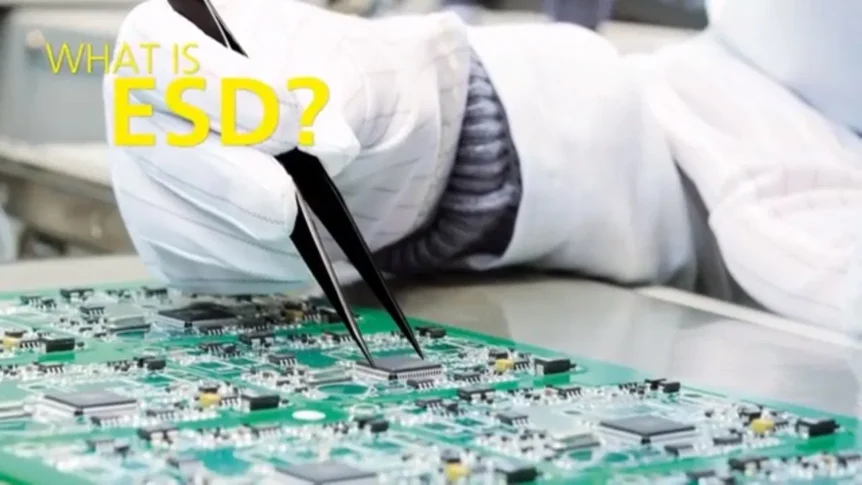
Electrostatic discharge can damage PCBs, sensors, power modules and battery-management components without producing visible evidence. For electronics production, testing, inspection, repair and e-mobility operations, selecting the right ESD workstation is therefore a quality and risk-management decision: not simply a furniture purchase.
The right specification supports yield, repeatable processes, operator safety and audit readiness. It also connects physical organisation with digital systems. An ERP or inventory platform may identify the correct SKU, but the operator still needs an accessible, controlled location in which to handle it.
This seven-step buying guide explains what to specify when creating an ESD Protected Area (EPA), from application and grounding requirements to storage, ergonomics, accessories, verification and warranty.
1. Define the ESD workstation application
The problem
A workstation designed for low-risk inspection may be unsuitable for soldering, rework or e-mobility electronics. Similarly, a bench that supports small PCBs may not have the load capacity or working area required for larger power modules.
Buying before defining the process creates compromises. Those compromises can increase handling errors, restrict future production changes and make ESD controls difficult to verify.
How It Works
Start by documenting:
- The components and assemblies being handled.
- The device sensitivity, including HBM and CDM requirements where available.
- Whether the station is used for assembly, testing, inspection, repair or rework.
- Equipment loads, including microscopes, test instruments, soldering systems and fixtures.
- The number of operators, shifts and product changeovers.
- Whether work is seated, standing or shared between both positions.
For e-mobility applications, also consider the dimensions and weight of battery electronics, inverters, sensors and high-voltage system components. The ESD specification must sit alongside electrical, fire and manual-handling risk assessments.
Practical Implementation Tips
- Observe the current process during a normal shift.
- List every item that must be within the operator’s reach.
- Identify the most sensitive device handled at the station.
- Measure the available floor space, access routes and adjacent storage.
- Compare the proposed layout with TEMA’s 7-Step Industrial Workbench Buying Guide.
An ESD workstation should be specified around the process, not selected from a catalogue based only on price or dimensions.
2. Specify the ESD workstation surface and grounding
The problem
Terms such as “anti-static” do not provide enough information for a controlled procurement decision. A surface may be described as static-safe without clear resistance data, test conditions or a defined route to earth.
A disconnected mat or unverified earth point creates the appearance of protection without a dependable control system.
How It Works
A suitable ESD workstation uses a static-dissipative surface and a defined grounding arrangement. The purpose is to control the movement of charge and reduce sudden potential differences between the operator, tools, work surface and device under test.
Specify:
- Surface resistance and resistance-to-ground data.
- A common point ground (CPG).
- A connection to a verified protective earth.
- Grounding provisions for mats and wrist straps.
- Compatible ESD flooring, footwear and accessories where required.
The current IEC 61340-5-1:2024 standard provides general requirements for protecting electronic devices from electrostatic phenomena. The ESD Association standards resource provides additional information on ESD programme development and related standards.
Practical Implementation Tips
- Request documented test data rather than accepting vague “ESD-safe” terminology.
- Confirm that the surface, frame and accessories are compatible.
- Ask how the CPG connects to the facility earth.
- Do not assume that a conventional metal bench is automatically suitable.
- Record the required resistance and grounding criteria in the purchase specification.
The surface is only one part of the system. A compliant ESD workstation must be connected, tested and maintained as part of the wider EPA.
3. Build the complete ESD Protected Area
The problem
A bench alone does not create an EPA. Operators, packaging, flooring, tools, chairs and storage can all introduce charge or expose sensitive components to unsuitable materials.
Partial implementation is a common weakness. For example, a correctly grounded bench may still be undermined by ordinary plastic containers or an ungrounded operator.
How It Works
A complete EPA may include:
- Wrist straps and wrist-strap testers.
- ESD footwear and dissipative flooring.
- ESD-safe chairs and standing supports.
- Suitable protective packaging for movement outside the EPA.
- ESD-safe tools, bins and component trays.
- Clear signage, boundaries and handling procedures.
- Operator training and routine verification.
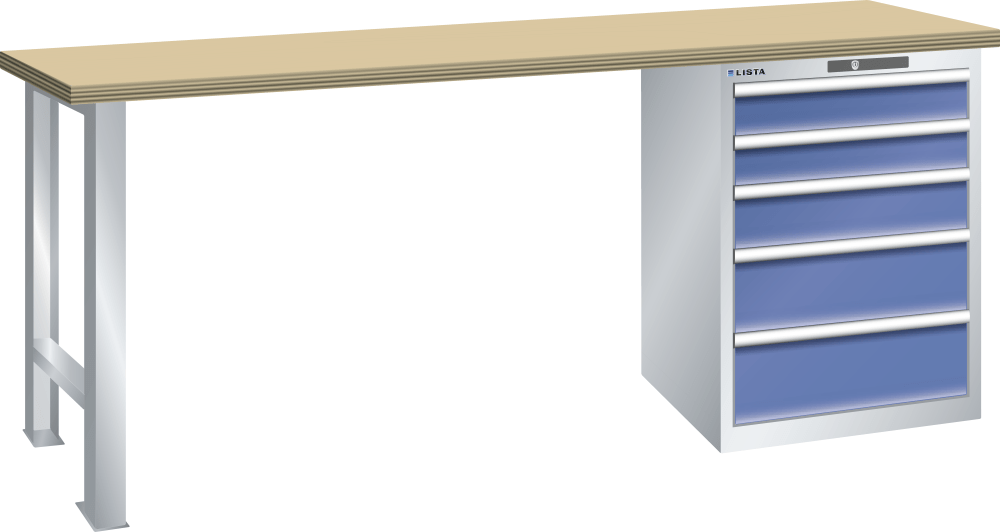
LISTA’s ESD workspace and storage solutions are designed as configurable systems. The product information explains that LISTA ESD equipment uses a specialist coating intended to dissipate charges in a controlled manner.
Practical Implementation Tips
- Define the EPA boundary with clear signage and floor markings.
- Keep unapproved packaging and insulators outside the handling zone.
- Test wrist straps and personnel grounding before work begins where required by your programme.
- Train contractors, visitors and temporary staff: not only permanent operators.
- Include ESD controls in 5S and internal audit routines.
Treat the EPA as a controlled production environment. The ESD workstation is its centre, but every connected process must support the same objective.
4. Integrate ESD-safe storage and tooling
The problem
Tools and components are often stored separately from the workstation. Operators then leave the EPA to retrieve items, place sensitive devices on unsuitable surfaces or use unapproved containers at the point of work.
This creates both ESD risk and motion waste.
How It Works
Point-of-use storage keeps tools, components and consumables within the operator’s normal reach zone. Suitable options include:
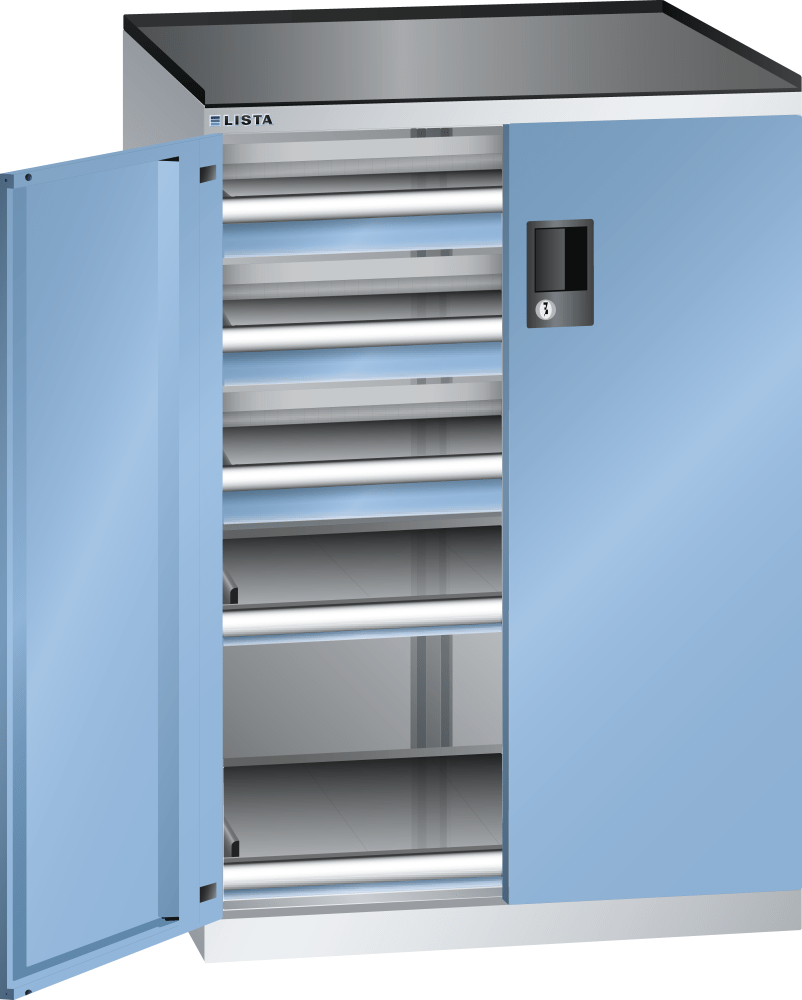
- Drawer cabinets with compartment dividers.
- ESD-safe bins and trays.
- Lockable storage for high-value equipment.
- Tool panels and vertical holders.
- Mobile drawer units for flexible production cells.
- Labelled locations linked to SKU or job references.
This approach supports JIT working and improves the physical accuracy of digital inventory systems. TEMA’s guide to the workbench with drawers explains how organised storage can reduce search time and improve housekeeping.
Practical Implementation Tips
- Apply the Pareto Principle: place the 20 per cent of tools used most frequently closest to the operator.
- Use dedicated locations for available, used, inspected and quarantined items.
- Label drawers and compartments consistently across production cells.
- Store heavy items where they can be handled safely.
- Confirm that storage materials and coatings are suitable for the EPA.
Good ESD workstation design includes the surrounding storage. Physical organisation is the bedrock of reliable digital efficiency.
5. Set ergonomics and height adjustment requirements
The problem
Electronics work can involve prolonged seated inspection, detailed manipulation and repeated changes between components and test equipment. A fixed-height bench may force operators to bend, reach or raise their shoulders.
Poor ergonomics also increases the likelihood of accidental contact, dropped components and inconsistent work.
How It Works
An adjustable-height ESD workstation can support seated and standing operation, subject to the equipment configuration and required adjustment range. Precision tasks may benefit from a higher surface, while larger assemblies or inspection tasks may require a different position.
Ergonomics should include the complete work cell:
- Worktop height and depth.
- Monitor and microscope position.
- Chair and foot support.
- Drawer and tool locations.
- Cable routing and adjustment clearance.
- Lighting and visual access.
TEMA’s adjustable-height workbench guide provides further guidance on task-specific working positions. The HSE manual-handling guidance should also inform site-specific risk assessments.
Practical Implementation Tips
- Trial the proposed height with actual operators and equipment.
- Keep frequently used items within the primary reach zone.
- Ensure drawers and cables do not restrict height adjustment.
- Record preferred settings for repeatable workstation layouts.
- Review the station whenever the product or operator group changes.
Ergonomic adjustment is not an optional comfort feature. It is a critical foundation for safe, consistent production.
6. Configure accessories and modular expansion
The problem
A basic bench may meet today’s requirement but become unsuitable when new products, test equipment or operators are introduced. Retrofitting accessories later can be costly and may compromise the original layout.
How It Works
A modular ESD workstation can combine:
- Overhead shelves and tool panels.
- Task lighting.
- Power and data management.
- Monitor arms.
- Drawer cabinets and mobile units.
- ESD mats and grounding points.
- Documentation holders and component rails.
LISTA’s production systems and LISTA storage range provide options for creating configurable production cells. Where general industrial strength is the priority, TEMA can also advise on heavy-duty workbench features.
Practical Implementation Tips
- Specify the frame, worktop, storage and accessories as one system.
- Allow spare capacity for future tools and SKUs.
- Check load ratings for the bench, drawers, shelves and castors.
- Plan power and data connections before installation.
- Pilot one workstation before standardising the configuration.
Modularity protects the investment by allowing the ESD workstation to develop with the operation.
7. Verify compliance, durability and warranty
The problem
ESD performance can deteriorate through contamination, damaged cords, worn mats, poor cleaning or changes to the layout. A workstation that passed an initial inspection may not remain effective without a verification programme.
Durability and supplier support also influence total cost of ownership.
How It Works
Before purchasing, ask the supplier for:
- Technical specifications and resistance data.
- Grounding and installation instructions.
- Recommended cleaning procedures.
- Verification and maintenance guidance.
- Spare-part availability.
- Warranty terms for frames, worktops and electronic components.
The IEC standard should be used as part of a documented ESD control programme rather than as a marketing label. TEMA also supplies durable LISTA and Thurmetall systems for industrial environments. Thurmetall products purchased through TEMA carry a five-year warranty, while workbench tops and electronic parts carry a one-year warranty, subject to the relevant product terms.
Thurmetall manufacturing is associated with ISO 9001, ISO 14001 and ISO 45001, covering quality, environmental and occupational health and safety management.
Practical Implementation Tips
- Establish a documented inspection schedule.
- Test grounding points, mats and personnel systems as required.
- Record failures, corrective actions and replacement dates.
- Include ESD equipment in planned maintenance.
- Review the EPA whenever equipment or process conditions change.
A well-supported ESD workstation should remain measurable and serviceable throughout its working life.
ESD Workstation Buying Checklist
| Requirement | Questions to ask |
|---|---|
| Application | What devices and processes will the station support? |
| Sensitivity | Are HBM, CDM or customer-specific requirements documented? |
| Surface | Is resistance data available for the worktop? |
| Grounding | Is there a verified CPG and earth connection? |
| EPA | Are footwear, flooring, packaging, tools and signage included? |
| Storage | Are ESD-safe drawers, bins and point-of-use tooling required? |
| Ergonomics | Will the station support seated, standing or shared work? |
| Expansion | Can lighting, power, monitors and storage be added later? |
| Verification | How will the system be tested, cleaned and maintained? |
| Support | What warranty, documentation and spare parts are available? |
Implementation Roadmap
- Audit the current process: Record ESD incidents, rework, search time and unnecessary movement.
- Define the specification: Document device sensitivity, equipment loads, operator requirements and EPA controls.
- Design the work cell: Position the bench, storage, tools, power, lighting and packaging around the real process.
- Pilot one station: Test the configuration with operators and measure quality, retrieval time and usability.
- Standardise and verify: Roll out the successful design, train users and schedule regular checks.
Key Takeaways
- An ESD workstation must be specified as part of a complete EPA.
- Surface performance and grounding require measurable, documented criteria.
- Wrist straps, flooring, footwear, packaging, tools and signage are essential parts of the wider system.
- ESD-safe storage keeps sensitive components and tooling controlled at the point of use.
- Adjustable height supports better seated and standing work when correctly configured.
- Modular LISTA systems can adapt as production requirements change.
- Verification, training and maintenance are non-negotiable.
- Compliance should be considered alongside durability, ISO-aligned manufacturing and warranty support.
Plan Your ESD Workstation with TEMA Solutions
Selecting an ESD workstation is a strategic investment in production quality, operator performance and long-term process control. The strongest solution is the one built around your devices, workflows, operators and future requirements.
TEMA Solutions can help you assess your current layout and configure LISTA or Thurmetall storage and workstation equipment for electronics, automotive and e-mobility applications. Explore the ESD workspace and storage solutions, review wider industrial storage solutions or browse available products through the TEMA Solutions shop.
Start by auditing one high-risk or high-friction workstation, then contact TEMA Solutions to specify a reliable ESD workstation around the way your team actually works.


