


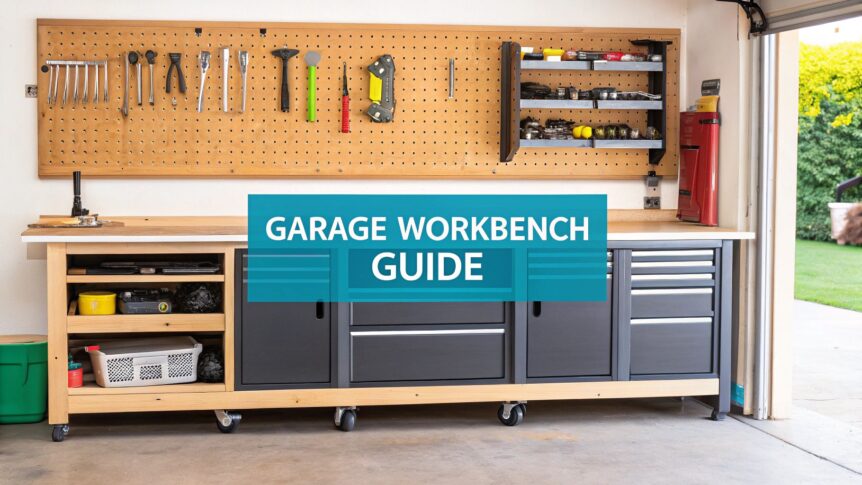
Right, let's get one thing straight: a proper garage workbench with storage is so much more than just a table. It's the very heart of your workspace, the command centre that brings a sense of order to the glorious chaos of any project. The best ones masterfully blend a sturdy work surface with built-in drawers, cupboards, and shelves, transforming a single piece of kit into the hub for everything you do.
Your Workshop's New Foundation
Think about your garage right now. For many of us in the UK, it’s less of a workshop and more of a dumping ground, isn't it? A graveyard for half-used paint tins, forgotten garden tools, and bits of wood you swear you'll use one day. A dedicated garage workbench with storage cuts right through that clutter. It’s the single most effective way to solve the twin problems of mess and inefficiency.
It really is the central nervous system for all your DIY tasks, repairs, and hobbies. It gives you a solid, dependable surface for everything from building flat-pack furniture to tinkering with the lawnmower. And all the while, its integrated storage keeps your tools organised and within arm's reach. Say goodbye to rummaging through that one massive toolbox or nervously pulling a drill from a teetering stack of containers.
Reclaiming Your Space for What Matters
Putting a good workbench in your garage does more than just hold your tools; it completely changes your relationship with the space. It carves out a specific zone for getting things done, drawing a clear line between 'storage' and 'workshop'. That simple change can make you vastly more efficient and, frankly, make the whole process a lot more enjoyable.
The real-world benefits become obvious pretty quickly:
- Tools Right Where You Need Them: Every spanner, screwdriver, power tool, and bit of safety gear gets its own spot. That means less time hunting and more time doing.
- A Safer Way to Work: A clean, stable worktop is infinitely safer than trying to balance a project on a wobbly box or, worse, the concrete floor.
- Tackle Bigger Projects: When you're organised, you feel more confident. Suddenly, those bigger, more ambitious jobs that seemed too much of a faff feel completely doable.
A garage workbench with storage isn't just another thing to put in your garage. It's the very foundation you build a safe, efficient, and productive workshop on. Think of it as an investment in your own ability to fix, make, and create.
This transformation from a cluttered shed into an active workshop has other perks, too. A well-organised garage is a definite plus point if you ever decide to sell your house. But more importantly, it unlocks the true potential of a space you already own. Whether you're into woodworking, fixing up cars, or fiddling with electronics, the right workbench is the cornerstone for creating a space that truly works for you. It’s the ultimate upgrade for any UK homeowner who’s ready to take back their garage and start getting things done.
Choosing the Right Workbench Material
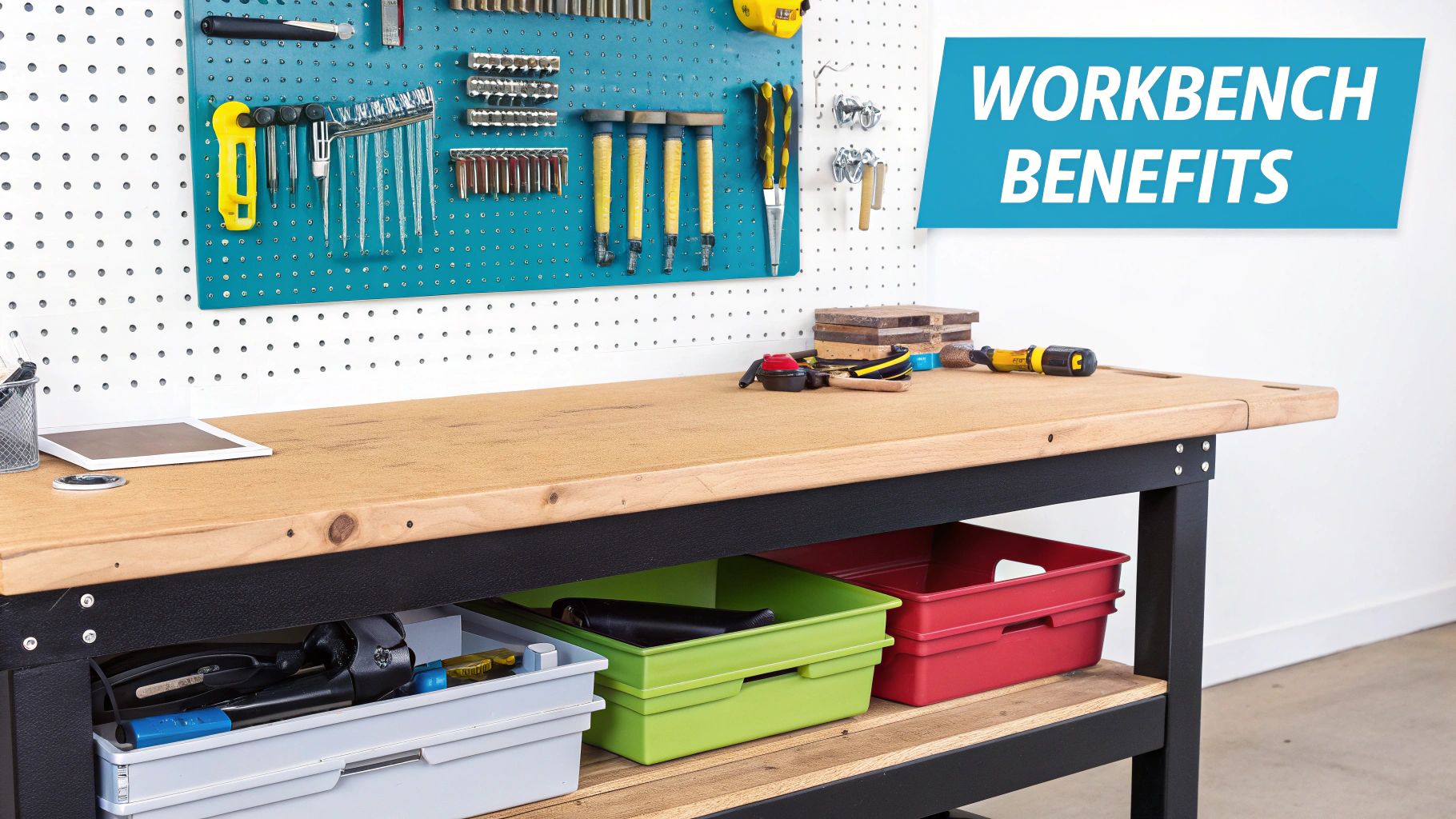
Picking the right material for your garage workbench with storage is a bit like choosing the right tyres for your car. You wouldn't put slick racing tyres on a Land Rover destined for off-roading, would you? The same logic applies here. The material is everything—it dictates your bench's durability, how much maintenance it needs, and what kinds of jobs it can handle.
A mechanic who’s constantly wrestling with oily engine parts has a completely different set of needs to a woodworker focusing on delicate joinery. Your choice of frame and worktop material is probably the single most important decision you'll make. It determines how your workbench performs and, crucially, how long it will last.
Let's break down the most common options to find the perfect fit for your workshop.
The Foundation: The Workbench Frame
Think of the frame as the skeleton of your workbench. It provides the core strength needed to hold up heavy gear and stand firm against years of hard use. For a proper garage setup, there are really only two contenders worth considering.
-
Heavy-Duty Steel Frames: For pure strength and durability, this is the undisputed champion. Steel frames, especially those with a powder-coated finish, are simply fantastic at resisting rust, corrosion, chemical spills, and the odd bash. That powder coating acts like a suit of armour, making the frame incredibly tough and dead easy to clean—a must-have in any busy garage.
-
Solid Wood Frames: While you don't see them as often in pre-built systems with built-in storage, wood frames have a classic, timeless appeal. They're strong and have a natural knack for dampening vibrations, which can be a real plus for certain types of precision work. The downside? They are more vulnerable to moisture, oil stains, and pests unless you seal and maintain them properly.
For most people's garages, a robust steel frame is the clear winner. It gives you a worry-free foundation that can take pretty much anything you can throw at it.
The Business End: The Work Surface
The worktop is where all the action happens. The ideal surface depends entirely on the kind of work you do. A surface that’s perfect for assembling electronics could be completely ruined by a few welding sparks.
Think of the work surface as the interface between you and your project. It needs to be tough enough for the job but also forgiving enough not to damage your materials. The right choice here is a balance between resilience and functionality.
Let's compare the most popular worktop materials you'll come across on a modern garage workbench with storage:
| Material | Key Advantages | Best For |
|---|---|---|
| Butcher Block | Durable, repairable, and won't damage tools. Offers a classic, warm aesthetic. | Woodworking, general assembly, and precision tasks where surface feel is important. |
| Solid Steel | Extremely durable, non-porous, and resistant to heat, oil, and chemicals. Easy to clean. | Automotive repair, welding, and heavy-duty metalworking. |
| MDF (Medium-Density Fibreboard) | Affordable and smooth. Often used as a base layer or on budget-friendly models. | Light-duty crafts, electronics, and general hobby use. Not ideal for heavy impact or moisture. |
| Laminate | Smooth, easy to clean, and resistant to stains and solvents. Available in many colours. | Electronics, light assembly, and tasks requiring a clean, non-conductive surface. |
This growing interest in creating truly functional, organised garage spaces isn't just a hunch; it's reflected in wider market trends. In fact, the UK's garage organisation and storage market is projected to grow at a compound annual rate of 6.7% between 2022 and 2028. This highlights a clear shift towards multifunctional garages where a high-quality workbench is seen as a core component, not just an afterthought. You can explore more about these market dynamics and see how the UK fits into the wider European picture.
Ultimately, selecting the right material comes down to being honest about your needs. For most serious DIYers and professionals, a heavy-duty steel frame paired with a solid steel or butcher block top offers the best long-term value and versatility. This combination ensures your garage workbench with storage isn't just a purchase, but a lasting investment in your workshop's capability.
Finding the Perfect Fit for Your Space
Let's be honest, even the most brilliant garage workbench with storage is completely useless if it doesn't actually fit in your garage. More than that, it needs to fit your workflow. It’s not just about squeezing it into a corner; it's about creating a genuinely functional workspace that doesn't leave you shuffling sideways to get past your car.
Before you even think about browsing models, grab a tape measure. Seriously, this is the most important first step. Measure the length, width, and height of the spot you've picked out. Don't forget to account for any pesky obstructions like windowsills, protruding pipes, power sockets, or even that slightly sloping bit of the floor that could throw everything off.
Think of it as mapping out your command centre in 3D. You need enough room to pull drawers all the way out, swing cupboard doors wide open, and move around the bench without tripping over yourself. A solid rule of thumb is to leave at least 90cm (about 3 feet) of clear space in front of the bench. This gives you enough breathing room to work safely and efficiently.
Decoding Workbench Dimensions
Once you've got your measurements, you can start matching them to standard workbench sizes. Most benches fall into a few common categories, which makes comparing them a whole lot easier.
-
Width (or Length): This is where you'll see the most variation. A compact bench for a small, single-car garage might be around 120cm (4 feet) wide. The sweet spot for most people is a standard 180cm (6-foot) model, which gives a great balance of worksurface and storage. If you've got a massive workshop, you can find benches over 240cm (8 feet) or even link modular units together for a custom run.
-
Depth: Most workbenches are between 50cm and 60cm (20-24 inches) deep. A deeper surface is fantastic for spreading out big projects, but it can make it a stretch to grab tools from a pegboard at the back. A shallower bench, on the other hand, is a real space-saver but might feel a bit tight for larger jobs.
-
Height: The magic number for ergonomics is a worktop height between 86cm and 96cm. This is the ideal height for most people to work without hunching over—a classic recipe for back pain after a few hours. A slightly lower bench is better for tasks where you need to put your weight into it, while precision work often feels more comfortable at a slightly higher surface.
This visual guide can help you see how your garage's size directly influences the best storage and material choices for your new setup.
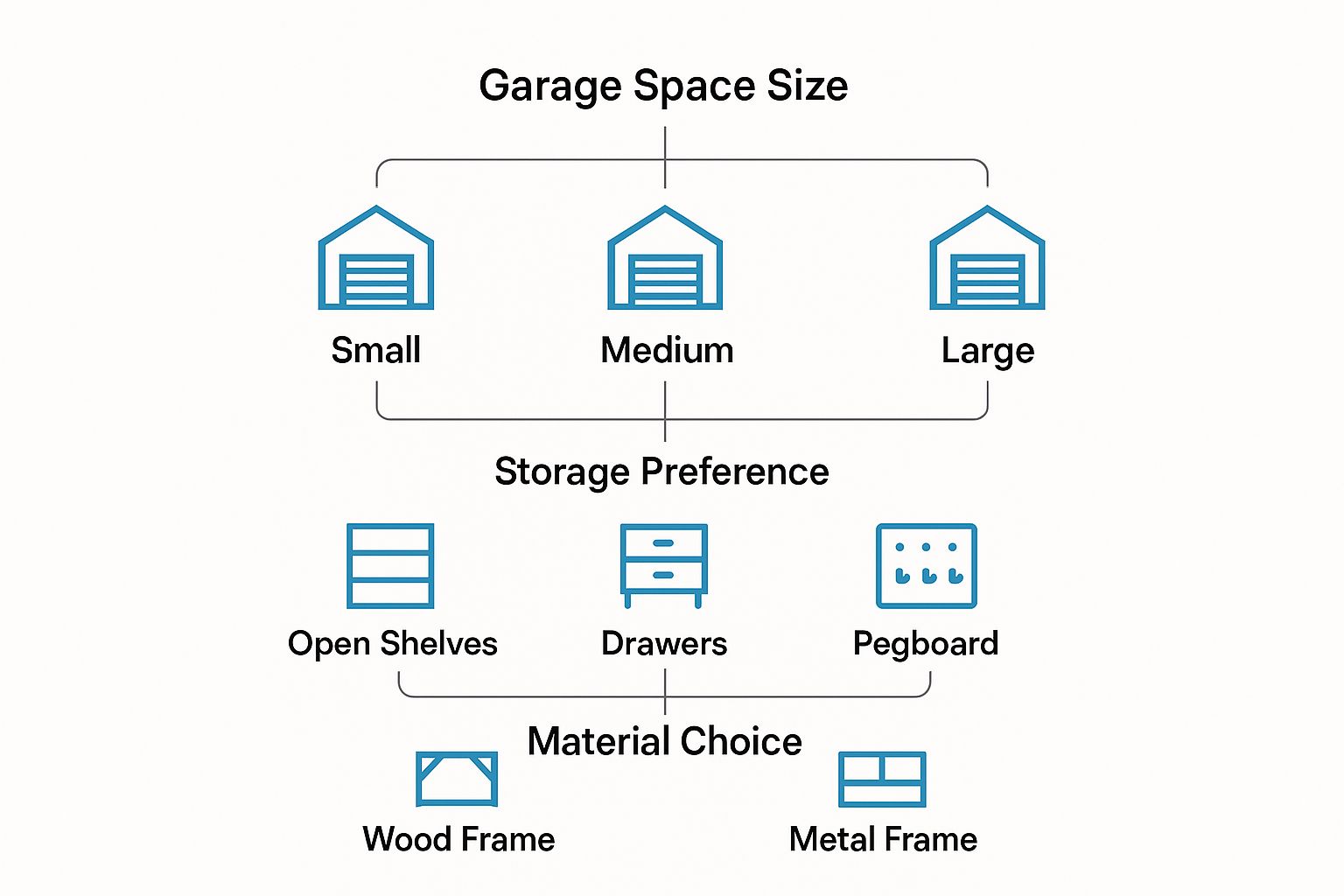
As you can see, it all starts with an honest look at your space. From there, the decisions about storage and materials start to fall into place naturally.
To make things even clearer, here’s a quick guide to help you match your garage size to the right workbench dimensions and storage setup.
Workbench Size and Storage Configuration Guide
A comparison of common workbench dimensions and storage configurations to help you choose the right fit for your garage size and project needs.
| Garage Size | Recommended Workbench Width | Ideal Storage Configuration | Best For |
|---|---|---|---|
| Single Car Garage | 120cm – 150cm (4-5 ft) | Compact unit with drawers and a pegboard backsplash. | Basic DIY, bike maintenance, small-scale hobbies. |
| Double Car Garage | 180cm – 200cm (6-6.5 ft) | A mix of drawers, cupboards, and overhead shelving. | Woodworking, car repairs, and larger projects. |
| Large Workshop / Triple Garage | 240cm+ (8 ft+) or Modular | Full modular system with wall cabinets, tool chests, and large cupboards. | Professional-level work, large-scale fabrication, storing extensive tool collections. |
Choosing the right size is the foundation, but the storage you build on top of it is what makes a workbench truly yours.
Matching Storage to Your Workflow
Beyond the raw dimensions, the storage configuration is what really makes a workbench work for you. This isn't a game of Tetris where the goal is to cram in the most drawers possible. It's about getting the right kind of storage for the tools and bits you actually use. A truly effective garage workbench with storage should feel like it was custom-made for your habits.
Take a moment to think about what you’ll be storing and how often you need to grab it.
Your workbench’s storage system is its personality. Is it organised and meticulous with dozens of small drawers, or is it a powerhouse built for bulky gear with large, open cabinets? Your projects will determine its character.
Here’s a look at the common options and what they're best for:
- Drawers: Absolutely perfect for organising hand tools, screws, and all those small parts. Shallow drawers are a godsend for stopping tiny items from vanishing into a jumble, while deeper ones are brilliant for power tools. Always check for smooth, ball-bearing slides—they make a huge difference.
- Cupboards: The go-to solution for hiding away bigger, bulkier items like paint tins, car cleaning supplies, or large tool cases. They keep the visual clutter to a minimum, making your whole garage feel tidier.
- Pegboards and Backsplashes: An absolute must for keeping your most-used tools like spanners, screwdrivers, and pliers right in front of you. This "grab-and-go" access is a massive time-saver and keeps you in the zone.
- Open Shelving: A flexible option for items you need to see at a glance, like storage bins or organisers. They’re incredibly practical but do require a bit of discipline to keep from looking messy.
By taking the time to measure your space properly and think through your workflow, you can pick a workbench that doesn't just fit—it will completely change the way you work for the better.
Key Features That Define a Quality Workbench
When you’re looking for a good garage workbench with storage, it’s easy to get bogged down by the basics like size and material. But the real difference between a standard bench and a genuinely high-performing one lies in the details. These are the thoughtful features that turn a simple table into the heart of your workspace, and knowing what to look for is the key to a smart purchase.
It's clear that homeowners across the UK are catching on. The market for garage organisation and storage hit about USD 2,042.1 million back in 2022. Tellingly, workbenches with drawers and cupboards accounted for a massive 42.93% of that. With the market expected to grow to USD 3,513.1 million by 2030, it’s obvious we’re taking our home workshops more seriously than ever. You can read more about these garage storage market projections to see just how big this trend has become.
Load Capacity and Stability Features
First things first: a workbench has to be solid. Its load capacity isn't just a number on a spec sheet; it's a direct promise of safety. A rating of, say, 500kg means you can confidently place heavy items like an engine block or mount a serious vice without a second thought, as long as the weight is spread out.
Just as crucial are the adjustable levelling feet. Let's be honest, most UK garage floors aren't perfectly flat—they’re often sloped for drainage. Without adjustable feet, your bench will wobble and shift, which is both annoying and dangerous. A quick twist of each foot lets you compensate for any unevenness, giving you a rock-solid platform to work on.
Smooth and Secure Storage Mechanisms
The quality of a workbench’s storage often comes down to how it feels to use it every day. The mechanics matter.
- Ball-Bearing Drawer Slides: I'd call this a non-negotiable feature. These allow drawers to glide open smoothly, even when packed with heavy spanners and sockets. It’s the difference between wrestling with a stuck drawer and having satisfying, one-handed access to your tools.
- Robust Locking Mechanisms: Look for a central locking system that secures all drawers and cupboards at once. This simple feature transforms your workbench into a secure safe for your valuable tools, giving you complete peace of mind. For more ideas on tool organisation, check out our guide to innovative storage for tools.
A workbench isn’t just a surface; it’s a system. The quality of its moving parts, like drawer slides and locks, directly impacts your daily workflow and the long-term security of your tools.
High-Value Functional Add-Ons
The very best workbenches often include integrated extras that make a huge difference to how you work. These aren't just gimmicks; they are practical additions that solve common workshop frustrations.
Here are a few high-value features to keep an eye out for:
- Integrated Power Strips: This is a real game-changer. Having power sockets built right into the frame means no more tripping over extension leads. It keeps your space tidy and safe, with power always at your fingertips for drills, chargers, and grinders.
- Built-in Lighting: Good light is essential for doing precise work safely. An integrated overhead LED strip illuminates your entire worktop, casting direct light exactly where you need it and eliminating annoying shadows.
- Protective Backsplashes: A simple backsplash, usually made of steel or pegboard, does two things brilliantly. It stops your screws and sockets from rolling off the back into oblivion, and it protects your garage wall from scratches, dinks, and oil splashes.
Top Workbench Models for UK Garages
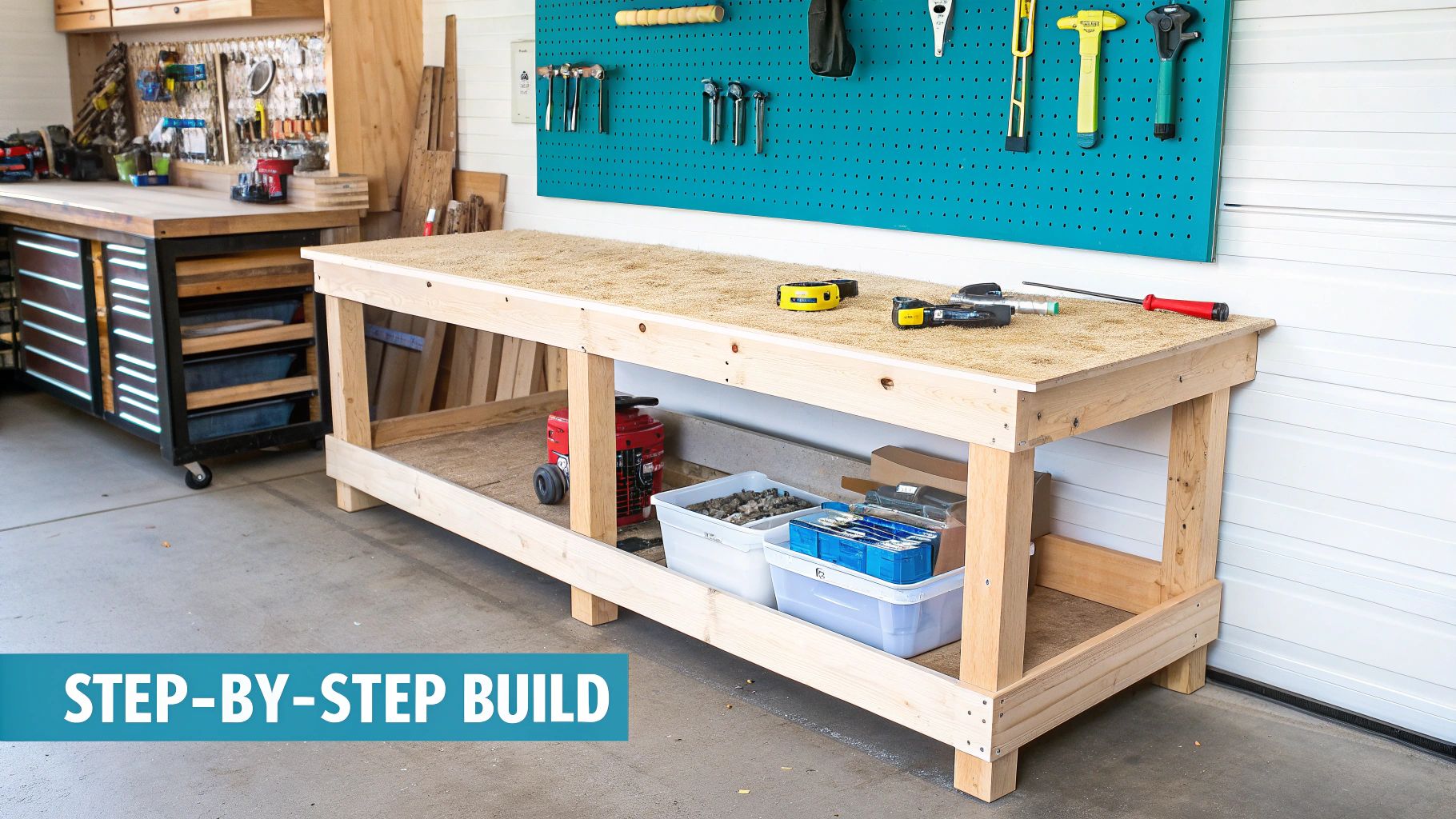
Alright, we’ve covered the theory. Now for the fun part: seeing how it all translates into real-world products. Choosing the right garage workbench with storage can feel like a huge task, but looking at a few top contenders will help you connect the dots between features and what you actually need for your garage.
To give you a head start, I've pulled together a few standout models that really shine in different scenarios. Whether you're stripping down an engine or fine-tuning a woodworking project, these examples will help you zero in on the perfect workbench for you.
For the Serious Automotive Enthusiast
If your garage is less about parking the car and more about serious mechanical work, you need a workbench that can take a beating. Think oil, grease, heavy components, and the occasional dropped spanner. For this, nothing beats a heavy-duty steel model.
Here’s what you should be looking for:
- A fully welded steel frame: This is non-negotiable for rigidity and gives you a massive load capacity, often well over 500kg.
- A stainless steel or thick wooden worktop: Stainless steel is the clear winner for resisting chemicals, but a solid butcher block top is fantastic at absorbing impacts from heavy parts.
- Deep, ball-bearing drawers: Your socket sets and power tools are heavy. These drawers glide open smoothly without sagging or jamming, which makes a world of difference.
- Integrated locking systems: Essential for keeping your expensive diagnostic tools and equipment safe and sound.
These workbenches are absolute workhorses. They're built for pure function, prioritising brute strength and durability over aesthetics. They are a serious investment, but one that pays for itself in safety and efficiency over many years of hard use.
For the Dedicated Woodworker or Hobbyist
A woodworker's needs are a bit different. While you still want a sturdy bench, the work surface itself becomes a crucial part of the process. It's less about resisting grease and more about providing a reliable, forgiving platform for your craft.
A woodworker's bench isn't just a table; it's a partner in the craft. The surface needs to be sturdy enough to clamp onto but gentle enough not to mar a delicate piece of timber. It's a balance of toughness and finesse.
Key features for woodworkers and crafters include:
- A solid wood worktop (butcher block): This surface is brilliant. It won't damage your projects, it’s perfect for detailed joinery, and you can even repair it by sanding and re-oiling to erase years of wear.
- A mix of drawers and cupboards: You need shallow drawers for chisels, marking gauges, and screws, alongside larger cupboards for storing jigs, sanders, and pots of varnish.
- A sturdy, vibration-dampening frame: The frame, often steel, needs to provide a rock-solid platform. Any wobble or vibration can ruin precision work, so stability is paramount.
This type of garage workbench with storage is a fantastic all-rounder for most DIYers, offering a classic workshop feel with smart, organised storage to keep you focused on the project at hand.
For the Compact, All-In-One Garage
Not everyone is working with a huge double garage. If you're trying to fit a capable workshop into a smaller space, a compact, all-in-one unit is your best bet. These are cleverly designed to squeeze maximum function out of every inch.
You’ll often see these models with a pegboard backsplash built right into the frame. It's a fantastic design choice that gives you instant vertical storage for your most-used tools, keeping your worktop clear without eating up any more floor space.
Many of these benches also offer incredible flexibility. While a fixed bench is great, some compact models are designed to move. For anyone with a multi-purpose garage, it’s worth checking our guide on choosing a workbench with wheels to see how a mobile setup could completely change how you use your space. They're stable when you need them and out of the way when you don't.
This makes them the perfect solution for balancing your hobbies with everyday needs, like parking the car. A compact garage workbench with storage is proof you don't need a massive space to have a well-organised and highly effective workshop.
How to Organise Your New Workspace
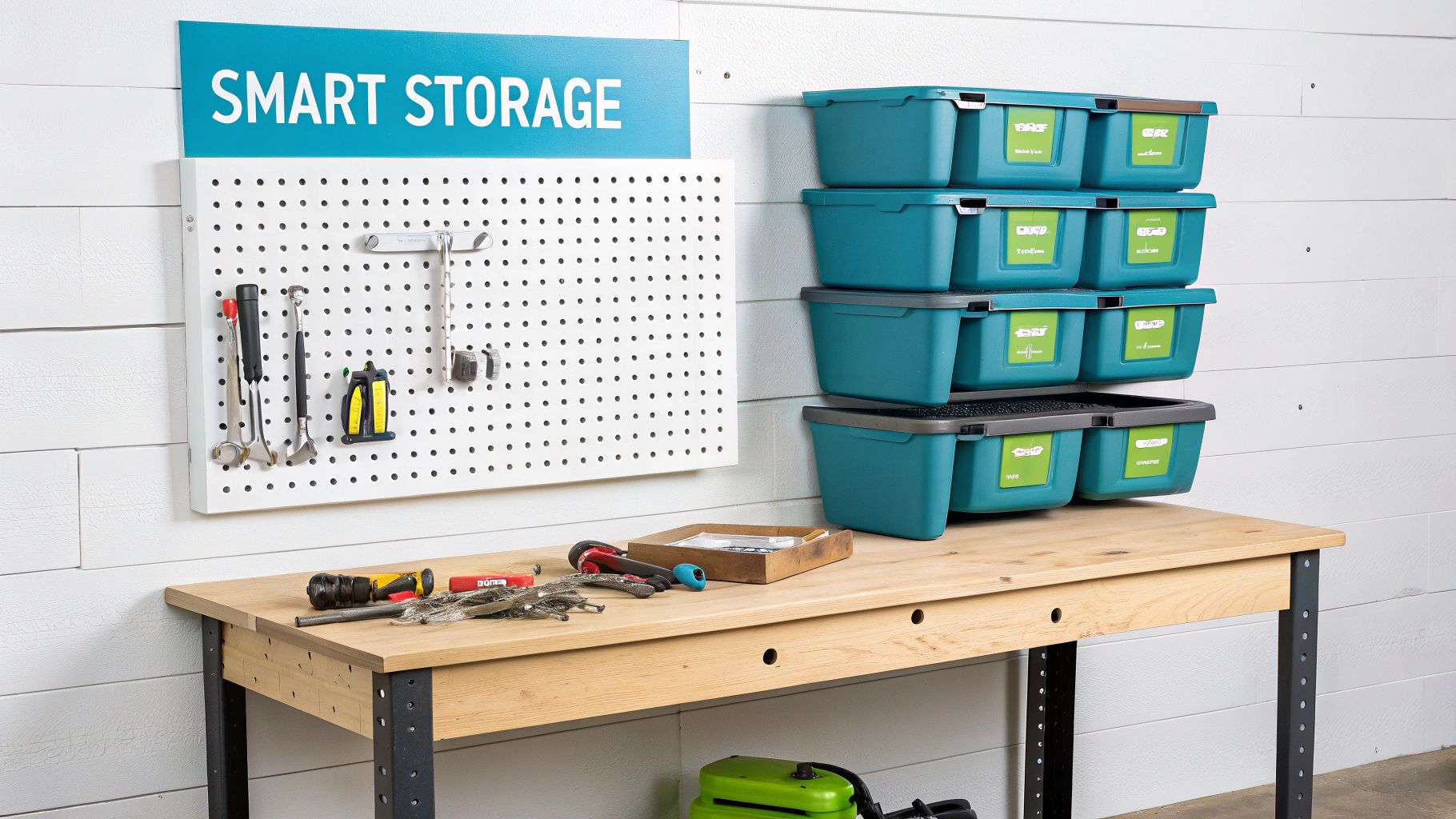
Right, your new garage workbench with storage is finally here. It’s built, feels solid, and is ready for you to get cracking. But hold on. Before you dive into your next project, the single most important job is to turn this blank canvas into a genuinely efficient workspace. A thoughtful layout is what separates a simple bench from a proper command centre.
First things first, let's get the installation spot on. Make sure the whole unit is perfectly level. Use the adjustable feet to get rid of any annoying wobbles, which is pretty common on garage floors. For real peace of mind, especially if you'll be using a vice or doing any heavy-duty work, anchor the workbench securely to the wall studs. It’s a small step that stops any chance of it tipping over and gives you a rock-solid base to work from.
Once the bench is fixed in place, the real art of organisation can begin. The aim isn't just to tidy things away; it's to build a system so natural that you can grab what you need without even thinking about it.
Create Logical Tool Groupings
The best way to get your storage sorted is to group items by what they do or how often you reach for them. Think of your workbench drawers and cupboards as specific zones for different jobs. This "zoning" method cuts out all that wasted time rummaging around for a particular tool.
Here are a few ideas to get you started:
- Electrical Zone: Dedicate one drawer to your multimeter, wire strippers, soldering iron, and various tapes.
- Fasteners Hub: Pop some small, clear dividers in a drawer to keep different sizes of screws, nails, bolts, and washers apart.
- Painting & Finishing Station: A cupboard is ideal for keeping paint tins, brushes, sandpaper, and fillers all in one place.
- Precision Instruments: Your measuring tapes, calipers, and squares should live in a shallow, protected drawer to keep them safe from knocks and damage.
This isn't just a niche idea; it’s part of a bigger trend. Homeowners are increasingly looking to get the most out of their garage space. In fact, garage cabinets and workbenches with storage are set to be the fastest-growing part of the UK garage organisation market. People clearly want more than just a dumping ground; they want a functional, orderly workspace at home.
An organised workbench doesn't just look better—it actively makes you better. When every tool has a home, your mind stays focused on the project, not on the frustrating hunt for a missing screwdriver.
Supercharge Your Setup with Add-Ons
The built-in storage on your bench is a great start, but a few clever additions can take its functionality to a whole new level. These accessories help you use every last square inch of your new workspace.
Consider these simple but powerful upgrades:
- Magnetic Tool Bars: Stick these on the wall above your worktop or on the side of a steel cabinet. They’re brilliant for keeping frequently used tools like spanners, pliers, and hex keys within instant reach.
- Custom Drawer Dividers: Stop your drawers from becoming a jumbled mess. You can get foam inserts or adjustable plastic dividers to create a perfect spot for every single tool, keeping them neat and protected.
- Clear, Labelled Bins: For all those small, loose bits like fixings or electrical connectors, clear bins are a lifesaver. Label each one, and you’ll be able to see exactly what you have and grab what you need in seconds.
By combining a secure installation with a smart, zoned storage plan, your new bench becomes so much more than just a piece of furniture. If you’re looking for a solid foundation to build on, our selection of professional work and storage benches is the perfect place to start. A bit of organisation now will keep your workspace clean, intuitive, and ready for whatever you decide to tackle next.
Your Top Workbench Questions Answered
Even after you've weighed up all the options, a few questions tend to crop up just before you commit. Getting solid answers to these common queries can be the final piece of the puzzle, giving you the confidence that you're picking the right garage workbench with storage for your UK workshop.
Let's clear up some of the most frequent questions we get asked. Think of this as a final chat with an expert to iron out any last-minute doubts.
What Is the Best Height for a Garage Workbench?
This one is all about ergonomics, which is just a fancy way of saying comfort and safety. As a rule of thumb, the top of your workbench should sit roughly at the height of your wrists when your arms are hanging relaxed at your sides. For most people, that magic number is somewhere between 86cm and 96cm.
But the job itself changes things:
- Heavy-Duty Work: If you're doing anything that needs serious muscle, like sawing or heavy hammering, a slightly lower bench gives you better leverage and stability. You can really put your weight into it.
- Precision Work: For fine-detail tasks like electronics or model-making, a slightly higher surface is a back-saver. It brings the work closer to eye level, so you aren't hunched over for hours.
Should I Anchor My Workbench to the Wall?
Without a doubt, yes. Securing your workbench to the wall studs is a non-negotiable safety step, especially if you plan on doing anything more demanding than sorting screws. It stops the whole thing from wobbling, sliding, or worse, tipping over when you're using a vice or putting some real force into a job.
Anchoring a workbench isn't just a good idea; it's what separates a piece of garage furniture from a proper, safe work platform. It makes your bench a solid, dependable part of the room's structure.
Any decent workbench kit should come with the right brackets, making this an essential and straightforward part of the setup. Don't skip it.
Are Mobile Workbenches a Good Investment?
For a garage that has to do double-duty (workshop one minute, car park the next), a mobile workbench on castors can be a stroke of genius. It gives you incredible flexibility. You can wheel your entire workspace out into the middle of the floor for a big project, then tuck it away against the wall when you're done, freeing up all that space.
The secret lies in the wheels. Make sure you get a model with heavy-duty, locking castors. This is crucial, as it ensures your bench is rock-solid and stays put once you've got it where you want it.
Ready to build a workspace that’s as organised as it is efficient? Explore our professional-grade workbench and storage systems at TEMA Solutions Limited and find the perfect foundation for your workshop. See the full TEMA Solutions range and get started.


