


When you're fitting out a warehouse, one of the biggest line items on your budget is always the racking. Opting for a used pallet rack system is a direct route to shrinking that initial investment, often slicing 40-60% right off the top compared to buying new. Those are significant savings you can pump back into other critical areas of your business—think more inventory, better equipment, or hiring another pair of hands.
The Real Benefits of Choosing Used Racking
Let's be frank: the sticker price is what first turns heads towards used pallet racking. But any seasoned warehouse manager will tell you the real value runs much deeper than just the initial outlay. Choosing second-hand isn't just about pinching pennies; it’s a smart, strategic move that pays off financially, operationally, and even environmentally. It's about staying nimble, keeping a tight rein on costs, and running a more responsible operation.
Financial and Operational Agility
The cost savings are, of course, the most immediate and obvious win. By spending less on your storage infrastructure, you free up vital cash flow. For a growing business or any company navigating a tight budget, that kind of financial flexibility is gold.
Just as crucial, though, is immediate availability. Lead times for brand-new racking can be a real headache, sometimes stretching out for weeks or even months. What if you land a new contract or see a sudden spike in demand? You can’t afford to sit around and wait. Used racking is nearly always in stock and ready to go, meaning you can get it delivered and installed fast, scaling up your storage capacity almost overnight.
A Greener Footprint and a Growing Market
Choosing used racking is also a genuinely sustainable choice. You're giving high-quality, durable steel a second life, which cuts down on the need for new raw materials and avoids the energy-hungry manufacturing process that comes with it. It’s a practical way to support your company's green initiatives and contribute to a circular economy.
By reusing perfectly good steel racking, you're not just cutting costs; you're actively lowering your warehouse's carbon footprint. It’s a win for your budget and a win for the planet, all without sacrificing performance.
It's no surprise that demand for these systems is on the rise. The global pallet racking market, already valued at USD 10.6 billion, is expected to nearly double by 2035. This massive growth, spurred on by e-commerce and manufacturing, is feeding a strong UK market for used pallet racking as more businesses look for efficient, affordable ways to expand. You can read more about these market trends over at Future Market Insights.
New vs Used Pallet Rack: A Quick Comparison
To really see the difference, it helps to put the two options side-by-side. Here’s a straightforward comparison to help you weigh the pros and cons.
| Factor | New Pallet Racking | Used Pallet Racking |
|---|---|---|
| Initial Cost | High upfront investment required. | Significant cost savings (40-60% less). |
| Availability | Can have long lead times (weeks or months). | Typically in stock and ready for immediate install. |
| Customisation | Fully customisable to your exact specifications. | Limited to available stock; less customisation. |
| Eco-Impact | High carbon footprint from manufacturing. | Low environmental impact by extending product life. |
At the end of the day, a professionally inspected and properly installed used system delivers nearly all the practical benefits of a new one. When you understand the full scope of a storage racking system, you can confidently make a choice that aligns with your budget, your timeline, and your operational goals without feeling like you've had to compromise.
How to Inspect Used Racking Like a Pro
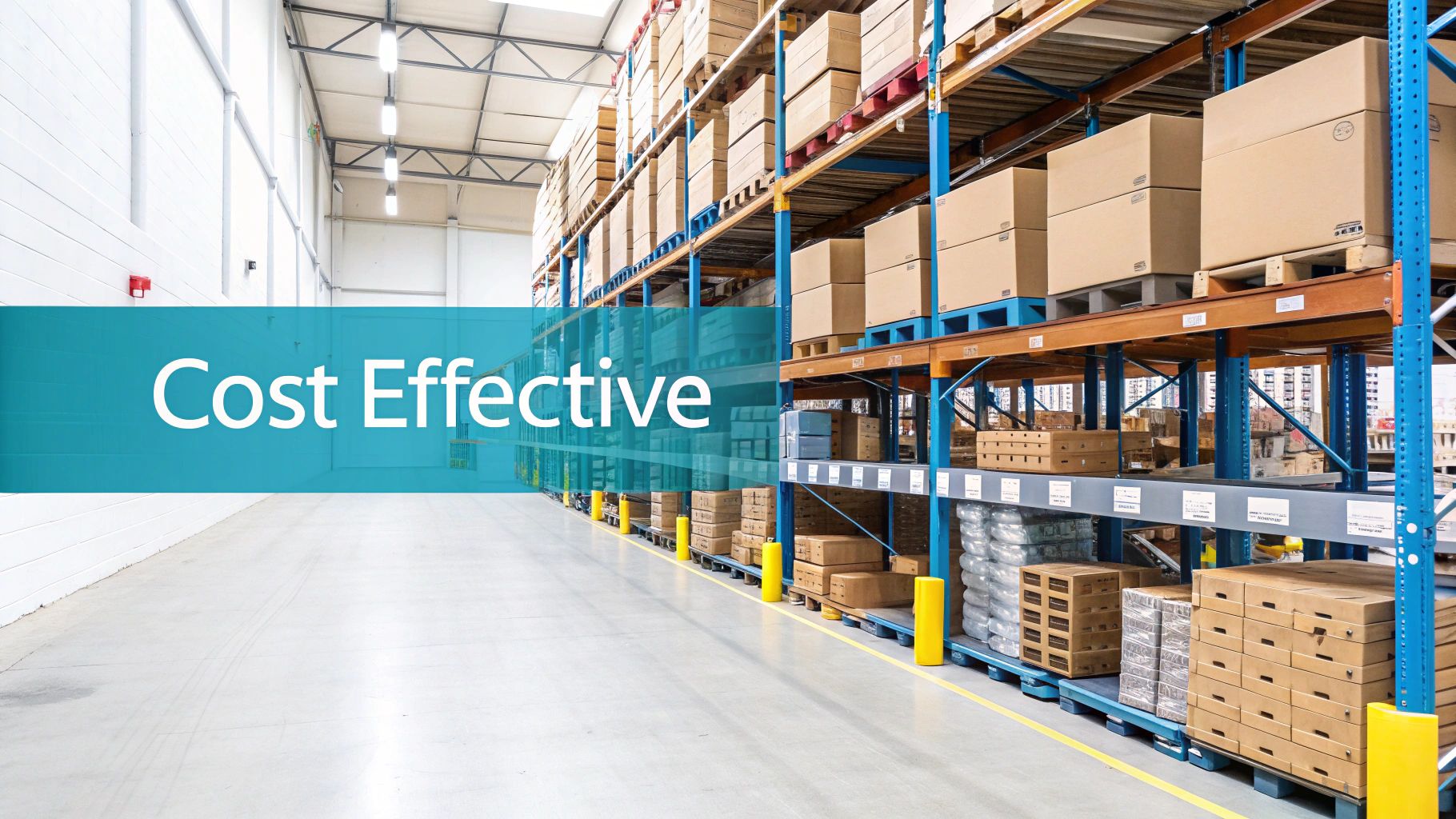
Buying used pallet racking isn't like picking up a second-hand desk. You're buying a structural system where integrity is everything—it's directly linked to your team's safety and your stock's security. A cheap deal on dodgy racking can quickly turn into a disaster, costing you far more in the long run.
That’s why a thorough, in-person inspection is non-negotiable. You have to get past the online photos and get your hands on the components. I always recommend bringing a few simple tools: a decent torch, a small spirit level, a tape measure, and your phone's camera to document what you find. These bits of kit are brilliant for uncovering hidden problems you might otherwise miss.
Focusing on Uprights and Bracing
The upright frames are the skeleton of your racking, so they need the most attention. Start with the obvious stuff. Look for dents, deep gouges, and twisted sections—all classic signs of a run-in with a forklift. These are immediate red flags.
But to really know what you're looking at, you need to go a bit deeper. Grab your torch and run the light along the length of the steel posts. You’re hunting for the subtle clues that tell a story of past abuse.
- Faint Ripples or Waves: Shine your torch at a shallow angle. If you see faint, wavy lines in the steel, it’s often a sign of compression damage from being consistently overloaded.
- Hairline Cracks: Look very closely where the horizontal and diagonal bracing is welded to the main posts. These are major stress points, and it's where tiny, dangerous cracks love to hide.
- Dodgy Repairs: Keep an eye out for any amateur welding jobs, patches of fresh paint in just one spot, or bolted-on splices that clearly aren't from the manufacturer. These so-called "fixes" are a serious gamble and completely invalidate the frame's rated capacity.
Any upright that isn't perfectly vertical is a problem. A slight lean, which you can easily spot with your spirit level, creates an uneven load that puts the whole bay at risk.
Don't ever let a seller tell you a dent is "just cosmetic." Any deformation in a load-bearing column reduces its capacity in ways you can't calculate without an engineer. If it's dented, twisted, or has been re-welded, just walk away. It’s not worth the risk.
Scrutinising the Beams
Once you’re happy with the frames, it’s time to look at the horizontal load beams. These are the components that carry the direct weight of your pallets, so their condition is just as crucial.
A great way to check them is to lay a few on a flat, level floor. A healthy beam should be perfectly straight. If it has a permanent sag or bow in the middle, it’s been overloaded and its strength is compromised. That’s a deal-breaker.
You also need to give the connectors on each end of the beam a proper look-over. Check for:
- Damaged or Bent Connector Pins: These are what lock the beam into the upright. If the pins are bent, sheared, or missing entirely, the beam is unsafe to use.
- Cracks Around the Welds: The point where the end connector plate is welded onto the beam is a high-stress area. Get your torch out and inspect it closely for any hairline fractures.
- Missing Safety Clips: Every beam must have a safety clip or bolt to stop it from being accidentally knocked upwards and dislodged by a forklift. Make sure these are present and correct for the specific racking system you're inspecting.
Get to Know the Seller and the Racking’s History
When you buy a used pallet rack, you’re not just getting steel; you’re inheriting its entire backstory. Who you buy it from and where it’s been are just as critical as its physical condition. A bargain from a questionable seller can turn into an expensive, and frankly dangerous, problem down the line.
Think of it like interviewing a candidate for a job. You need to vet the seller properly to tell the difference between a reputable dealer and someone just trying to offload scrap metal. Any decent supplier will be open and honest, ready to answer detailed questions about the racking’s origin and its previous job.
This background check on the racking is non-negotiable. The environment it came from directly affects its current state and how long it will safely last in your own warehouse.
Asking the Right Questions to Uncover the Story
Don't hold back when it comes to digging for details. The quality and confidence of the seller’s answers speak volumes. Here are the essential questions you should be asking:
- "Which specific facility did this racking come from?" A straight answer tells you they know their stock and have a clear chain of custody. If they get shifty with answers like "a warehouse down south," that’s a major red flag.
- "What kind of products were stored on it?" This is crucial. It helps you understand the stress the system has been under. Racking that held lightweight boxes has had a much easier life than a system used for dense, heavy materials like engine blocks or stone slabs.
- "Were any parts ever repaired or replaced?" There's a world of difference between professional, documented repairs and a dodgy weld job done by an amateur. Undisclosed fixes can seriously compromise the entire system’s structural integrity.
- "Why was the racking taken out of service?" Was it a simple warehouse reconfiguration? A business closure? Or, more worryingly, did it fail an inspection?
The answers build a picture. You’ll feel a lot more confident buying a system from a clean, well-run food distribution centre than one from a chaotic, high-turnover site known for forklift "cowboys".
A pro tip: Always ask if the racking came from a cold storage or outdoor environment. The constant freeze-thaw cycles in a freezer can cause metal fatigue over time. Outdoor use is even worse, exposing the steel to rust and UV damage that isn't always obvious at first glance.
The UK's booming e-commerce market has led to a steady stream of good quality, second-hand racking becoming available. With the global pallet racking market valued at USD 12.5 billion and forecast to reach USD 19.7 billion by 2031, warehouses are constantly expanding and reconfiguring. You can dig into the numbers on pallet racking market growth. This turnover is a great opportunity for savvy buyers, but it also means you have to be extra diligent.
Key Checks for a Safe and Compatible Installation
Getting a great deal on a used pallet rack system is a brilliant start, but the real work begins with the installation. This is where the value is truly realised. A safe, correct assembly isn't just a goal; it's an absolute necessity. Even the smallest oversight can compromise the structural integrity of the racking and put your entire team at risk.
I can't stress this enough: never mix and match components from different manufacturers. It's one of the most common and dangerous mistakes I see. A beam from one brand might seem to slot perfectly into an upright from another, but you can't see the minute differences in steel thickness, engineering tolerances, or the design of the locking mechanism. These tiny variations create hidden weak points that can, and often do, fail under load. Doing this immediately invalidates any safety certification and introduces a massive, unknown risk into your operation.
Building from the Ground Up
Before you even think about putting a single piece of steel together, your focus needs to be on the floor. Your concrete slab needs to be able to handle the immense weight concentrated at the foot of each upright. A professional floor load assessment isn't a 'nice-to-have'—it's essential. Without it, you're literally building on a foundation of guesswork.
Once you’ve confirmed the floor is up to the job, the next step is anchoring everything correctly. You must use the right type and number of floor fixings for your specific concrete slab and the racking's design. This is absolutely not the place to try and save a few pounds. A rack that isn't anchored properly is an accident waiting to happen.
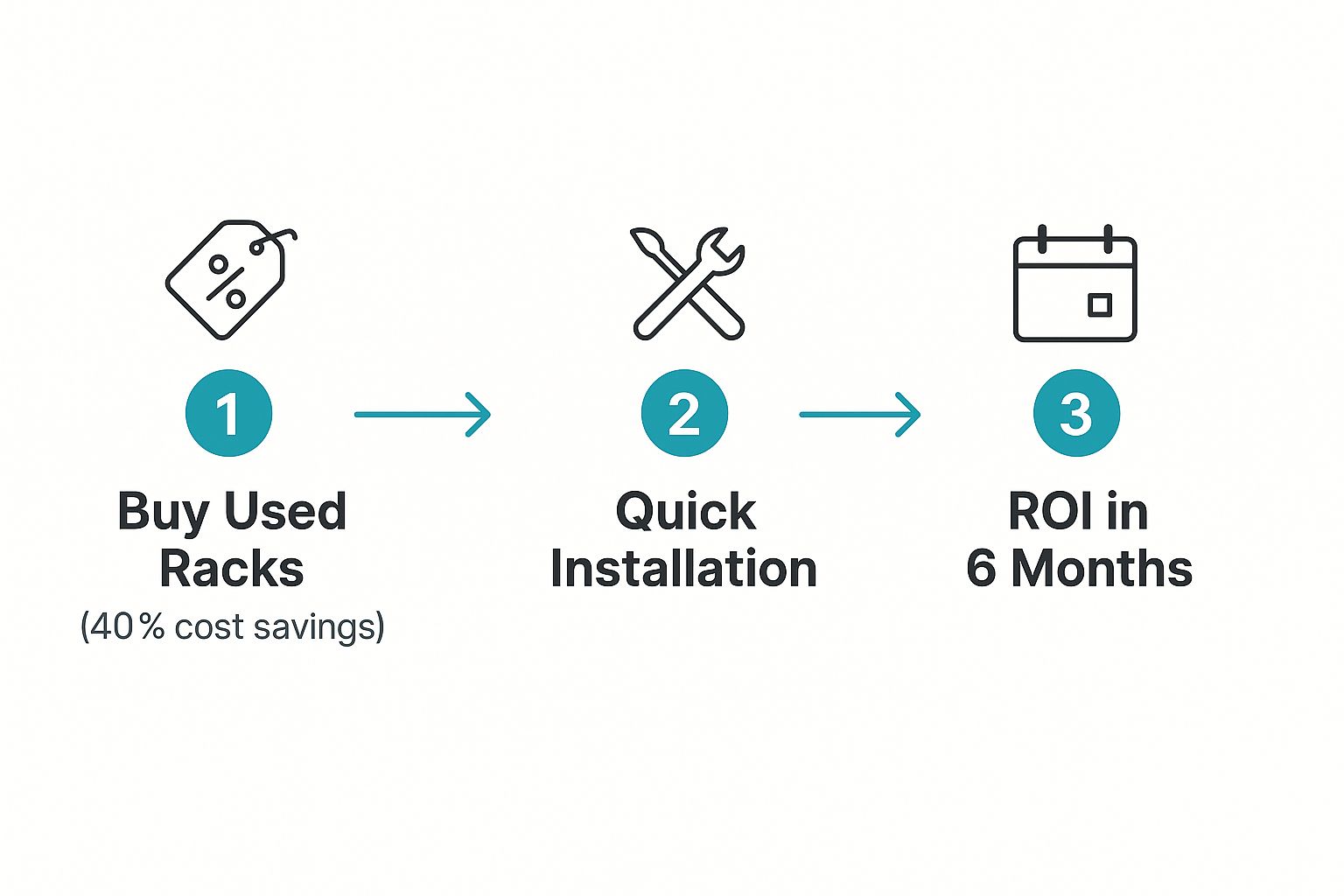
As you can see, a smart purchase followed by a professional, efficient installation leads directly to a faster return on your investment.
Don’t forget the locking pins and safety clips. These small but mighty components are what secure the beams to the uprights, stopping a forklift from accidentally lifting a beam and its load clean off. Always make sure you have the correct, manufacturer-specific clips for your system, and check that every single beam has them properly fitted.
To keep track of these crucial safety measures, it's helpful to use a structured checklist throughout the process.
Used Racking Installation Safety Checklist
This checklist breaks down the essential safety actions you need to take before, during, and after installing your used pallet racking.
| Phase | Key Action | Reasoning |
|---|---|---|
| Pre-Installation | Verify floor load capacity. | Ensures the concrete slab can support the total weight of the fully loaded system without cracking or failing. |
| Pre-Installation | Confirm component compatibility. | Prevents mixing parts from different manufacturers, which compromises structural integrity and safety. |
| Pre-Installation | Source correct safety pins/clips. | Guarantees beams are securely locked into the uprights, preventing accidental dislodgement. |
| During Installation | Use the specified type and number of floor anchors. | Properly secures the racking to the floor, preventing tipping or movement under load. |
| During Installation | Ensure the structure is plumb and level. | A perfectly vertical and horizontal installation distributes weight as designed and maintains stability. |
| Post-Installation | Affix clear, accurate load notices to each bay. | Informs operators of the maximum safe working load, preventing dangerous overloading. |
| Post-Installation | Schedule a final inspection by a qualified person. | Provides an independent, expert verification that the system is correctly assembled and safe for use. |
Following these steps methodically will give you confidence that your racking is not just functional, but fundamentally safe.
When to Bring in the Professionals
While you and your team can handle many of the initial checks, there are situations where calling in an expert is non-negotiable. This is especially true if the original manufacturer’s load data plates are missing or illegible.
Without the official load notices, you have no way of knowing the safe capacity of your racking. Trying to guess or estimate these figures is a recipe for disaster. From a safety and legal standpoint, the system is unsafe until proven otherwise.
In this scenario, you must hire a SEMA Approved Racking Inspector (SARI) or a qualified structural engineer. They have the knowledge and tools to assess the used components, analyse the design, and calculate its true safe load capacity. They will then issue new, compliant load notices, which makes your system safe and legal to use. If you're storing particularly heavy items, understanding the different types of heavy duty racks for storage will give you a better grasp of what the inspector is looking for.
Finally, it’s always best practice to have a SARI conduct a final inspection after your team has finished the installation. This gives you an independent sign-off that the job has been done correctly and is ready for operation. It's the ultimate peace of mind and a vital part of building a responsible safety culture in your warehouse.
Keeping Your Racking Safe and Ready for the Future
Your responsibility doesn’t stop once the last bolt is tightened. Looking after your used pallet racking is an ongoing job, one that protects both your investment and, more importantly, your team. Think of it less as a chore and more as a smart strategy to get the most out of your system for years to come.
The great thing is, this doesn't have to be complicated. A simple, regular inspection routine carried out by your own staff is the best way to catch small problems before they spiral into something much more serious and costly.
Creating a Simple In-House Inspection Plan
The best defence you have against racking damage is a sharp-eyed team. It’s absolutely vital to train your staff, especially your forklift operators, on how to load and unload pallets correctly and safely. A single moment of carelessness is behind most rack damage, so a bit of education goes a very long way.
Give your team the tools to help you out. A straightforward checklist for a quick weekly or monthly walk-through empowers them to spot and report issues. Here’s what they should keep an eye out for:
- Fresh Damage: Any new dents, deep scrapes, or twisted-looking parts on the uprights and beams.
- Secure Components: Double-checking that all beams are properly slotted in and that the safety clips are present and firmly engaged.
- Solid Foundations: Making sure all base plates are securely bolted to the floor, with no wobbly or loose anchors.
- Signs of Strain: Looking for any overloaded beams that are starting to bow or frames that are leaning.
A well-maintained used racking system isn’t a second-rate option; it’s a flexible asset. If you look after it, you can easily reconfigure it as your warehouse layout changes, saving you the expense of buying new all over again.
Adapting as Your Warehouse Evolves
Your racking is the backbone of your warehouse efficiency. As your business grows and your needs change, a good-quality used racking system offers fantastic adaptability. This fits perfectly with the wider industry shift towards more flexible and sustainable logistics.
In fact, the global pallet racking market is growing fast, projected to expand from USD 12.18 billion to USD 20.18 billion by 2029. This boom is partly driven by the rise of warehouse automation, which creates demand for reliable racking that can work alongside modern systems. You can learn more about how these trends shape modern warehouse storage solutions.
By committing to a straightforward maintenance schedule and training your people, you're not just ticking a box. You’re making sure your used pallet rack remains a safe, effective, and valuable part of your operation for the long haul.
Common Questions About Used Pallet Racks
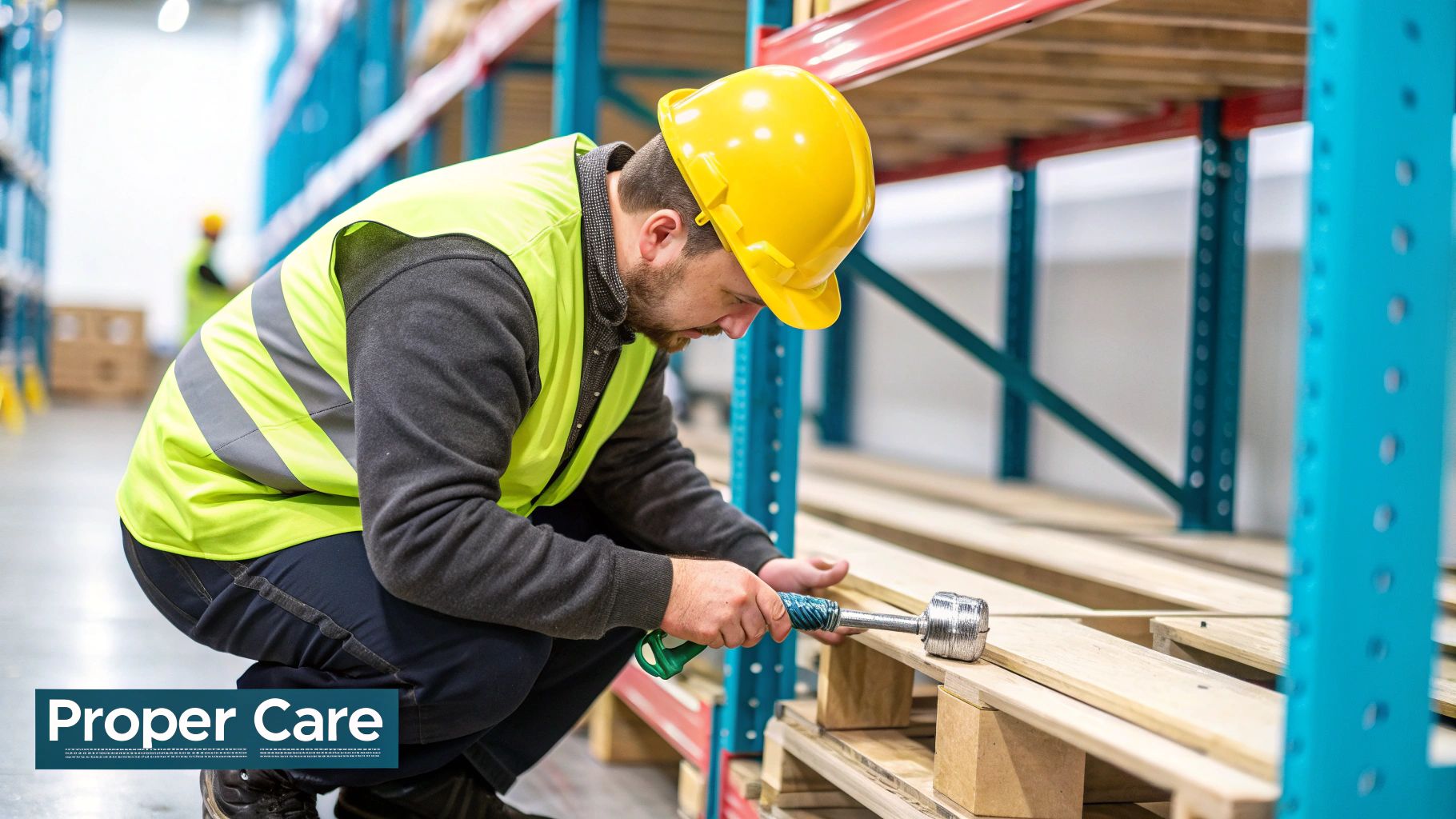
Even after doing your homework, a few lingering questions often pop up when you're about to invest in a used pallet rack system. That's completely normal. Getting clear answers to these final queries is what helps you make the decision with confidence. Let's tackle some of the most common questions we hear from people just like you.
For anyone new to the world of industrial storage, understanding exactly what racks are is the first step. Think of them as the backbone of your warehouse—structural systems built for efficiency and, above all, safety. This holds true whether you're buying them brand new or second-hand.
Is Buying Used Pallet Racking Actually Safe?
Yes, absolutely—but there's a big 'if'. It's only safe if you've done your due diligence properly. The safety of any used system really comes down to three things: a detailed inspection, buying from a trustworthy seller, and getting it installed by professionals.
The most important part is checking the condition for yourself. Be prepared to walk away from any components with visible damage, serious rust, or dodgy-looking repairs. For complete peace of mind here in the UK, the gold standard is getting a SEMA Approved Racking Inspector (SARI) to sign off on the system after it's been installed.
Can I Mix Components From Different Racking Brands?
Let me be crystal clear: no. This is one of the cardinal rules of warehouse safety, and breaking it is a gamble you never want to take.
I've seen it before—a beam from one brand looks like it slots perfectly into an upright from another. But looks can be deceiving. There are subtle, invisible differences that can lead to catastrophic failure.
These can include tiny variations in:
- The gauge and grade of the steel
- The engineering and manufacturing tolerances
- How the locking mechanism is designed to engage
The moment you mix parts from different manufacturers, you invalidate all official load ratings. You’re left with a structure that has an unknown, unquantifiable risk of collapse. Always, always stick to components from one single manufacturer for each continuous run of racking.
If a seller tries to offer you a mixed assortment of components, that’s a massive red flag. A reputable supplier knows the dangers and would never sell a system like that. It screams inexperience and a total disregard for safety.
What if the Racking Is Missing Its Load Capacity Plates?
This one isn't a grey area. If a used rack system doesn't have its official manufacturer load capacity plates, you cannot legally or safely use it. Simple as that. Never guess, assume, or try to use data from a similar-looking rack. Until its capacity is properly verified, the system is unsafe.
The only way forward is to bring in a qualified structural engineer or a SARI. They have the expertise to assess the components and the overall design to calculate a new, official safe working load. Once their assessment is complete, they will issue brand-new, compliant load notices that must be fixed clearly onto the racking.
At TEMA Solutions Limited, we're committed to fitting out your facility with storage solutions that are not just effective, but fundamentally safe. Discover our selection of industry-trusted racking and storage systems built for reliable, long-term performance. Visit https://tema-solutions.co.uk to find the perfect solution for your workspace.


