


Don't think of workplace safety compliance as some tedious, bureaucratic checklist. It's much more fundamental than that. It’s the very foundation that keeps a business strong, ethical, and standing for the long haul. Essentially, it’s the ongoing, active process of following the laws, regulations, and standards put in place to protect everyone who walks through your doors. Without it, you’re building your entire operation on shaky ground.
Why Workplace Safety Compliance Matters
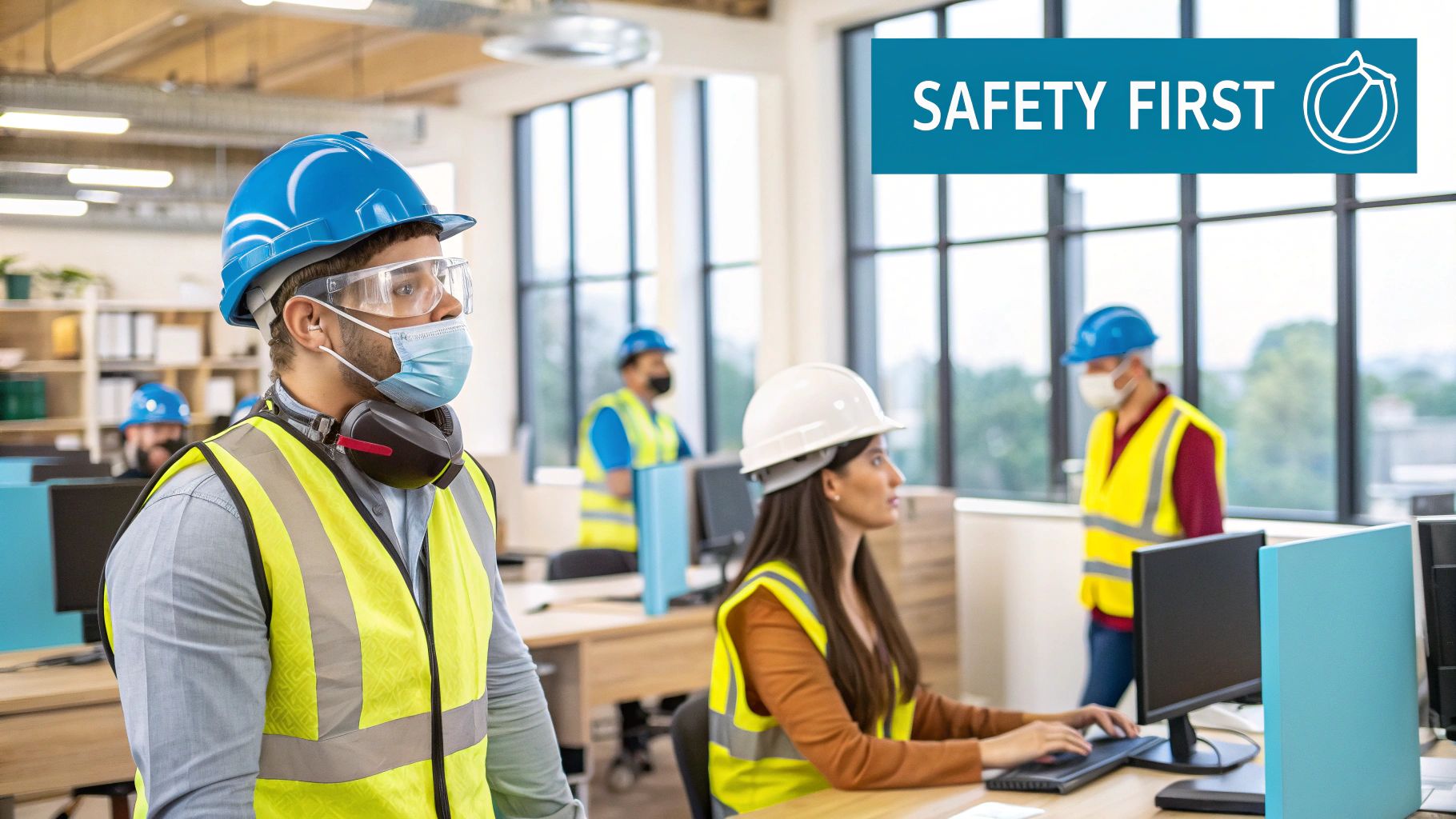
When you strip everything else away, workplace safety compliance boils down to one simple, non-negotiable idea: every single employee should go home in the same condition they arrived in. It’s not just about following rules for the sake of it. It’s a core business strategy that protects your people and secures your company's future. A proactive approach to safety isn't an expense; it’s an investment in stability, reputation, and getting the job done right.
Failing to take this duty seriously can have devastating consequences. One single incident can set off a catastrophic chain reaction—leading to life-changing injuries, crippling fines, and a damaged reputation that’s incredibly difficult to repair. Getting ahead of the game with proactive compliance is your best defence against these enormous risks.
The Role of the Health and Safety Executive (HSE)
In the UK, the main body overseeing health and safety at work is the Health and Safety Executive (HSE). The HSE is an independent regulator with a straightforward mission: to prevent death, injury, and ill health in the workplace. They do this through a range of activities that every business needs to be aware of.
Getting to grips with the HSE’s role is crucial for any UK business. Their key responsibilities include:
- Setting Standards: The HSE is responsible for creating the regulations and Approved Codes of Practice (ACOPs) that make up the legal rulebook for workplace safety.
- Enforcement Action: Their inspectors have the power to enter any workplace, carry out investigations, and enforce the law. This can be anything from an improvement notice demanding changes, right up to criminal prosecution.
- Providing Guidance: The HSE offers a massive library of resources and advice to help businesses understand what they need to do to stay on the right side of the law.
- Research and Data: They also conduct vital research into workplace risks and publish statistics, which helps shape safety strategies across the country.
Think of the HSE as setting the "rules of the road" for safety. They aren't the enemy; they provide the map. Following their guidance is the surest way to build a compliant and genuinely safe working environment for your team.
Beyond the Rules: A Culture of Safety
Real workplace safety compliance goes far beyond just ticking boxes. It's about weaving a genuine culture of safety into the DNA of your entire organisation. This is where safety becomes a shared value, embraced by everyone from the managing director right down to the newest apprentice on the workshop floor.
You can see a strong safety culture in action. It’s there when a team member feels confident enough to stop a job they think is unsafe, without any fear of being penalised. It’s present in the daily toolbox talks where potential hazards are openly discussed, and it’s evident when near-misses are reported and learned from, not swept under the carpet.
This is the shift that turns compliance from a reactive chore into a proactive, people-first commitment. When you build this foundation, you create a business that isn't just legally sound—it's productive, trusted, and, most importantly, safe.
Decoding UK Health and Safety Regulations
Getting to grips with the UK’s health and safety laws can feel like a daunting task, but it all boils down to a few clear, logical principles. Real workplace safety compliance isn't about memorising every line of legislation. It’s about understanding what these rules actually ask of you as an employer and translating that into practical, everyday actions in your workshop, factory, or warehouse.
The bedrock of it all is one crucial piece of legislation: The Health and Safety at Work etc. Act 1974 (HSWA). Think of this as the constitution for British workplace safety. It doesn't get bogged down in specifics for every single hazard. Instead, it lays out the broad, non-negotiable duties for both employers and employees, setting the fundamental expectation that employers must protect the "health, safety and welfare" of their people, so far as is reasonably practicable.
The Employer's Duty of Care
Under the HSWA, your most important legal responsibility is your duty of care. This is a direct obligation to do everything reasonably possible to keep your staff—and anyone else affected by your work, like contractors or visitors—safe from harm. This overarching duty is the foundation upon which all other, more specific regulations are built.
But the law is clear that safety isn’t a one-way street; it's a shared responsibility. Your employees have duties, too. They must take reasonable care of their own safety and that of others, and they’re required to cooperate with you to help you meet your legal obligations. This creates a genuine partnership for keeping the workplace safe.
A core principle of UK law is that safety is a collaborative effort. While the employer holds the ultimate responsibility for creating a safe system of work, every individual plays a part in upholding the standards.
Core Regulations You Must Know
Flowing from the main Act are several key regulations that tackle specific risks you'll find in industrial settings. These aren't just rules on a page; they're your practical guidebook for managing common hazards. While our focus here is on UK regulations, it can be useful to see how other frameworks operate. For instance, looking at a comprehensive guide to OSHA safety training requirements in the US can provide some interesting comparative insights.
For any industrial or workshop environment, three regulations pop up time and time again:
- RIDDOR (Reporting of Injuries, Diseases and Dangerous Occurrences Regulations 2013): This is all about official reporting. RIDDOR tells you exactly when and how you must report serious workplace accidents, certain occupational diseases, and specific dangerous incidents (often called near-misses) directly to the Health and Safety Executive (HSE).
- COSHH (Control of Substances Hazardous to Health Regulations 2002): If your team handles any kind of hazardous substance—from everyday cleaning chemicals and paints to industrial solvents and fumes—COSHH is for you. It requires you to assess the risks, put control measures in place, and give your team the right information and training to prevent harm.
- LOLER (Lifting Operations and Lifting Equipment Regulations 1998): This applies to any business that owns, operates, or has control over lifting equipment. That covers a huge range, from forklift trucks and cranes to simple hoists and even passenger lifts. LOLER demands that this gear is fit for purpose, clearly marked, and regularly examined by a competent person.
To help you see how these pieces fit together, the table below gives a quick snapshot of the key regulations and what they mean for you in practice.
Key UK Health and Safety Regulations at a Glance
| Regulation Name | Primary Purpose | Key Employer Responsibilities |
|---|---|---|
| Health and Safety at Work etc. Act 1974 | Establishes the fundamental legal framework. | Ensure employee health, safety, and welfare. |
| RIDDOR 2013 | Mandates the reporting of specific incidents. | Report serious injuries, diseases, and dangerous occurrences to the HSE. |
| COSHH 2002 | Governs the control of hazardous substances. | Conduct risk assessments and control exposure to harmful materials. |
| LOLER 1998 | Ensures the safe use of lifting equipment. | Plan lifts properly and ensure equipment is inspected and maintained. |
| PUWER 1998 | Regulates the safety of all work equipment. | Ensure all equipment is suitable, safe, maintained, and used correctly. |
This overview should give you a clearer picture of the main legal duties you hold. By understanding the purpose behind each regulation, you can move from simply "complying" to actively creating a robust and effective safety culture.
The True Cost of Non-Compliance
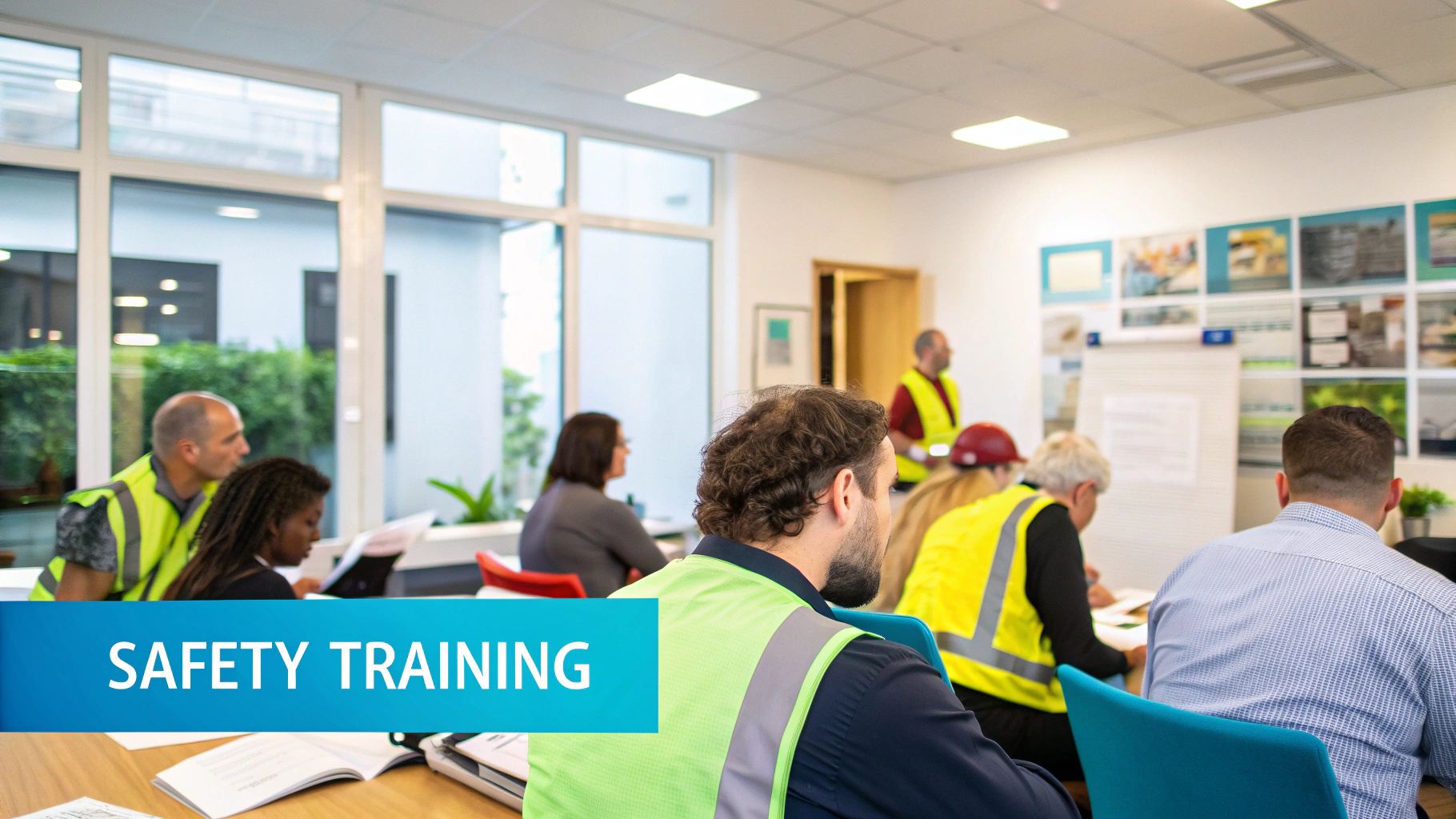
It’s tempting to view workplace safety compliance as just another box to tick, maybe even a corner you can cut when deadlines are looming. But let's be clear: ignoring safety isn't a calculated risk. It's a guaranteed loss just waiting for its moment. The consequences aren't abstract concepts in a manual; they are real, severe, and can cripple a business from every angle.
Let's walk through a scenario that plays out far too often. A small manufacturing firm is under pressure to fulfil a big order. To save time, they skip the daily pre-use checks on a forklift. An experienced operator, David, flags a small hydraulic leak but is told by his manager to "just get the job done." A few hours later, the forklift’s brakes fail as he’s lowering a heavy pallet. The load crashes down, striking a younger colleague, Liam, and causing life-altering injuries.
The immediate aftermath is one of shock and trauma. For the business owner, however, the nightmare has only just begun. That single decision to cut a corner unleashes a torrent of devastating outcomes, bringing the true cost of non-compliance into sharp, painful focus.
The Human Toll of Safety Failures
The first, and most tragic, cost is always human. Behind every statistic is a person whose life has been shattered, and a family and community left to pick up the pieces. The story of David and Liam isn't just a dramatic example; it’s a reflection of a grim reality.
These incidents are depressingly common. The Health and Safety Executive's figures for 2023/2024 show that 138 workers were killed in work-related accidents. Falls from height and being struck by moving vehicles were responsible for around 70% of these deaths, with construction once again topping the list as the most dangerous industry.
Beyond fatalities, the numbers are staggering. There were over 604,000 self-reported non-fatal injuries and 61,663 officially reported under RIDDOR. Work-related ill health is a colossal issue, affecting an estimated 1.7 million workers and leading to 33.7 million lost working days. And the financial penalties are keeping pace—the fines for health and safety breaches have been climbing, with some of the largest penalties on record seen in 2025. You can see a breakdown of the highest UK health and safety fines on Skillcast.com.
The emotional damage is just as devastating. For the business owner in our story, the guilt will be a heavy weight. For David, the trauma of harming a colleague is a lifelong burden. For Liam and his family, their entire world has been turned upside down. This is the unquantifiable, human price of getting it wrong.
Financial Fallout Beyond the Fines
While the human cost is rightly our primary concern, the financial fallout from a safety incident can be an extinction-level event for a business. The fine from the HSE, as hefty as it might be, is often just the tip of the iceberg. The real damage runs much, much deeper.
"A workplace accident is like an earthquake. The initial tremor is the incident itself, but the aftershocks—legal fees, insurance hikes, lost productivity, and reputational damage—can bring the entire structure down."
Let’s tally up the bill for the business owner from our forklift story:
- HSE Fines and Legal Fees: A prosecution by the HSE can easily result in fines hitting hundreds of thousands, or even millions, of pounds, depending on the company's turnover and the severity of the failure. On top of that, legal fees will add tens of thousands more.
- Soaring Insurance Premiums: After a major incident, your Employers' Liability insurance premiums will go through the roof. Some insurers might even refuse to offer cover at all, making it legally impossible for you to continue trading.
- Lost Productivity and Downtime: The incident area will be cordoned off for investigation, grinding production to a halt. Key staff members might be off with injuries, suffering from trauma, or tied up in interviews, causing huge operational delays.
- Reputation and Brand Damage: Bad news travels fast. Word of a serious safety failure can destroy customer trust, lead to cancelled contracts, and make it incredibly difficult to recruit skilled staff, who are understandably wary of employers with a poor safety record.
When you add it all up, it’s a perfect storm of financial pressure. A shortcut taken to save a few minutes on a safety check ends up threatening the very survival of the business. The message couldn't be clearer: investing in robust workplace safety compliance isn't an expense—it’s essential protection against total financial ruin.
Your Practical Guide to Risk Assessment
Effective safety management doesn't start with a rulebook. It starts with a good, hard look at your actual workplace. A solid risk assessment is, without a doubt, the single most powerful tool you have for achieving workplace safety compliance. Think of it less like a document to file away and more like a live roadmap, guiding you away from danger and helping you prevent harm before it ever has a chance to happen.
The process itself doesn't need to be overly academic or complicated. The Health and Safety Executive (HSE) champions a straightforward, five-step approach that any business, big or small, can get to grips with. Mastering this cycle is the cornerstone of building a genuinely safe environment for everyone.
Step 1: Identify the Hazards
First things first: you need to spot what could actually cause harm. Take a walk through your workshop or warehouse. As you go, think critically about the activities, machinery, and substances that have the potential to injure someone. A hazard can be anything from trailing cables and unguarded machine parts to chemical fumes or the strain of repetitive heavy lifting.
Don't just look for the obvious stuff, though. Your best source of information is often your own team. Chat with the people who do the jobs day in, day out; they have an unparalleled insight into the real-world risks they face. Remember to consider long-term health hazards too, like persistent noise or dust exposure, not just the immediate safety threats.
Step 2: Determine Who Might Be Harmed
Once you have your list of hazards, the next logical step is to think about who might be affected and how. This isn't about writing down individual names but about identifying groups of people. For instance, your machine operators are clearly at risk from moving parts, while warehouse staff might be more concerned about forklift traffic.
It’s crucial to think beyond your full-time staff. Don't forget people who aren't always on-site:
- Cleaners and maintenance staff who often work outside of normal hours and in different conditions.
- Visitors and contractors who will be completely unfamiliar with your site's layout and procedures.
- Members of the public, especially if your work could potentially affect them beyond your site's boundaries.
Step 3: Evaluate Risks and Decide on Controls
This is where you weigh things up. You need to decide how likely it is that a particular hazard will cause harm and, if it does, how severe that harm could be. Armed with that knowledge, you can then implement control measures to either eliminate the risk entirely or, if that’s not practical, reduce it to an acceptable level.
For example, managing forklift traffic requires a combination of controls: clear signage, designated pedestrian walkways, and perhaps even physical barriers. These controls are absolutely vital for maintaining organised and safe warehouse storage solutions.
A risk assessment is a continuous cycle of improvement, not a one-time task. As your business evolves—with new machinery, processes, or people—your assessment must evolve with it to remain effective.
Step 4: Record and Implement Your Findings
If you have five or more employees, the law says you must record your significant findings. This written record is your proof that you’ve done the assessment and shows exactly what control measures you've decided to put in place. It should be a simple, practical document that clearly outlines the hazards, who is at risk, and your plan of action.
This diagram shows the typical flow of events after something goes wrong, which really highlights why getting the assessment right beforehand is so important.
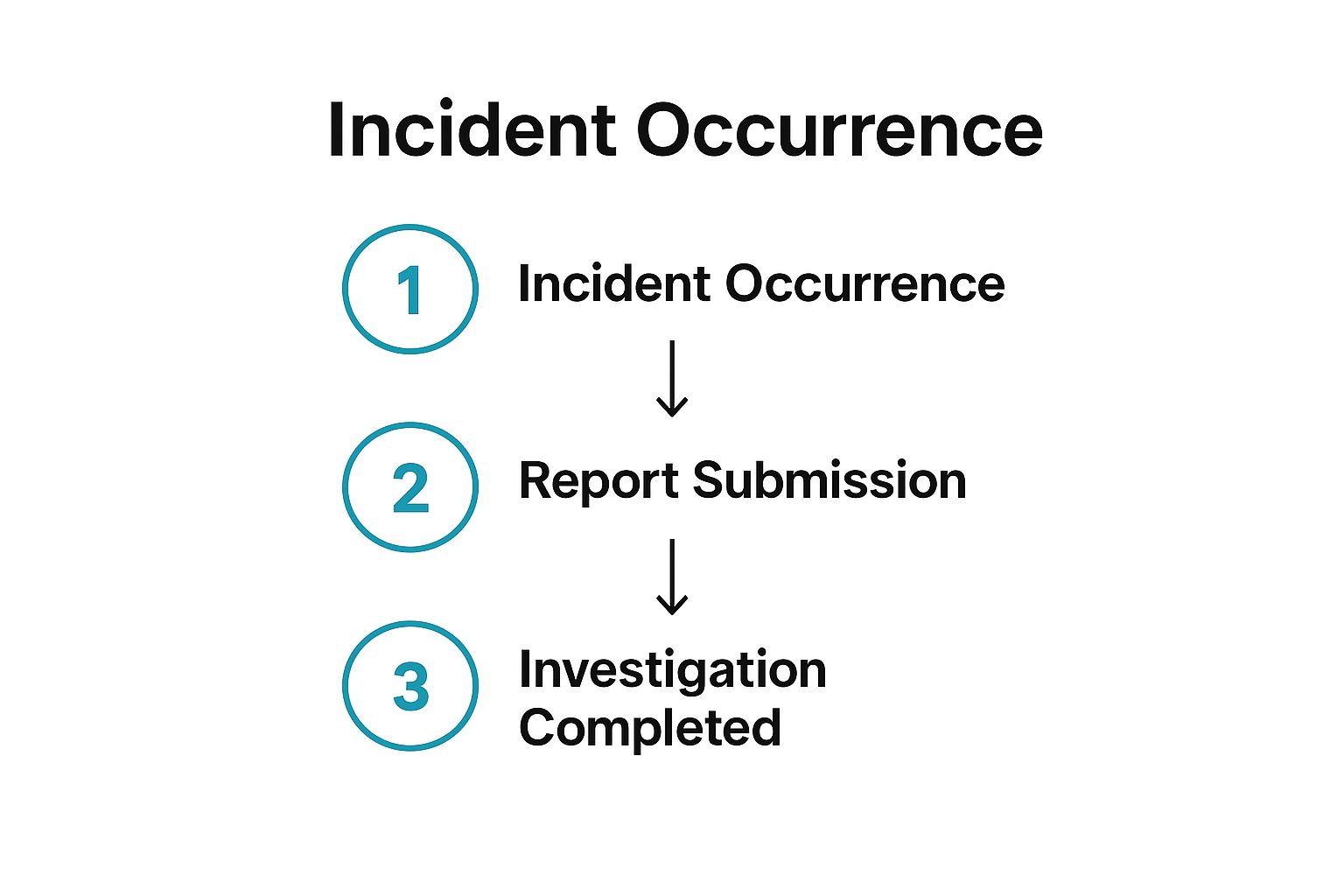
The key takeaway here is that while a structured response is essential, the entire purpose of a good risk assessment is to stop that "Incident Occurrence" box from ever being ticked in the first place.
Step 5: Review and Update Regularly
Finally, never treat your risk assessment as a finished product. It's a living document that needs attention. You must review it regularly—good practice suggests at least annually—and update it immediately whenever there are significant changes in your workplace. This is the only way to ensure your safety measures keep pace with your business.
Putting Safety Theory into Practice in High-Risk Environments
While the basic ideas behind workplace safety apply everywhere, you can't just use a one-size-fits-all approach when the stakes are high. In demanding fields like construction, manufacturing, and logistics, generic advice simply doesn’t cut it. The hazards are far too specialised and severe. Getting workplace safety compliance right in these sectors means diving deep into what actually causes harm and applying proven, targeted best practices.
The numbers tell a sobering story. Even with strong regulations in the UK, there are still significant dangers. According to the Health and Safety Executive (HSE), in 2024–2025, there were 124 workers fatally injured on the job. Another 92 members of the public died due to work-related activities. Unsurprisingly, the industries that consistently top the list for these tragic incidents are construction, agriculture, manufacturing, and logistics. This stark reality shows that industry-specific safety plans aren't just a "nice-to-have"—they are absolutely essential for saving lives.
Manufacturing and Production Floors
On a factory floor, people and machinery are in constant contact, which makes controlling that interaction a top priority. The single most important safety procedure here is Lockout/Tagout (LOTO). This is the process of completely isolating a machine from its power source to ensure it cannot be accidentally switched on while someone is performing maintenance or repairs. It's a life-saver, plain and simple.
Beyond LOTO, every manufacturing site should be laser-focused on:
- Ergonomic Design: Think adjustable workbenches, anti-fatigue mats, and lifting aids. Anything that reduces the physical strain from repetitive tasks helps prevent long-term musculoskeletal injuries.
- Chemical Safety: This means following COSHH regulations to the letter for any chemicals used. Proper storage, clear labelling, good ventilation, and the right Personal Protective Equipment (PPE) are non-negotiable.
- Noise Control: High-decibel environments can cause permanent hearing damage. Regular noise monitoring and clearly marked "hearing protection required" zones are a must.
Logistics and Warehouse Operations
Step into any busy warehouse, and the biggest risk is immediately obvious: the constant movement of vehicles and people in the same space. Forklifts, lorries, and even simple pallet jacks create a recipe for disaster if not managed with military precision. The solution? Segregation.
A painted line on the floor is a start, but it's not enough. Creating clearly defined and physically separated zones for pedestrians and vehicles is the most powerful way to prevent collisions in a bustling warehouse.
To keep your logistics operation safe, you need to implement:
- Traffic Management Plans: This includes creating one-way systems, enforcing sensible speed limits, and making high-visibility clothing mandatory for everyone on the floor.
- Safe Racking and Storage: Racking needs to be inspected regularly for any signs of damage. It’s also crucial to ensure loads are stable and never exceed weight limits. This is especially true when adding new structures, as understanding the requirements for a warehouse mezzanine flooring solution is vital to prevent a catastrophic collapse.
- Manual Handling Training: Sprains and strains are some of the most common warehouse injuries. Proper, practical training on how to lift and move goods safely can drastically reduce them.
Construction Site Protocols
Construction sites are, by their very nature, constantly changing and full of hazards. The number one killer in this industry is falling from height. Because of this, your procedures for working at height must be rock-solid. This means ensuring all scaffolding is erected by competent people, mobile elevated work platforms (MEWPs) are only used by trained operators, and the correct fall arrest gear is always used.
Knowing the regulations is one thing, but safety truly happens on the ground. For more practical advice on building a culture of safety, check out this guide on implementing effective workplace safety procedures. It’s these kinds of specific, industry-focused actions that turn a compliance checklist into a genuine shield that protects your team.
How Technology Is Shaping Safety Compliance

For a long time, workplace safety compliance has been about looking in the rearview mirror. You can think of it like an old car fitted only with seatbelts; they’re there to reduce the damage after a crash has already happened, but they do nothing to prevent it in the first place. This is how traditional safety methods—paper checklists and incident reports—have always worked. They help us analyse what went wrong, but only after the fact.
Now, technology is flipping that model on its head. The entire focus is shifting from reacting to past incidents to actively preventing future ones. It's the difference between a basic seatbelt and a modern car packed with active safety features like automatic braking and lane-keep assist. These systems use real-time data to spot danger and step in before an accident can even happen. That’s the new reality for safety compliance in workshops and industrial sites.
The Rise of Proactive Safety Tech
This isn't just a glimpse of the future; it's what’s happening on the ground today. Smart companies are already embracing digital tools to build safer, more intelligent work environments. These aren't just about ticking compliance boxes—they're about actively stopping incidents before they start.
This shift is creating a huge wave in the market. The UK workplace safety sector, valued at roughly USD 723 million in 2024, is projected to skyrocket to USD 2.2 billion by 2033. Stricter regulations are part of the story, but the real driver is the incredible potential of these new safety systems. You can read more about the UK workplace safety market on imarcgroup.com.
All this investment is fuelling a new generation of tools that give us a level of insight into operational risks we've never had before.
Technology is transforming safety from a matter of historical record-keeping into a predictive science. It allows us to ask "What could go wrong?" instead of just "What went wrong?"
Key Innovations Driving the Change
This new era of safety is built on data and connectivity. Instead of just relying on manual checks and what a supervisor can see, we now have intelligent systems that can keep an eye on the workplace 24/7.
Three areas, in particular, are leading the charge:
- Wearable Sensors: These are small devices workers can wear to monitor everything from their vital signs to their proximity to hazards. Imagine a sensor that alerts a manager if a lone worker suddenly stops moving, or one that detects if a driver is showing signs of fatigue. It allows for immediate intervention that could save a life.
- Internet of Things (IoT) Devices: Think of these as smart sensors you can attach directly to machinery and equipment to get a constant stream of health data. An IoT sensor on a critical motor could flag unusual vibrations or a spike in temperature, signalling a potential failure long before it causes a dangerous breakdown and expensive downtime.
- Predictive Analytics: This is where it all comes together. By feeding historical incident data, near-miss reports, and equipment sensor readings into powerful software, we can uncover hidden patterns and forecast where the next risk might emerge. This lets managers be truly proactive—addressing problem areas or retraining teams before an accident is even likely to happen. This is what genuine, forward-thinking workplace safety compliance looks like.
Common Questions About Workplace Safety
Even when you feel you’ve got a handle on the official rules, real-world questions will always pop up. Getting clear on these common queries is what turns safety theory into confident action on the workshop floor.
Who’s Really in Charge of Safety?
One of the first things people ask is, "Where does the buck stop?" Legally, the ultimate responsibility for providing a safe workplace rests squarely on the shoulders of the employer or business owner.
But it’s not a one-way street. Safety is a shared duty. While the company must provide safe equipment, proper training, and clear procedures, every employee has a legal obligation to take care of their own safety and follow the rules put in place to protect everyone.
What to Do When an Accident Happens
Another critical question is what to do in the immediate aftermath of an incident. The absolute priority is always your people. First, make sure anyone injured gets the medical help they need. Next, secure the area to stop anyone else from getting hurt.
Only after the immediate danger is managed should you start the formal process of recording what happened. For any serious incidents, this process must follow the official RIDDOR reporting guidelines.
How Often Is Training Actually Needed?
There isn't a rigid, one-size-fits-all legal schedule for safety training—it all comes down to the level of risk involved in your specific operations.
As a solid rule of thumb, every new starter should get safety training as part of their induction. For anyone involved in high-risk activities, annual refresher courses are a smart move. You’ll also need to provide fresh training whenever you bring in new machinery, change a process, or a risk assessment flags up a new hazard.
A well-documented safety plan is more than just a box-ticking exercise; it’s a core part of your operational DNA. Think of it this way: you wouldn't compromise on your quality assurance processes for your products, and the same meticulous care is needed to protect your team.
This ongoing approach to training ensures your team's knowledge stays sharp and relevant, building a culture where safety isn't an afterthought, but an active, daily commitment.
For durable, expertly designed workbenches and storage that form the foundation of a safe and efficient workshop, trust TEMA Solutions Limited. Explore our industry-leading solutions at https://tema-solutions.co.uk.


