


You can think of long span shelving as the beefed-up, heavy-duty cousin of your standard bookshelf. It’s built for the kind of stuff you'd never dream of putting on a normal shelf – those heavy, bulky, or just plain awkward items that need to be loaded by hand. It perfectly fills the gap between light-duty shelving and full-scale pallet racking, giving you serious strength without needing a forklift to access your goods.
What Exactly is Long Span Shelving?
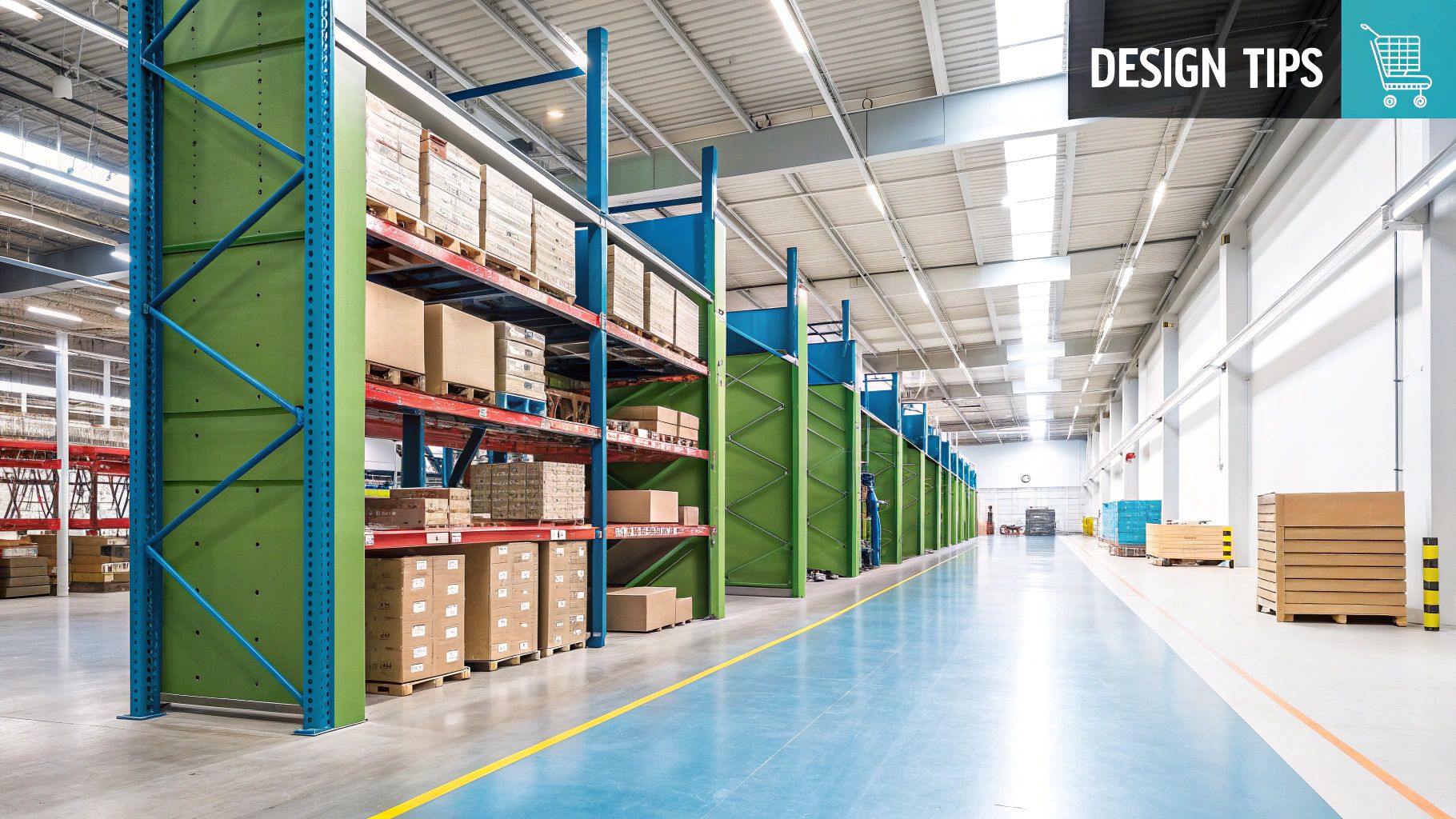
Picture this: you need to store a dozen car tyres, large rolls of carpet, or boxes full of archived files. Your office shelving would buckle under the strain, but using pallet racking would be overkill. This is exactly where long span shelving shines. It provides a strong, easy-to-access, and remarkably flexible storage solution for anything too cumbersome for standard shelves but not quite big enough for a pallet system.
At first glance, the system looks pretty straightforward. It’s a modular setup, built from just a few core parts that cleverly lock together to form a surprisingly rigid structure. That simple, modular design is its secret weapon.
The Key Parts of the Puzzle
Getting to know the components helps you understand just how strong and adaptable these systems are.
- Upright Frames: These are the vertical pillars, the very backbone of the shelving unit. They come in different heights and depths, which ultimately sets the size of your storage bay.
- Horizontal Beams: These are the workhorses. They clip securely into the uprights and run from front to back, creating the actual shelf level. The length of the beam defines the 'span', and its profile determines how much weight it can safely hold.
- Shelf Decks: This is the surface where your goods actually sit. The decks rest neatly on top of the beams. You can get them in various materials like chipboard, galvanised steel, or wire mesh, depending on what you’re storing.
Putting it all together, you get a highly customisable storage bay. You can tweak everything from the height of each shelf to the overall length of the run, tailoring it perfectly to your space and stock. It’s this versatility that has made it an absolute staple in warehouses, workshops, and stockrooms across the UK.
Long span shelving is more than just a place to put things; it's a strategic tool for getting the most out of your floor space. It closes a critical storage gap, helping businesses manage manually-handled goods that are just too much for other systems.
The need for this kind of smart storage is on the rise. In fact, the European market for these solutions, including long span shelves, was valued at around USD 1.2 billion in 2023. Here in the UK, that growth is being driven by the relentless expansion of e-commerce and retail, where warehouses need seriously robust systems to keep up with inventory. For a deeper dive, you can explore the latest longspan shelving market trends.
This simple yet powerful design makes it the go-to choice for a huge range of scenarios, from keeping an automotive garage organised to making a retail stockroom run like clockwork.
Why Smart Design Makes All the Difference
What is it about long span shelving that makes it so incredibly effective? It’s not just about raw strength; it’s the clever design thinking that makes a real, practical difference in any busy space. These features are what elevate a simple rack into a seriously efficient organisational tool.
The genius lies in its basic structure. Forget bulky, welded-together units. Most quality long span shelves use a simple, boltless, clip-together design. This means you don't need a specialist crew or a van full of tools to get it set up.
Think of it as a grown-up, industrial version of LEGO. The beams just slot and lock into the uprights, creating a sturdy, rigid structure in a fraction of the time it would take to build traditional shelving. This gets your new storage area up and running faster, which in turn saves you money on the initial setup.
Total Flexibility with Adjustable Shelves
One of its most powerful features is the ability to adjust the shelf heights. The upright frames are punched with slots, usually every 50mm, allowing you to set the horizontal beams at the exact height you need.
This level of customisation is a game-changer for getting the most out of your space. You can create one level with just enough room for small parts bins, and then a much taller level right above it in the same bay for bulky boxes or equipment. No space is wasted.
It also means you can adapt your storage on the fly as your stock changes.
- Seasonal Items: Easily reconfigure a bay to handle big Christmas boxes, then change it back for smaller summer stock.
- New Products: When a new product line arrives in different-sized packaging, you can adjust the shelves to fit perfectly.
- Project Work: You can even change the layout to hold specific tools and materials for a one-off job.
This adaptability gets rid of "dead air"—that frustrating empty space above your items that you can’t use with fixed shelving. Every centimetre of your storeroom is put to work.
Open Access and Clever Material Choices
Another key design element is the open-frame build. With no solid back panels or clunky cross-bracing getting in the way, long span shelves give you clear access from both the front and the back. This dual access is a massive advantage in a fast-paced environment.
The real value of a storage system isn't just in what it holds, but in how easily you can get to it. An open-frame design cuts down picking times and smooths out the workflow by simply removing physical barriers.
This is particularly useful for packing stations or assembly lines where people on either side of the rack need to grab parts. It just creates a much more natural, efficient flow, which is a key part of good workshop organisation. For more on that, our guide on storage ideas for your workshop has some great practical tips.
Finally, the choice of shelf material is itself a crucial design feature. The type of decking you go for has a direct impact on how the system performs and how long it lasts.
- Chipboard: This is the go-to, cost-effective option for most dry goods. It gives you a solid, flat surface that’s perfect for boxes, archive files, and general storage.
- Galvanised Steel Panels: If you’re dealing with damp, humid, or oily conditions, galvanised steel is the far better choice. It won't rust, it's a breeze to clean, and it can handle spills without warping.
- Wire Mesh Decking: This option is great for letting air circulate and allowing light to reach the lower levels, which really helps with visibility. It's also often a requirement for fire safety, as it lets water from sprinkler systems pass through to the goods below.
By matching the right features—from the easy assembly and adjustable levels to the open access and decking material—to what you actually do day-to-day, you turn long span shelves from a simple bit of kit into a dynamic tool that helps your business run better.
Understanding Load Capacity and Material Strength
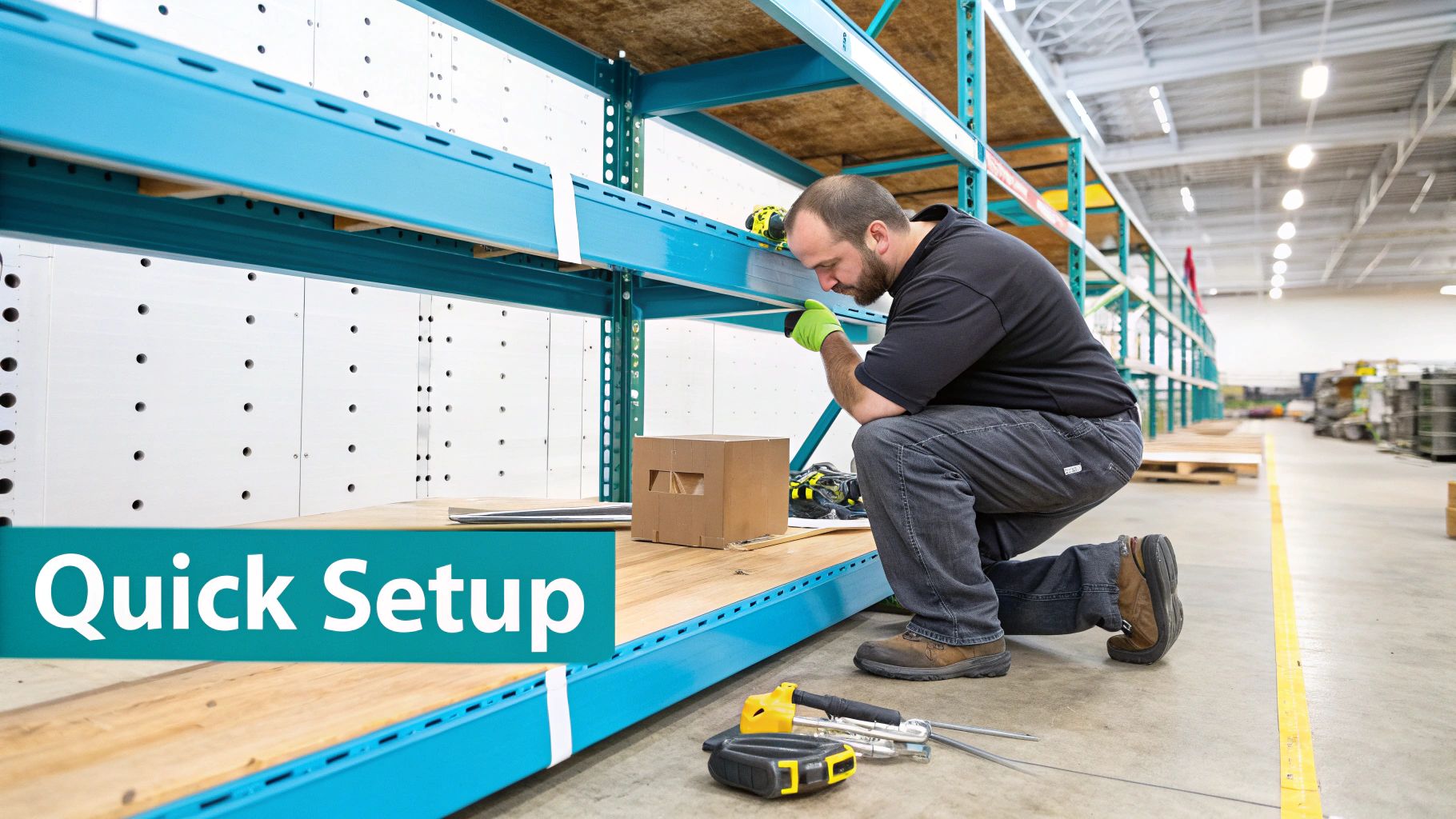
Choosing the right shelving is about much more than just whether it will fit in your space. It's a fundamental decision that underpins the safety of your staff and the efficiency of your entire operation. At the core of this choice is load capacity, a concept you absolutely cannot afford to get wrong. Pushing a shelf beyond its limits isn't just a minor mistake; it's a recipe for disaster that can lead to system collapse, destroyed stock, and serious injuries.
To get it right, you first need to understand the term Uniformly Distributed Load (UDL). This is simply the maximum weight a single shelf can safely hold when that weight is spread evenly across its entire surface.
Think of it this way: trying to store a heavy engine block right in the middle of a shelf concentrates immense pressure on a tiny area, creating a dangerous stress point. Now, imagine breaking that weight down into several smaller boxes spread out from one end to the other. This distributes the load evenly across the beams, letting the system work exactly as it was designed to.
The Physics of Strength and Span
There’s a basic rule of physics at play with long span shelving: the longer the beam, the less weight it can hold. It's a straightforward trade-off.
Picture yourself holding a heavy box. Holding it close to your chest is easy. Now, try holding it with your arms stretched out as far as they’ll go. It feels much heavier, right? The steel beams in a shelving system behave in precisely the same way. A shorter, 1200mm beam might easily handle 800 kg, but a longer 2400mm beam made from the exact same steel profile might only be rated for half that at 400 kg.
This is why you must start by knowing what you need to store. A thorough inventory assessment is non-negotiable. If you're dealing with exceptionally heavy or bulky items, you may need to look beyond standard shelving. Our guide to heavy duty racks for storage is a great resource for those more demanding applications.
Sample Load Capacities by Beam Length and Decking Type
To give you a clearer picture of how these factors interact, the table below shows some typical UDL ratings. Remember, these are estimates for illustrative purposes—always check the manufacturer’s specific guidelines for the exact system you’re using.
| Beam Length (mm) | Standard Duty Beam UDL (kg) | Heavy Duty Beam UDL (kg) | Recommended Decking Material |
|---|---|---|---|
| 1200 | 850 | 1200 | Chipboard / Steel Panels |
| 1500 | 650 | 950 | Chipboard / Steel Panels |
| 1800 | 500 | 750 | Steel Panels / Wire Mesh |
| 2100 | 400 | 600 | Steel Panels / Wire Mesh |
| 2400 | 320 | 500 | Steel Panels / Wire Mesh |
As you can see, the capacity drops significantly as the beams get longer. Choosing a heavy-duty beam and the right decking material is essential for maintaining strength over wider spans.
Material Integrity from the Ground Up
The load capacities advertised by a manufacturer are entirely dependent on the quality of the materials used. Every single component, from the floor to the top shelf, contributes to the system's overall strength and safety.
-
Upright Frames: These are the backbone of the system, typically made from high-grade, cold-rolled steel. The thickness of the steel and the design of its profile are what determine the total load a bay can handle.
-
Horizontal Beams: Beams are often shaped into a 'Z' or box profile. This isn't for looks; it's a clever bit of engineering that gives them maximum resistance to twisting or bowing under heavy loads. Heavier-duty beams simply use thicker steel or a more robust profile.
-
Decking Material: The surface your goods actually sit on is just as crucial. Chipboard is a popular and economical choice for general-purpose storage in dry environments. However, in workshops or areas exposed to moisture, you’ll want to opt for something tougher like galvanised steel panels or wire mesh decks that won't warp or corrode.
A shelving system is only as strong as its weakest link. A set of heavy-duty beams is worthless if they're supported by underrated frames or topped with flimsy decking. Every part must be specified for the job at hand.
While our shelving is built from steel, the principle of material quality determining strength is universal. For instance, in construction, understanding different framing lumber grades is vital for structural integrity—it’s the same logic. Choosing the right grade of steel for your shelving ensures it will perform safely and reliably for years to come.
Real-World Uses for Long Span Shelves in the UK
Theory is great, but seeing long span shelves in action is where you really get it. All across the UK, businesses of every kind are leaning on this simple system to solve some of their biggest storage headaches. From buzzing warehouses to specialist workshops, these shelves are the unsung heroes of an efficient operation.
Let’s step into a few different UK industries and see how they’re putting these versatile systems to work, turning chaos into organised, productive spaces.
E-Commerce Warehouses in Manchester
Picture a busy e-commerce hub on the outskirts of Manchester. They're dealing with thousands of different products (or SKUs), from tiny electronic bits to awkwardly shaped homewares. The name of the game here is speed and accuracy—every second wasted looking for an item is a second lost.
This is where long span shelves really shine. The open-frame design means pickers can grab items from either side, which keeps the aisles flowing smoothly. And because the inventory is always changing, staff can quickly adjust shelf heights on the fly, making sure no vertical space ever goes to waste.
- The Problem: A huge mix of non-palletised items of all shapes and sizes, making picking slow and wasting valuable space.
- The Solution: Long span bays set up with several shelf levels. This allows for jam-packed storage of hand-picked goods, keeping everything organised and ready to go. The direct result? Faster order fulfilment.
Automotive Workshops in Birmingham
Now, let's head to an automotive workshop in the heart of Birmingham. Mechanics need to get their hands on a massive range of parts instantly, from small boxes of spark plugs to heavy gearboxes and entire exhaust systems. Leaving this stuff on the floor is not just messy—it's a serious safety risk.
Here, long span shelves offer the perfect mix of muscle and accessibility. The heavy-duty beams can easily take the weight of hefty engine components. Plus, adding galvanised steel decks means they can stand up to oil and grease, making them a breeze to clean and maintain.
In an automotive business, organised storage isn't just a nice-to-have; it's fundamental to getting the job done right. Finding the right part on the right shelf means quicker vehicle repairs and a safer workshop for the whole team.
It's a textbook example of how the system's sheer strength directly helps skilled technicians work more effectively.
Retail Stockrooms in London
Think about the stockroom of a high-street shop in central London. Space is gold dust here. The challenge is managing a constant tidal wave of inventory, especially seasonal stock that’s often bulky and oddly shaped. Your average shelving just can't cope with the weight or the weird dimensions.
Long span shelves crack this problem by providing wide, clear bays that can swallow up large boxes of clothes, Christmas decorations, or display units without breaking a sweat. When it's time for a seasonal changeover, the whole system can be reconfigured in no time to fit the new products, keeping the stockroom from descending into chaos.
This kind of flexibility is crucial in the fast-moving world of retail. The need for smart storage like this has only grown with the explosion in online shopping. In fact, the UK longspan shelving market was valued at USD 48 million in 2024, pushed by demand from sectors like retail and logistics. The pandemic threw fuel on the fire, with online sales rocketing from 19.2% to over 32% of total retail sales between 2019 and 2023, cranking up the pressure for better warehouse systems. You can find more insights on the longspan shelving market on Dataintelo.com.
Archive and Document Storage Facilities
Finally, let's consider an archive facility tasked with storing thousands upon thousands of document boxes. The two biggest priorities are packing as much in as possible and ensuring the system will last for decades. A single box might not weigh much, but the combined weight across a full bay is immense.
Long span systems are tailor-made for this. You can build them into long, unbroken rows with multiple shelf levels, squeezing the maximum number of boxes into every square metre. The wide, open spans also make it easy to label and spot specific boxes, which is essential when a document needs to be found quickly. For any business that needs to keep its records safe but accessible, this kind of organisation is non-negotiable.
How to Choose the Right System for Your Space
Picking out a new storage system is a big deal. It's more than just buying shelves; you're making a direct investment in your business's efficiency, safety, and ability to grow. Let's walk through how to choose the perfect long span shelves for your space, so you can be completely confident in your decision.
First things first: grab a tape measure. Before you start thinking about beam lengths or decking types, you need to know exactly what you're working with. Take a moment to measure the three critical dimensions of your area.
- Height: Measure from the floor right up to the lowest point on your ceiling, whether that's a light fixture, a ventilation duct, or a sprinkler head.
- Width: Get the total clear run of the wall or floor space where you plan to install the shelving.
- Depth: Check how far the units can come out from the wall without getting in the way of walkways, doors, or fire exits.
Having these precise numbers is non-negotiable. They set the boundaries for your project and will save you from some very expensive headaches down the line.
Auditing Your Inventory
Once you know the size of your canvas, it's time to figure out what you'll be painting on it. What are you actually storing? The size, shape, and weight of your products will dictate the exact specifications of the long span shelves you need.
Start by asking some honest questions about your stock:
- What's the absolute heaviest single thing I need to put on a shelf? This will tell you what kind of beam duty and load capacity you’re looking for.
- What are the dimensions of my biggest items? This determines the shelf depth you need and how much space you’ll want between the upright frames.
- Is my stuff neatly boxed, loose, or just plain awkward? Your answer here points to the best decking material—chipboard is great for standard boxes, while steel panels are better for loose items that might catch or tear.
A proper assessment of your inventory is crucial. If you underestimate the weight or size, you could end up with an unsafe system that just doesn't work, which defeats the whole point of the upgrade.
A classic mistake is planning only for the stock you have today, completely forgetting about tomorrow. Your storage should be a launchpad for your business goals, not an anchor holding you back. Always build in a little extra capacity for future growth.
Key Questions for Your Checklist
Beyond the physical space and the items you're storing, a few other factors come into play. Thinking about your daily operations and the environment will help you nail down the final details.
- What's the environment like? Is your space dry, damp, or subject to big temperature swings? For specific settings like commercial kitchens or cold storage, you might need to look at specialised materials. Exploring stainless steel shelving options can give you a good idea of what works in tougher conditions.
- How often will you be grabbing things? If you have high-turnover goods, a system that you can access from both sides can be a game-changer for speeding up your picking and packing.
- Do you expect your layout to change? If your needs shift with the seasons or you're always bringing in new product lines, the sheer flexibility and easy adjustment of long span shelving is a massive plus.
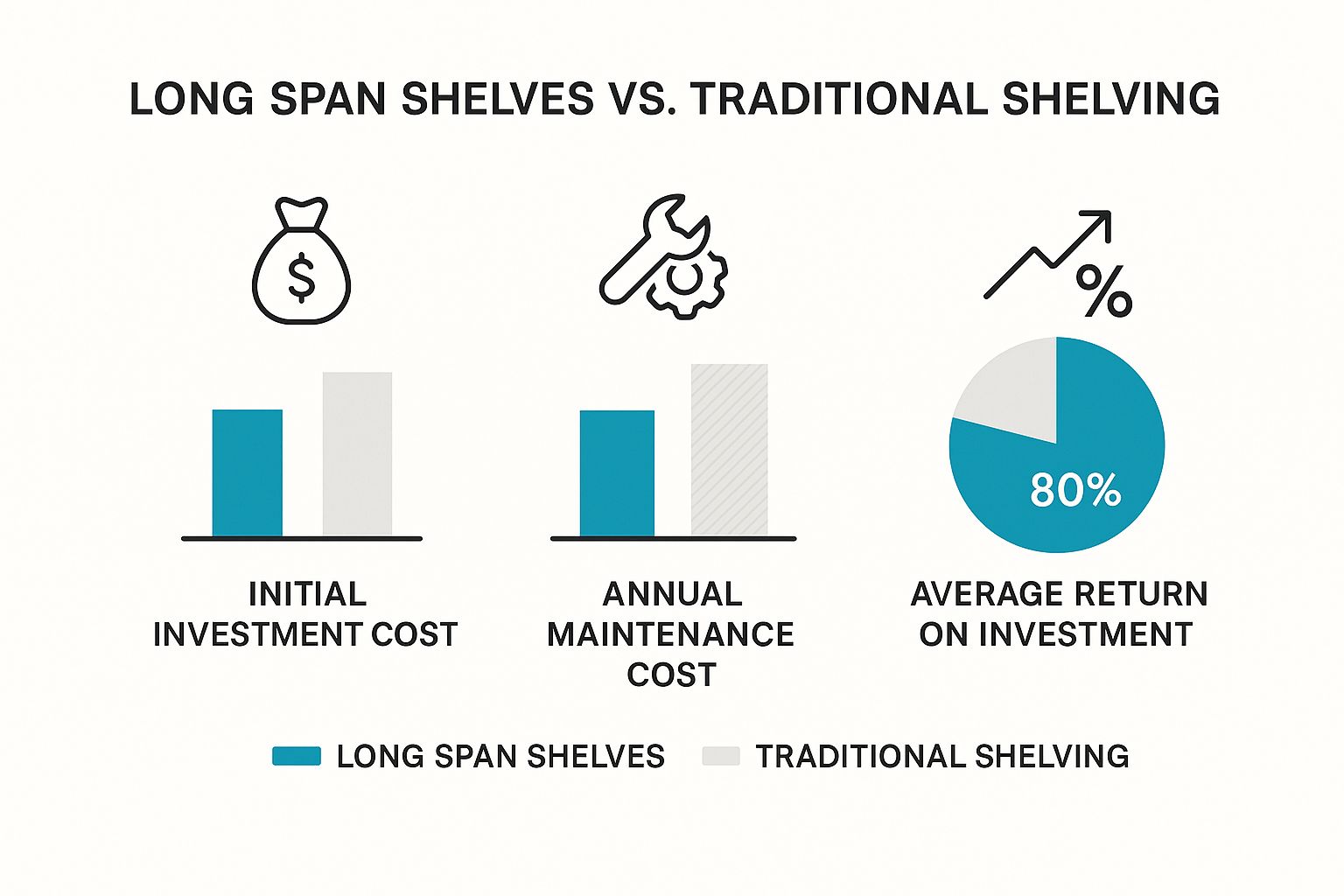
Storage System Comparison Long Span vs Other Options
To really be sure you’re on the right track, it’s helpful to see how long span shelves compare to the other usual suspects in the storage world. Every system has its strong suits, and knowing the difference is key to making a smart choice. If you want a broader look, you can find great information on various industrial storage racks to see the full spectrum of possibilities.
This quick table breaks down the main players.
| Feature | Standard Shelving | Long Span Shelves | Pallet Racking |
|---|---|---|---|
| Ideal Load Type | Light, small, hand-loaded items (e.g., office files, small parts bins). | Heavy, bulky, or awkward hand-loaded goods (e.g., car parts, archive boxes). | Fully palletised goods requiring a forklift for handling. |
| Load Capacity | Low (Typically under 150 kg per shelf). | Medium to High (Often 300-800 kg+ per shelf). | Very High (Usually 1,000-3,000 kg+ per pallet level). |
| Span Width | Narrow (Usually 900-1200mm). | Wide (Commonly 1200-2400mm or more). | Very Wide (Designed to fit standard pallet dimensions). |
| Accessibility | Primarily front-access only. | Excellent front and rear access due to its open-frame design. | Forklift access from the front is required. |
As you can see, long span shelving really hits that sweet spot. It offers much more strength and versatility than standard shelving, but without demanding the space and heavy machinery that full-blown pallet racking requires. It’s the perfect middle-ground solution for so many businesses. Follow these steps, and you’ll find a system that’s safe, efficient, and a perfect fit for you.
Getting it Built Right and Keeping it That Way
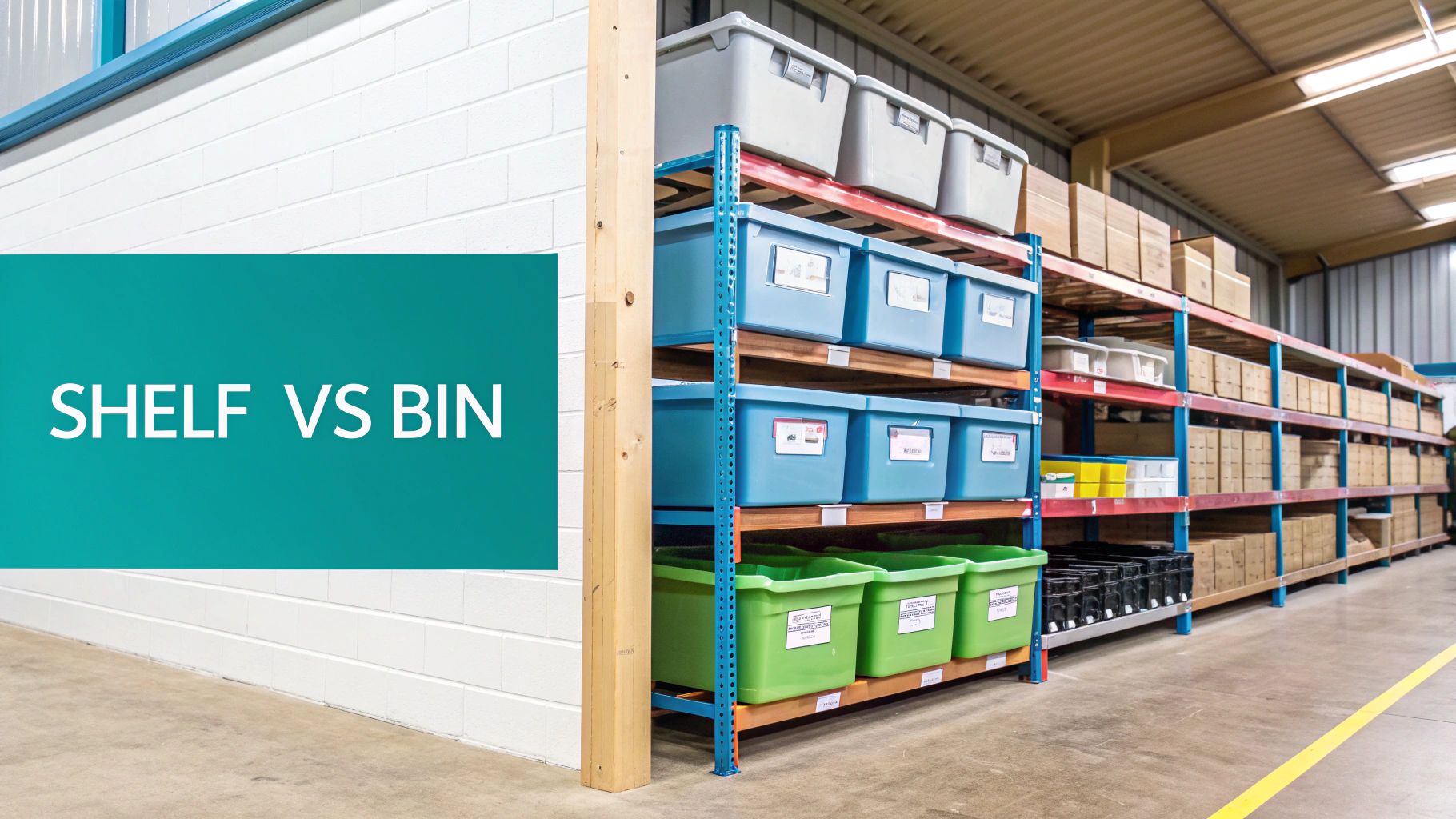
You've picked out the perfect long span shelves for your space – great! But the job isn't done yet. How you put it together and look after it is what turns a pile of steel into a genuinely safe and reliable asset for your business. It's the difference between a long-term solution and a future headache.
Proper assembly isn’t just about following steps; it’s about building a foundation of safety. Get this right, and you ensure the system performs exactly as it should for years. Even the highest quality racking can be a serious liability if it’s thrown together carelessly.
The Pre-Flight Check: Your Assembly Safety List
Before you even think about slotting a beam into a frame, a few simple checks are non-negotiable. It's tempting to rush and get the shelves up, but this is where dangerous mistakes happen. Give the installation the respect it deserves—think of it like commissioning any other critical piece of machinery.
Here’s a no-nonsense checklist to get you started on the right foot:
- Start on Solid Ground: First things first, check your floor. Is it level? Is it clear? An uneven surface puts uneven stress on the entire structure, which is a recipe for trouble. If you need to, use shims to get the base of the uprights perfectly level.
- Read the Manual: I know, I know. But the manufacturer’s instructions have crucial details you might miss, like which way a certain part should face or the right order of assembly. Following them ensures everything works as the designers intended.
- Make Sure it's Locked In: Every single beam should sit snugly in the frame's slots. You’re listening for a solid "click" as it seats itself. And here’s the most critical bit: always, always insert the safety pins. They’re what stop a beam from being accidentally knocked upwards and dislodged.
- Anchor it Down: For taller units, or if you’re in an area prone to tremors, bolting the frames to the floor or a solid wall is often a must. It’s a simple step that adds enormous stability and prevents any risk of tipping.
Think of your shelving as an active part of your workflow, not just static furniture. A professional installation is the first and most important step towards building a true safety culture in your storage areas.
Smart Habits for Keeping Your Shelving Healthy
Once your long span shelves are up and loaded, the job switches from building to watching. A little proactive maintenance goes a long way. It's quick, easy, and genuinely the best way to spot a small problem before it becomes a big, dangerous one. You'd be surprised what a quick walk-around can tell you.
Getting into the habit of a regular inspection—maybe monthly, or quarterly if usage is light—is one of the smartest things you can do.
What to Look For:
- Check for Dings and Dents: Keep an eye out for any dents, twists, or bends in the uprights and beams. These are usually calling cards from a close encounter with a trolley or forklift. Any damaged part is a weakened part, and it needs to be replaced, not ignored.
- Confirm the Safety Pins: This is an easy one. Walk the aisles and physically check that every beam has its safety pin in place. A missing pin is a major risk that takes seconds to fix.
- Inspect the Decks: Look over your chipboard, steel, or mesh decking. Are there any cracks, signs of sagging, or warping? If a shelf looks worn out, it probably is. Swap it out.
- Keep Load Labels Clear: Make sure the UDL (Uniformly Distributed Load) labels are still stuck on each beam and are easy to read. They’re a constant, vital reminder for your team about the weight limits, helping everyone stick to safe loading practices.
Common Questions About Long Span Shelving
Diving into the world of commercial storage can feel a bit overwhelming, and it's natural to have a few questions. To help you get started, we’ve put together some straightforward answers to the queries we hear most often about long span shelving.
How Hard Is It to Put Together?
This is one of the best things about long span shelving: it’s surprisingly simple to assemble. Most systems are designed to be boltless, using a clip-together frame where beams just lock into the uprights.
All you really need is a rubber mallet and a spirit level. With two people, you can have a standard bay built and ready to go in under 30 minutes. There’s no need for specialist tools or professional fitters.
Can I Add More Bays Later On?
Absolutely. The modular nature of long span shelves is a lifesaver for growing businesses. You can easily start with what you need now and then purchase "add-on" bays later.
These connect seamlessly to your initial "starter" bay, letting you extend your storage runs as your needs change. It’s a smart way to invest in a system that grows with you.
What’s the Difference Between a Starter Bay and an Add-On Bay?
Understanding this is key to planning your layout efficiently. Here’s the breakdown:
- Starter Bay: This is your first unit. It’s a complete, standalone bay with two upright end frames and all the beams for your shelf levels.
- Add-On Bay: This is what you use to extend a run. It only comes with one upright frame because it cleverly shares an end frame from the bay next to it, which saves you both space and money.
Think of it like building a train. The starter bay is the engine, which is a complete unit. Every add-on bay is like a carriage that links onto the one before it. You always have to start with an engine.
Are They Suitable for Damp Environments?
Yes, they can be, but you have to choose your materials wisely. Standard chipboard decking is great for dry, ambient storerooms, but it will swell and warp if it gets damp.
If you’re fitting out a workshop, garage, or an unheated unit where moisture is a concern, you’ll want to opt for either galvanised steel panels or wire mesh decks. These materials are built to resist rust and corrosion, ensuring your shelving stands the test of time.
At TEMA Solutions Limited, we specialise in providing robust storage systems designed for demanding professional environments. If you're ready to organise your space for maximum efficiency, explore our industry-leading solutions today at https://tema-solutions.co.uk.


