


High-quality metal drawer cabinets are much more than just storage boxes; they're the unsung heroes of any productive and safe industrial workplace. Think of them as a strategic investment designed to keep valuable tools secure, slash downtime, and make the whole workflow run smoother.
Why Metal Drawer Cabinets Are a Workshop Essential
Picture a high-performance workshop, maybe a busy garage or a precision engineering lab. It operates a lot like a professional kitchen. A chef needs every utensil perfectly organised to work quickly and efficiently, and it's no different for a technician. They need every component and tool stored logically where they can find it in a heartbeat. That's exactly the role a well-designed metal drawer cabinet plays. They’ve moved on from being simple containers and are now modular powerhouses that form the backbone of an efficient workspace.
This isn't just a hunch; it's a huge part of the industrial economy. The global market for these cabinets was pegged at around $8.2 billion in 2024, and it's still growing. We're seeing the same trend right here in the UK, driven by the ever-increasing need for organised, tough-as-nails storage in manufacturing and logistics. If you're interested in the numbers, you can dig deeper into these market trends on Verified Market Research.
The Strategic Role in Workflow Efficiency
The biggest win you get from a solid cabinet system is how it transforms your workflow. Every minute spent hunting for a misplaced spanner or a specific component is a minute of productivity down the drain. A properly organised metal drawer cabinet gets rid of that waste by giving everything its own dedicated spot, from the tiniest electronic parts to heavy-duty power tools.
This kind of organisation neatly supports some key operational principles:
- Lean Manufacturing: By cutting out wasted movement and search time, these cabinets are a direct contributor to a leaner, more efficient production line.
- Inventory Management: When drawers are clearly laid out and partitioned, you can do stock checks at a glance. This helps prevent running out of critical parts or over-ordering them.
- Point-of-Use Storage: Mobile cabinets are brilliant for this. You can wheel the necessary tools right to the job, creating a work environment that's flexible and responsive.
A place for everything, and everything in its place. It's an old saying, but when you apply it with a high-quality storage system, it turns a chaotic workshop into a showcase of efficiency and safety.
Protecting Assets and Enhancing Safety
Beyond just keeping things tidy, these cabinets are built to protect your gear. Constructed from heavy-gauge steel, they shield valuable tools and sensitive equipment from dust, damage, and anyone who shouldn't be touching them. The powder-coated finish adds another layer of defence, acting as a tough barrier against rust, chemical spills, and the general abuse of a busy industrial setting.
Safety is another massive benefit. Modern cabinets come with clever features like anti-tip mechanisms, which only let you open one drawer at a time. This stops a heavily loaded cabinet from becoming a tipping hazard. On top of that, smooth, full-extension ball-bearing slides mean technicians can easily reach items right at the back of a drawer without straining or awkwardly reaching, which goes a long way in preventing back and shoulder injuries. Choosing the right cabinet isn't just a purchase; it's a critical investment in your team's safety and your operational success.
Getting to Grips with Different Metal Drawer Cabinets
Walking into the world of metal drawer cabinets can feel a bit much at first glance. There are so many options. The trick is to stop thinking of them as just storage boxes and start seeing them for the specific jobs they're built to do. When you frame them by their function, you can quickly narrow down the right choice for your workshop, whether you're sorting tiny components or locking up heavy-duty machinery.
It’s a bit like choosing a vehicle. You wouldn't use a sports car to haul bricks, and you wouldn’t take a lorry on a racetrack. The same logic applies here; each cabinet is engineered for a particular purpose. Let's break down the main categories to help you find the perfect fit.
The Precision Parts Organiser
This is your specialist for small, high-value, or sensitive items. Picture an electronics lab with thousands of tiny resistors, or a medical facility that needs to keep delicate instruments perfectly organised. These environments demand absolute precision, and that’s where this type of cabinet really shines.
- Common Applications: Ideal for storing electronic components, medical supplies, jewellery parts, or small hardware like nuts and bolts.
- Key Features: These units usually have shallow drawers designed for high-density storage. They often come with customisable drawer dividers, letting you create hundreds of perfectly sized little compartments.
- Specialised Options: For anyone working with electronics, Electrostatic Discharge (ESD) safe cabinets are a must. They’re built with materials that stop static from building up, which is crucial for protecting sensitive components from getting fried.
This quick overview highlights the key benefits you get when investing in quality metal drawer cabinets, comparing their lifespan, strength, and overall value.
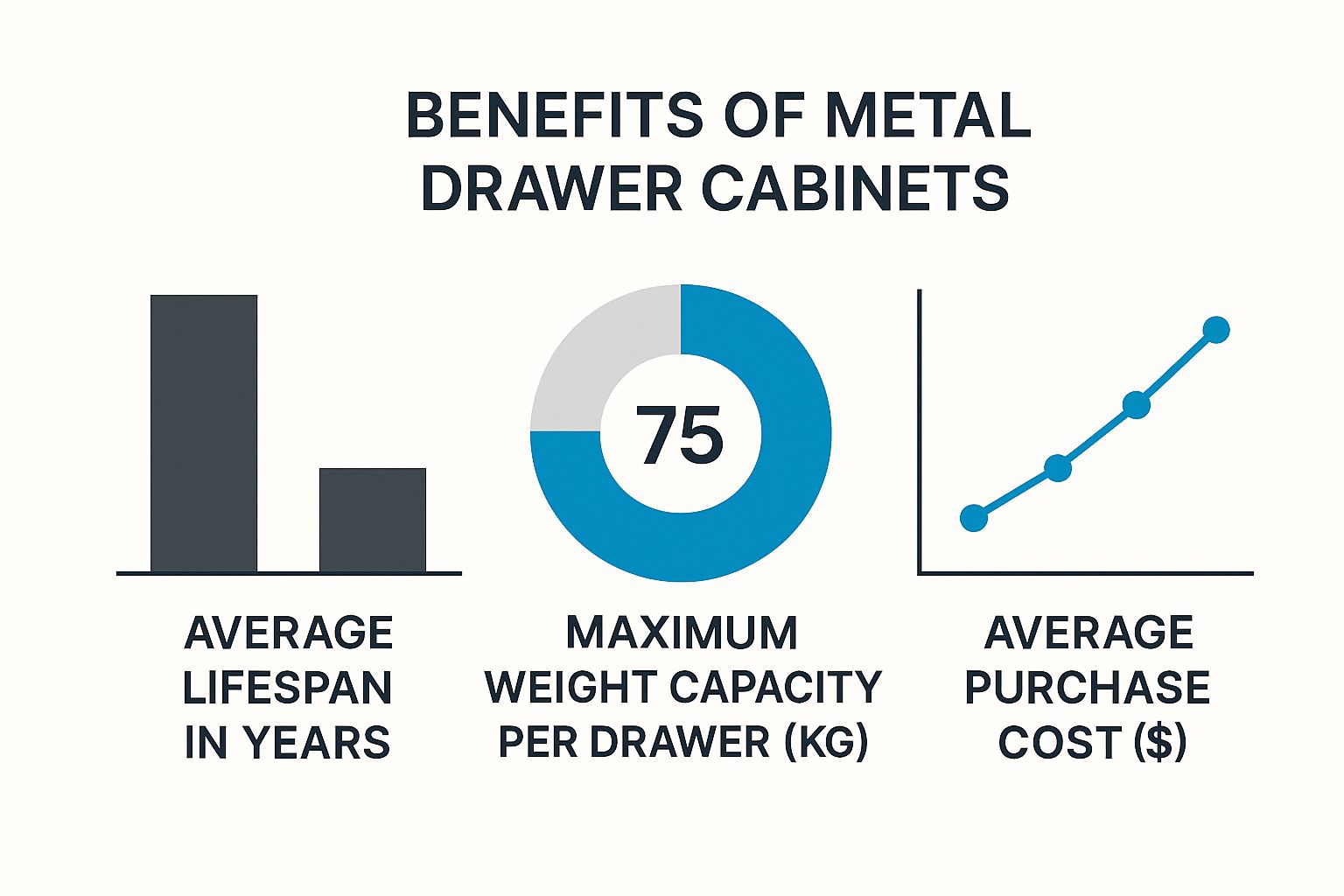
The numbers make it clear: while the initial outlay might be higher, the exceptional lifespan and weight capacity deliver real long-term value and rugged durability.
Quick Comparison of Industrial Cabinet Types
To make things even clearer, this table helps you quickly compare common industrial cabinet types based on their intended use, load capacity, and typical features. It's a handy way to see at-a-glance which one might be the best fit for your needs.
| Cabinet Type | Primary Use Case | Typical Drawer Capacity | Key Features |
|---|---|---|---|
| Precision Organiser | Storing small, sensitive, or high-value items like electronics, medical supplies, or small parts. | 15-50 kg | Shallow drawers, high-density layouts, customisable dividers, ESD-safe options. |
| Heavy-Duty Vault | Securing heavy, bulky tools and equipment in workshops and manufacturing facilities. | 100-200 kg | Reinforced steel frame, high-security locks, robust ball-bearing slides, deep drawers. |
| Mobile Workstation | Bringing tools directly to the job site in automotive bays, assembly lines, or maintenance areas. | 40-75 kg | Durable casters (often lockable), sturdy top work surface, integrated handles. |
Hopefully, seeing the main players side-by-side helps you pinpoint which direction to go in. Each has its strengths, so it's all about matching the cabinet to the task at hand.
The Heavy-Duty Tool Vault
When you need a place for heavy, bulky, and expensive gear, you need a tool vault. These are the absolute workhorses of any serious workshop, built to take a beating and handle incredible weight without breaking a sweat. They're the go-to for mechanics, engineers, and fabricators who depend on their large hand tools and power tools every single day.
Their entire design is centred on strength and security. The drawers are often rated to hold 100 kg or more, gliding on robust ball-bearing slides that keep things smooth, even when a drawer is packed to the brim. If you're looking for this kind of robust solution, our collection of metal cabinets with drawers has options built for the most demanding industrial environments.
A heavy-duty cabinet isn't just about storage; it's about protecting your assets. With reinforced frames and high-security locking systems, these units act as a safe for your most valuable tools, warding off theft and stopping unauthorised use.
The Mobile Roving Workstation
In a modern workshop, flexibility is everything. Mobile metal drawer cabinets, kitted out with durable casters, let you bring your tools right to the job. This simple change cuts out all that wasted time walking back and forth, effectively turning any spot on the floor into a productive workspace. Think of it as a tool chest and a small workbench, all rolled into one.
- Typical Load Capacity: While they don't hold as much as the stationary vaults, these mobile units are still incredibly tough, with drawers often supporting 40-75 kg.
- Common Applications: You’ll see these everywhere in automotive repair bays, on assembly lines, and in maintenance departments where technicians are constantly on the move.
- Smart Design: Many mobile cabinets have a durable top surface, sometimes made of wood or rubber, which is perfect for light assembly work. Locking casters make sure the unit stays put once you've got it where you need it.
By understanding these distinct roles—the organiser, the vault, and the mobile workstation— you can look past generic specs and choose a metal drawer cabinet that actually solves your storage problems and makes your team's life easier.
Critical Features to Look for Before Buying
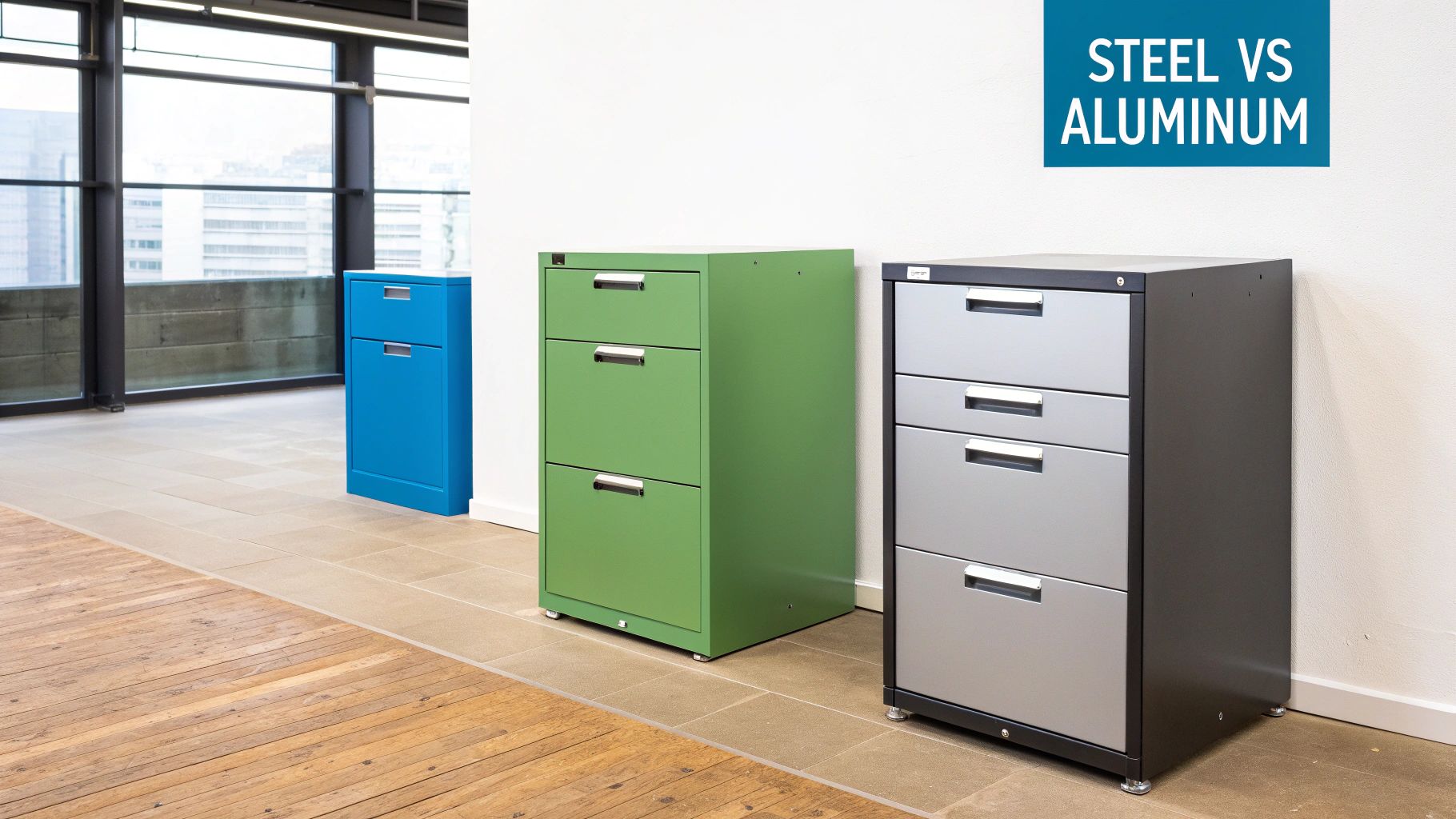
Choosing the right metal drawer cabinet can feel like wading through a sea of technical jargon. Words like 'steel gauge' and 'ball-bearing slides' get thrown around, but what do they actually mean for your day-to-day work? Getting to grips with these features is the difference between buying a stop-gap solution and a long-term investment that genuinely improves your workshop's efficiency and safety.
Think of it like buying a car. You wouldn't just kick the tyres and look at the paintwork. You’d want to know what's under the bonnet, how it handles, and what safety features it has. A quality cabinet deserves that same level of scrutiny, because the components inside are what truly dictate its performance and how long it will last.
Understanding Steel Gauge Strength
One of the first things you'll come across is the steel gauge. It's a fundamental measure of strength, but it works in a way that can seem a bit backwards at first.
The lower the steel gauge number, the thicker and stronger the steel. A cabinet built from 18-gauge steel is far tougher and more resistant to dents than one made from a flimsy 22-gauge sheet.
In a busy industrial setting, where accidental bumps from trolleys or dropped tools are inevitable, a lower gauge is non-negotiable. It's the backbone of the cabinet, ensuring it can take a beating without its structural integrity being compromised. This is the very foundation of a truly durable metal drawer cabinet.
The Importance of Drawer Slide Mechanisms
The real magic of a great cabinet lies in how the drawers operate. The slide mechanism is the component that makes or breaks the user experience, especially when you're dealing with heavy equipment.
- Ball-Bearing Slides: These are the gold standard for a reason. They use a system of small steel balls to create a beautifully smooth, low-friction glide, even when a drawer is loaded with up to 100 kg of tools. No more jamming or wrestling with a stuck drawer.
- Full-Extension Capability: Always look for slides that allow the drawer to open all the way. This gives you 100% access to everything inside, so you’re not left fumbling for that one spanner hidden at the very back. It's more than just a convenience; it’s a crucial ergonomic feature that helps prevent strains and injuries.
- Load Capacity: Pay close attention to the drawer's official weight rating. Overloading a drawer with underrated slides is a recipe for disaster. They will eventually fail, leading to frustrating downtime, costly repairs, and potential safety risks.
Just imagine trying to yank open a heavy drawer that sticks and groans every time. It’s infuriating and a complete waste of time. High-quality ball-bearing slides turn that struggle into a smooth, one-handed operation.
Finishes That Fight Corrosion and Wear
The finish on a metal drawer cabinet is far more than just a splash of colour. It’s the cabinet's first line of defence against the harsh reality of a workshop environment.
A powder-coated finish is leagues ahead of standard liquid paint. The process involves electrostatically applying a dry powder to the steel, which is then cured under intense heat. This creates an incredibly thick, uniform, and hard-wearing layer that’s highly resistant to chipping, scratches, chemicals, and rust. It’s what keeps your cabinet looking professional and structurally sound for years.
The UK's demand for high-quality, durable metal furniture is on the rise. With the market projected to grow even more from 2025, investing in long-lasting features like a proper powder-coated finish is simply smart business. You can explore these market trends to see why durability is becoming so important.
Locking Systems and Security
Last but certainly not least, you need to be able to secure your valuable tools and parts. The locking system you choose should fit the security demands of your workspace.
- Keyed Locks: The classic, most common option, providing good, basic security for individual drawers or the entire cabinet.
- Centralised Locking: A brilliantly efficient system where one turn of a key locks all drawers in the unit at once. It’s perfect for quick and easy security checks at the end of the day.
- Digital Locks: For a more advanced, keyless solution, keypad or RFID locks offer top-tier security and can even provide an audit trail to see who accessed the cabinet and when.
By carefully weighing up these four critical areas—steel gauge, drawer slides, finish, and locking systems—you’ll be perfectly equipped to choose a metal drawer cabinet that’s built to perform, built to protect, and built to last.
A Practical Guide to Selecting the Right Cabinet
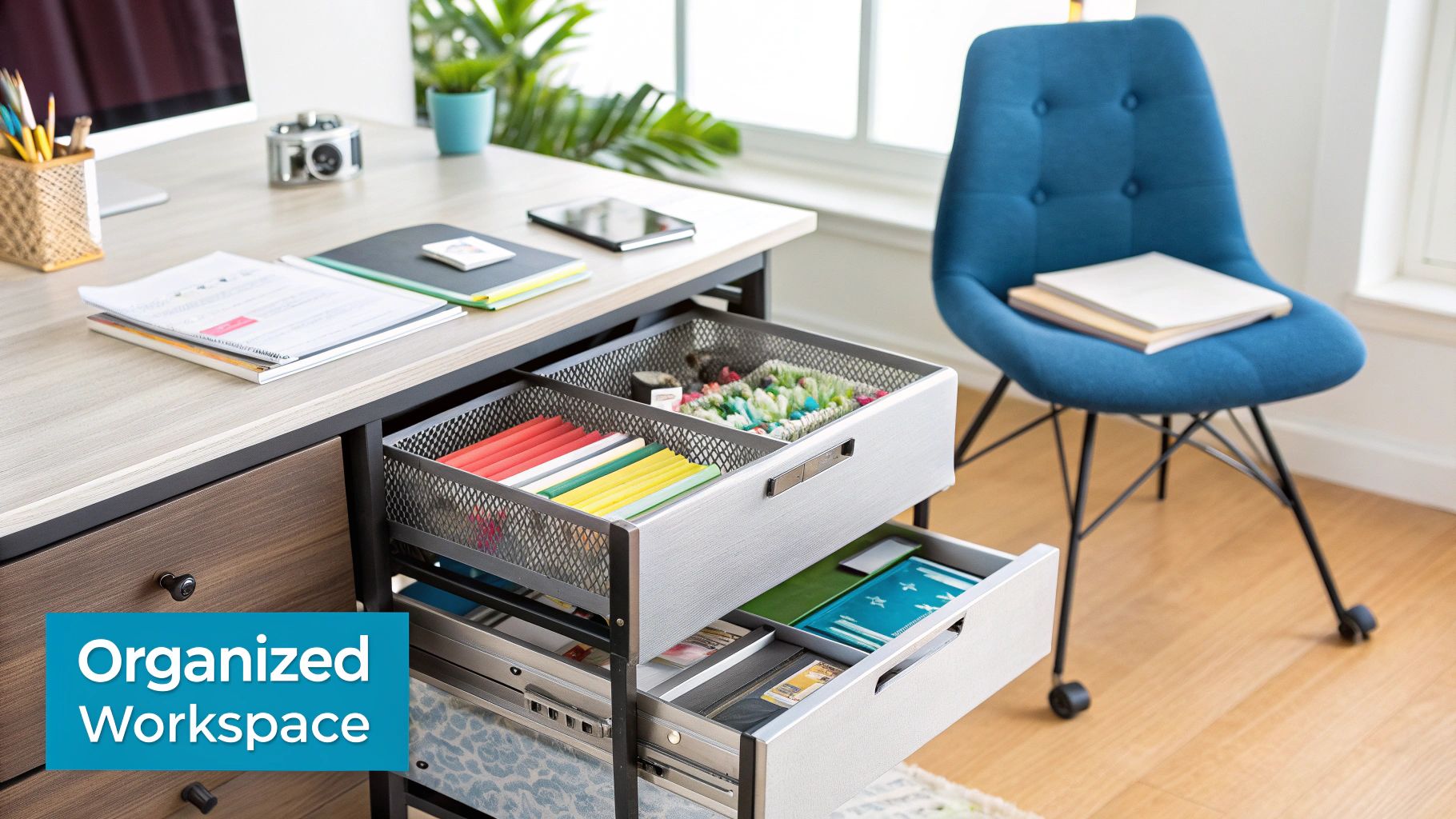
Choosing the perfect metal drawer cabinet isn’t just about picking the biggest or strongest one you can find. It’s about finding the right one for your workshop, your tools, and your workflow. Getting this right means taking a step back and thinking methodically before you even glance at a catalogue. The whole point is to match what you actually need to store with the cabinet’s capabilities.
This all starts with a simple but vital step: a storage audit. Think of it as playing detective in your own workspace. What are you actually storing? How heavy is it all? What shape is it? Answering these questions honestly is the only way to avoid the classic mistake of buying a cabinet that's too small, too flimsy, or just plain wrong for the job.
Conducting Your Storage Audit
Before you start looking at options, you need to get a clear picture of what you have. This audit is the bedrock of your entire decision.
-
Itemise Your Inventory: Make a detailed list of every tool, part, and piece of kit that needs a home. Don't just write "spanners"—get specific about the different sets and their sizes.
-
Weigh and Measure: This is the most important part, bar none. You need to physically weigh the items you plan to put in each drawer to get a realistic total. Underestimating weight is a common and expensive mistake that absolutely wrecks cabinets over time.
-
Consider Item Shape and Quantity: Look at the physical size of everything. Big power tools need deep drawers, while tiny electronic bits and bobs are best kept in shallow ones with dividers. How many of each item do you have? This will tell you how many drawers you need and the overall size of the cabinet.
Selecting a metal drawer cabinet requires the same careful evaluation as understanding the principles for choosing a reliable partner for a big project. In both cases, proper vetting is the key to a successful, long-term outcome.
Matching Your Needs to Cabinet Specifications
Right, with your audit done, you can start translating that information into technical specs. This is where you connect your real-world needs to the features listed on a product sheet.
Start with drawer capacity. If your audit showed that one drawer needs to hold 60 kg worth of tools, then you must choose a cabinet with a drawer rating that can comfortably handle more than that. I always recommend building in a buffer; a drawer rated for 75 kg is a much safer, more durable bet in this situation. That bit of foresight stops you from overloading the slides and dramatically extends the cabinet's life.
Next up, the cabinet's overall dimensions. It sounds obvious, but it has to physically fit in your workspace with enough room for drawers to open fully without hitting anything. Don't forget to account for a technician standing in front of it, too. If space is tight, an integrated system could be a game-changer; our guide on https://tema-solutions.co.uk/work-storage-benches/ has some great ideas for creating these kinds of efficient, dual-purpose workstations.
Environmental and Future-Proofing Considerations
The environment your cabinet lives in makes a massive difference. For most dry workshops, a standard powder-coated steel cabinet will do the job perfectly well. But what if your space is damp, or you're working with corrosive chemicals?
In places with high humidity, frequent wash-downs, or chemical exposure—like food processing plants or marine engineering workshops—a stainless steel cabinet isn't a luxury, it's a necessity. It offers far better resistance to rust and corrosion, protecting your investment for years to come.
Finally, think about the future. Is your tool collection likely to grow? Might you need to shuffle the workshop layout around? Going for a modular cabinet system gives you the freedom to add more units or completely reconfigure your setup as your needs evolve. This kind of forward-thinking makes your storage solution a sustainable and cost-effective choice in the long run.
Mastering Cabinet Installation and Maintenance
Choosing the right metal drawer cabinet is only half the battle. Getting it set up correctly and looking after it is what guarantees it will serve you well for years to come. A poorly installed cabinet can be a daily frustration or even a serious safety hazard, while a bit of neglect can slash its working life.
Think of it like any piece of precision equipment. You wouldn't just drop a new lathe on the floor and expect it to run true. It needs to be perfectly level and securely anchored to perform as designed. The same goes for your storage; getting the fundamentals right from day one ensures it remains a reliable asset, not a liability.
Your Essential Installation Checklist
A successful installation starts with the ground up—literally. Before you even think about loading it with tools, taking a few minutes to get the setup right will save you a world of headaches later.
-
Get it Dead Level: This is the most critical step. If the floor isn't perfectly flat, the cabinet frame will twist. That slight twist is all it takes for drawers to start jamming, scraping, or refusing to close properly. Grab a spirit level and use shims to get it spot on.
-
Think About Weight Distribution: It's simple physics. Always load your heaviest gear in the bottom drawers. This keeps the centre of gravity low and the whole unit stable. A top-heavy cabinet is an accident waiting to happen, especially when a fully loaded top drawer is pulled all the way out.
-
Anchor Tall Units, No Excuses: This is a non-negotiable safety rule. Any cabinet that stands taller than your workbench must be securely anchored to a wall. It’s the single most effective way to stop a fully loaded unit from tipping over and causing serious injury.
You’ll know a cabinet is installed correctly because it just works. Drawers glide silently, and locks click into place with no fuss. If you’re fighting with it, that’s a sure sign the unit is under stress from an improper setup.
Proactive Maintenance for a Long Life
Once your cabinet is properly installed, a little bit of upkeep is all it takes to keep it in peak condition. These aren’t big, time-consuming jobs—just quick checks that protect your investment.
A well-maintained metal drawer cabinet isn't just about having drawers that run smoothly. It's about preserving the entire structure and preventing a minor issue, like a sticky slide, from turning into a complete failure.
Simple Steps for Cabinet Care
Work these quick tasks into your regular workshop maintenance routine.
-
Lubricate the Drawer Slides: About every six months, give the ball-bearing slides a quick spray with a silicone-based lubricant. This keeps them running like new and stops friction from causing unnecessary wear. Steer clear of heavy greases, as they just attract dust and grit.
-
Check the Locks: Give the locks a quick test now and then to make sure they engage properly. If a lock feels loose or stiff, sort it out straight away. There’s no point having a lock that doesn't keep your gear secure.
-
Clean Surfaces the Right Way: For a standard powder-coated finish, all you need is a damp cloth and a bit of mild detergent. Avoid harsh, abrasive cleaners or strong chemicals, as they can strip the protective coating and leave the steel underneath vulnerable to rust.
Following these simple installation and maintenance tips ensures your metal drawer cabinets will perform exactly as they should. It’s a straightforward approach that boosts safety, extends the life of your equipment, and helps maintain a professional, organised workspace.
Boosting Safety and Ergonomics in Your Workspace

A high-quality metal drawer cabinet does far more than just keep your tools tidy. It’s an active player in creating a safer, more comfortable environment for your team. When you look at their design, you realise these units are built to tackle common workplace hazards and physical strains head-on.
It’s a subtle but important shift in thinking. Instead of viewing a cabinet as just a box, see it as a key part of your team's daily wellbeing. Features that seem like simple conveniences are actually based on solid ergonomic principles, all designed to reduce physical stress and improve workflow.
Designing for a Safer Reach
One of the biggest ergonomic wins comes from full-extension drawer slides. These allow the drawer to pull out completely, giving your technicians easy, clear access to everything inside, even the bits and bobs tucked away at the back.
Think about the alternative. Without full extension, staff end up bending, twisting, and reaching awkwardly into the cabinet. Do that day in, day out, and you’re creating the perfect conditions for musculoskeletal problems. It's well worth understanding how to prevent repetitive strain injury before it becomes a real issue on your shop floor.
Eliminating awkward postures doesn't just make the job easier—it makes it fundamentally safer. Full-extension drawers ensure your team can work comfortably, massively cutting down the risk of painful and expensive workplace injuries.
The Role of Smart Organisation
An organised drawer is a safe drawer. Simple as that. When tools are just thrown in together, technicians waste time rummaging, which builds frustration and increases the chance of grabbing the wrong tool or getting a minor cut.
This is where customisation really proves its worth. Using drawer dividers and foam inserts to create a dedicated spot for every single tool isn’t just about looking neat; it’s a core safety feature.
- Better Visibility: With a specific home for everything, tools are easy to spot and grab in seconds.
- Faster Retrieval: Less time spent hunting for a tool means more focus on the actual job, which minimises distractions.
- Tighter Inventory Control: You can see if a tool is missing at a glance, which is crucial for security and accountability.
Built-In Safety Mechanisms
Today’s metal drawer cabinets are engineered with clever systems to protect both your people and your equipment. The most critical of these is the anti-tip mechanism, an absolutely essential feature for any cabinet carrying a heavy load.
It’s a simple concept: the mechanism only allows one drawer to be opened at a time. By stopping someone from pulling out multiple heavy drawers at once, it keeps the cabinet’s centre of gravity stable and practically eliminates the risk of it toppling over. This is now a non-negotiable standard for meeting UK health and safety regulations, proving that the right cabinet is a direct investment in your team’s welfare.
Frequently Asked-Questions
Even after digging into the details, you're bound to have a few practical questions. It’s completely normal. Let’s tackle some of the most common queries we hear about metal drawer cabinets to help clear things up.
What Is the Typical Lifespan of a Metal Drawer Cabinet?
How long a metal drawer cabinet lasts really comes down to two things: how well it's built and where it lives. A top-notch, powder-coated cabinet made from heavy-gauge steel can easily serve you for 15 to 20 years—sometimes even longer—in a decent workshop environment.
On the other hand, cheaper, flimsy alternatives might start showing their age in just a few years. Think dents, rust, and drawer slides that give up the ghost. A bit of proper care goes a long way, too. Keep the slides lubricated and resist the urge to overload the drawers, and your cabinet will be a reliable workhorse for decades.
Are Mobile Cabinets as Durable as Stationary Ones?
That's a great question and a common worry. The short answer is yes, a well-made mobile cabinet is every bit as tough as its stationary cousin. Good manufacturers use the same heavy-gauge steel and solid construction for both. The only real difference is the set of industrial-grade casters bolted to the bottom.
These aren't your average office chair wheels. They’re built to take the weight and roll smoothly across a busy workshop floor. Look for units with sturdy bearings and reliable locks. That way, you get easy movement when you need it and rock-solid stability when you don’t.
The real test of a mobile cabinet isn't the frame—it's the wheels. Industrial casters are engineered for heavy use, meaning you get the benefit of portability without compromising on the rugged durability you expect from a stationary metal drawer cabinet.
Can I Customise the Drawers After Purchase?
Absolutely. In fact, most industrial metal drawer cabinets are designed for it. Modularity is a key feature, so you can always buy and fit new accessories down the line as your needs change.
- Adjustable Dividers: These are typically slotted metal strips you can move around to create perfectly sized compartments for different tools and parts.
- Plastic Bins: Small, often colour-coded bins are brilliant for organising tiny items like screws, washers, or electronic components.
- Foam Inserts: You can get foam cut to perfectly fit your tools. This not only stops them from rattling around but also gives you an instant visual cue if something is missing.
This flexibility means your storage can grow and adapt with your work, keeping everything organised and efficient without needing a complete overhaul.
At TEMA Solutions Limited, we live and breathe high-quality industrial storage that makes workshops safer and more efficient. Take a look at our range of durable and customisable metal drawer cabinets to find the perfect solution for your space at https://tema-solutions.co.uk.


